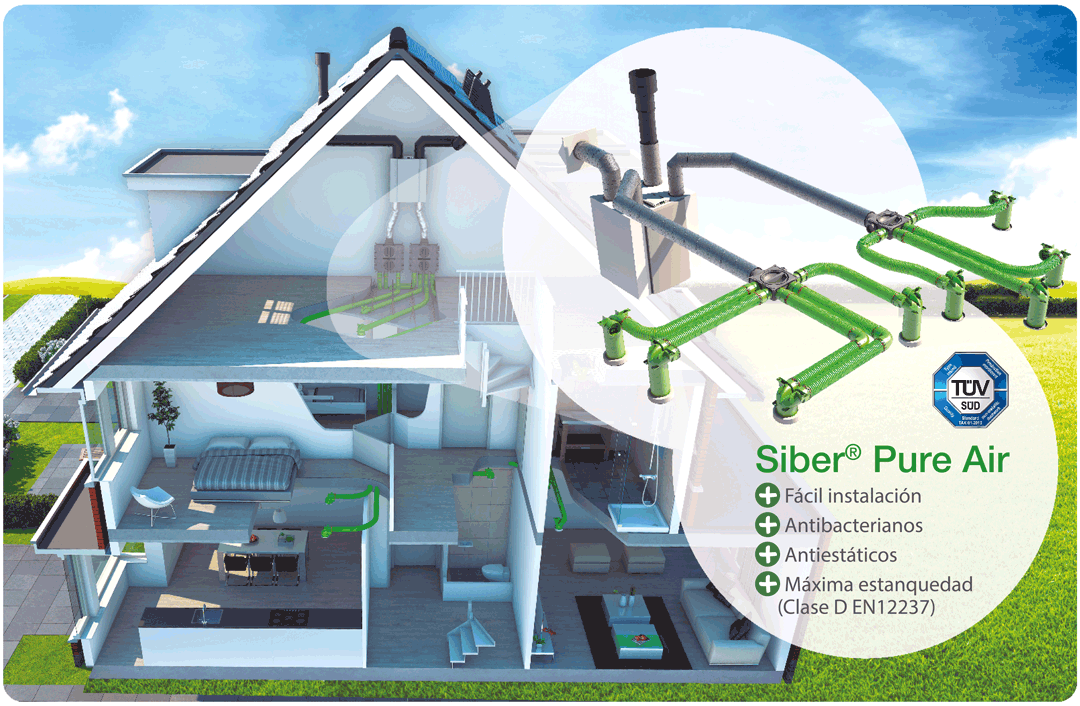
Ventilation ducts to ensure health and comfort
Engineering systems have greatly improved in recent decades, increasing the importance of ventilation ducts and leaving behind ventilation based solely on exhaust fans. Due to the high air pollution in cities, the role played by the ventilation system is even more relevant. Emissions from automobiles, the chemical compounds from factories, dust, pollen, and "bad" ozone can cause health problems, such as chronic bronchitis, allergies, asthma, among other respiratory difficulties. All the more reason, if the air we breathe outside is not healthy, we must invest in the air quality of our homes and indoor spaces. Nowadays, the industry, and especially the population, has understood the importance of having efficient high-quality ventilation systems and components that improve the air we breathe. However, just as we consider the major components of installations, we must also pay attention to the smaller elements that connect these installations: the ventilation ducts.
Nowadays, the industry, and especially the population, has understood the importance of having efficient high-quality ventilation systems and components that improve the air we breathe. However, just as we consider the major components of installations, we must also pay attention to the smaller elements that connect these installations: the ventilation ducts.
But where do I start? Why are ventilation ducts so important?
First, ventilation systems are classified into two types: simple flow (only controls the exhaust) or double flow (controls both the intake and exhaust), with the latter being the more common category. They are also classified based on the space to be ventilated: domestic, tertiary, or industrial. Next, to integrate the double flow ventilation system we need the components. These are: the filter, electric heaters, heat pumps, cooling batteries, mixed water batteries, the energy recovery unit, and finally, humidifiers or dehumidifiers.But that's not all. Ventilation ducts, the main ones responsible for distributing air throughout the different rooms, must be of high quality and designed in detail according to each space, taking into account their needs and properties. To achieve a healthy environment without unnecessary energy costs, the ducts must have the most advanced technology and knowledge, as they determine the outcome of the installation. Without them, air would not circulate.
Types of ventilation ducts
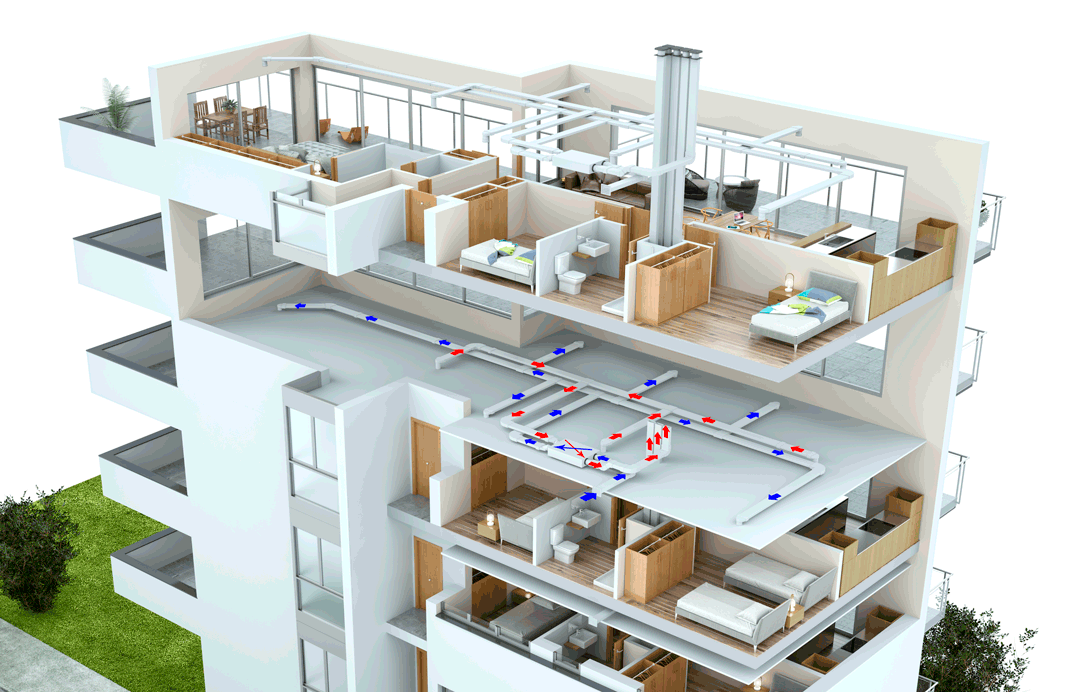
If we consider these different steps, we will obtain an installation that functions properly. Thus, we confirm that ventilation ducts play a fundamental role in the operability of the entire system. A set of suitable ducts will allow for air renewal, freeing harmful particles from the room and improving the quality of the air we breathe.
Related articles

Siber Ventilation
Related posts