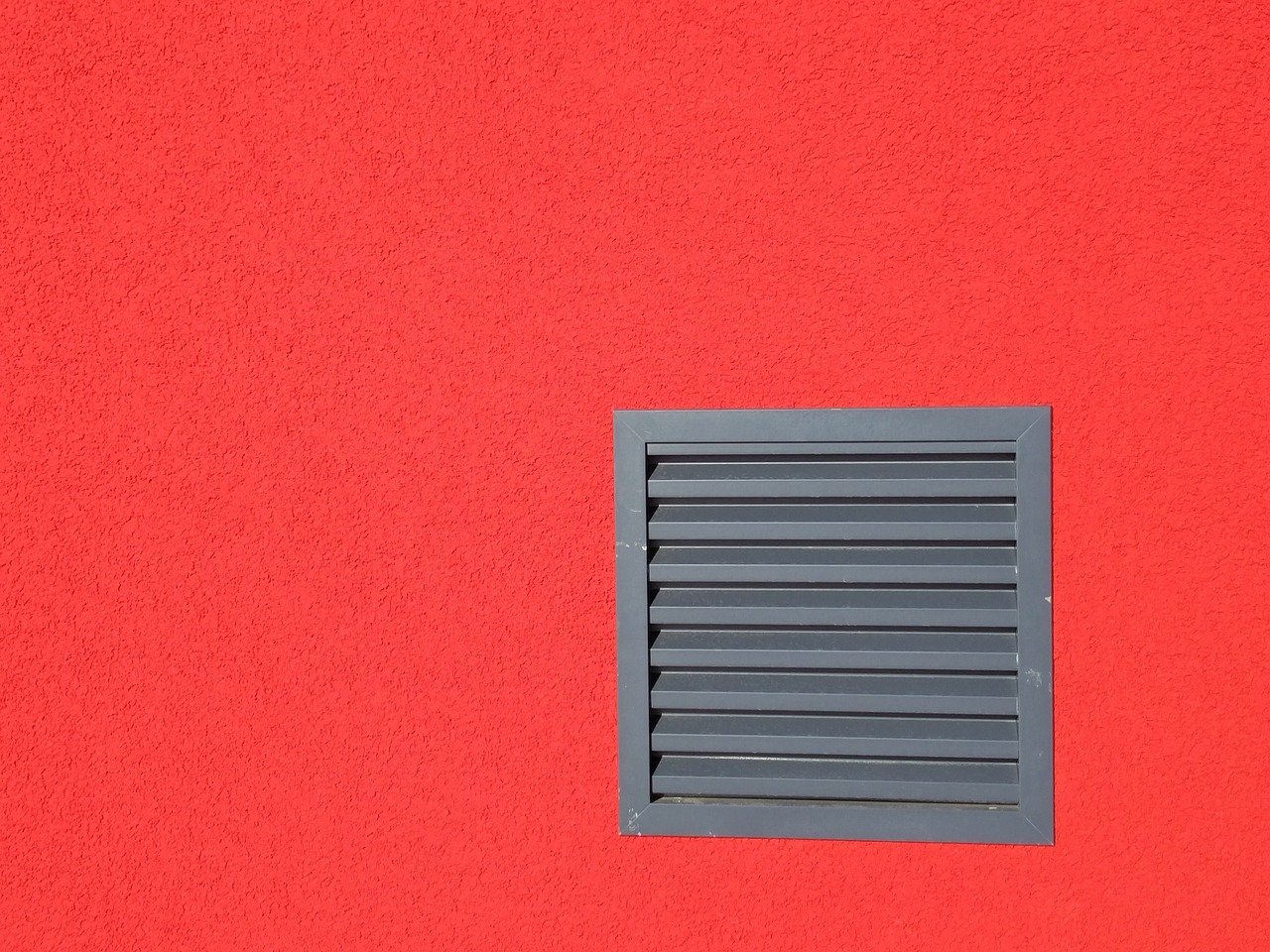
Types of ventilation grilles: plastic, aluminum, and steel grilles.
Technical and geometric characteristics of a ventilation grille
There are a series of parameters that define the geometric composition of a grille, such as:- Free visual surface: is determined by the relationship that exists between the visual distance between two slats and the spacing of the slat or distance between the fixing point of one slat and the fixing point of the next.
- Free physical surface: is determined by the relationship between the narrowest spacing between two slats and the spacing of the slat. Possible defects that may occur during assembly can lead to anomalies that imply a variation of 5% in relation to this value.
- Factor K: is a value that describes the aerodynamic resistance against the airflow. Contrary to the free surface, this value describes the relationship between flow that circulates through the grille and the accompanying pressure drop.
- Ce: "Entry loss coefficient". This value indicates the aerodynamic conduction of the airflow when attraction occurs. It is the relationship of the effective air passage through the grille against the theoretical passage.
- Cd: "Discharge loss coefficient". This value describes the aerodynamic conduction when air is expelled. It is the relationship of effective air passage through the grille against the theoretical air passage.
- IP Class: is an international protection value. It indicates the level of protection of the grille against the intrusion of external objects or the penetration of rainwater. It is determined based on the EN 60529 standard.
- Wall anchor: connection element used to fix the grille to the wall.
- Flap: visible part of the frame.
Types of ventilation grilles: plastic and metal grilles
The materials used to manufacture ventilation grilles are: plastic (PVC) grilles, aluminum, and steel. Aluminum grilles are often the most used because they are very resistant and perform well against the weather. Depending on their characteristics and the role they play within the ventilation system, they can be:- Injection grilles: usually have individually adjustable slats, allowing the range and height of the propelled airflow to be regulated.
- Floor grilles: whether used for air extraction or suction, their installation allows for the passage of people and heavy equipment.
- Transit grilles: are used to allow the circulation of air through doors and partitions. They may have slats shaped like a "V" to allow the passage of air and prevent the passage of light.
- Outdoor air intake grilles: are designed for the aspiration of outdoor air and to withstand weather aggression. The design of their slats prevents rainwater from entering.
- Linear grilles: usually have a decorative function in rooms and places where they are very visible. Their appearance is usually quite robust. They can be placed on walls, floors, and ceilings.


Siber Ventilation
Manufacturer of High Energy Efficiency Ventilation Systems. Siber provides a set of high energy efficiency solutions in wind and mechanically intelligent ventilation, improving the Health, Hygiene, and Comfort of people, being respectful of the environment.
Related posts

air admission
pipes
air extraction
heat exchanger
Efficient rehabilitation
air renovation
ventilation
mechanical ventilation
natural ventilation
Why is mechanical ventilation necessary in homes?
The need to ventilate homes through mechanical ventilation is due to the high level of airtightness that buildings currently have.

air flow
energy efficiency
dual flow ventilation systems
Ventilation systems and components
fans
Constant flow ventilation systems, how do they work?
Constant flow ventilation systems adapt to actual ventilation needs and avoid losses of load or efficiency.

Ventilation systems and components
clean air
air quality
humidity
Air purification
Air Purifiers: Functioning and Possibilities in Our Home
The air we breathe at home can be of poor quality, and for that, we will need solutions like those offered by air purifiers. Are they efficient? We’ll tell you.