


Ventilation and hygiene: how clean air improves disinfection

Have you ever thought that breathing poor quality air can be as harmful as drinking dirty water? Ventilation and hygiene are two concepts that must go hand in hand to ensure health and comfort.
Read moreDangers of pollution, is the most visible the most dangerous?
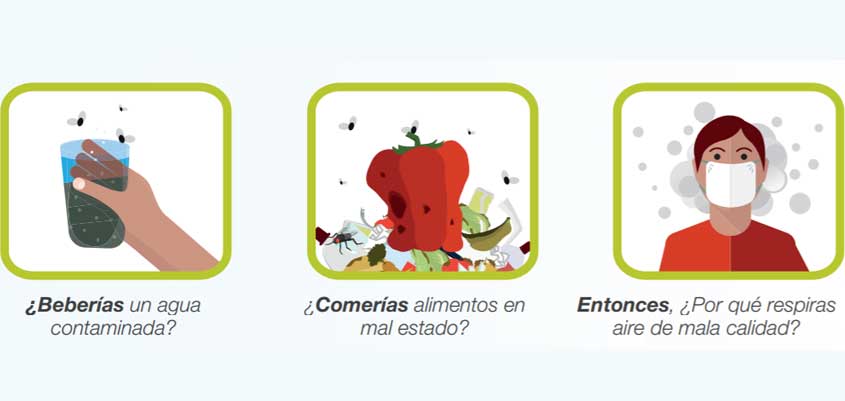
The dangers of pollution go beyond contaminated rivers and climate change. Do you know the poisons that affect our daily lives?
Read moreBioclimatic houses, a form of natural and ecological living

Bioclimatic houses are a way of living in communion with nature, taking advantage of its possibilities. In addition, they enjoy high energy efficiency.
Read moreEnergy-efficient architecture and higher quality

Energy-efficient architecture offers solutions to improve the air in our homes and also reduce electricity consumption.
Read morePassivhaus and the modification of the CTE, a better adaptation

Undoubtedly, Passivhaus is one of the most characteristic labels in terms of sustainable homes. Right now, with the modification of the CTE, its implementation is easier.
Read moreRecommended plants to filter the air
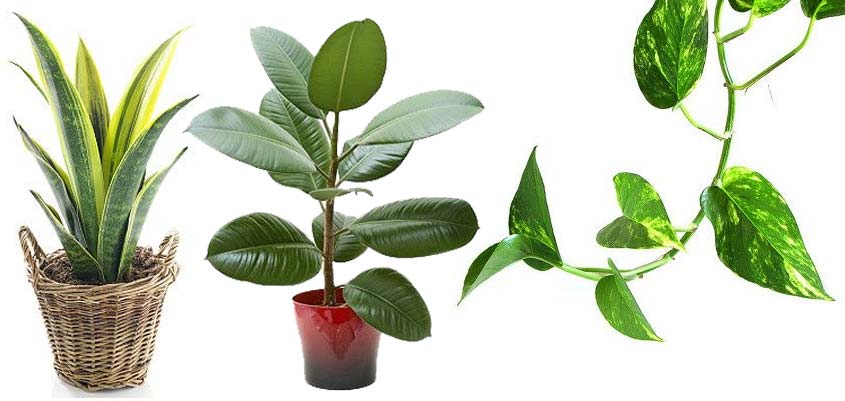
Having plants at home is one of the most natural and ecological ways to decorate our homes. In addition to looking great indoors and on terraces, they are also a way to improve ventilation at home. How do they do it? By purifying and providing us with better air quality to breathe.
Plants ventilate homes thanks to their innate capabilities and, not only that, they are a way to reduce heat in summer. For example, if placed in front of a window, they can reduce the temperature of the air entering by up to 5%.
All this gives us strong reasons to put plants at home to improve ventilation. With them, we will breathe better, clean the environment of impurities, and even make temperatures more bearable.
However, not all plants are the same for purifying the air. At the end of the last century, the American space agency NASA conducted a study to find out which plants are most suitable to improve air quality. The idea, of course, was to have them in a closed space like that of a spacecraft. Nowadays, the organization states that the results remain valid.
To know which plants are the best for purifying the air and breathing better in our homes, we must consider which pollutants are the most common and which the plants are tasked with filtering. NASA estimates that these include benzene, xylene, trichloroethylene, ammonia, and formaldehyde, all present in common situations.
However, before knowing which plants are recommended to improve ventilation, it is important to keep in mind something reiterated by air purification experts: the main thing is to have a variety of plants, as some eliminate specific chemical substances while others focus on different pollutants.
Which plants to choose for purifying the air?
Some of the plants we can choose for better ventilation in our home and to increase the quality of our air are very easy to obtain. Some of them are widespread and can be easily found in any specialized store.The first recommended plant for improving the air is the potus variety, also known as pothos, and whose species is called epipremnum aureum.
The origin of the potus is Southeast Asia and, in addition to its beneficial properties for cleaning the environment, it is capable of bringing life to any home. Additionally, it is very easy to find and adapts easily to many temperature ranges. It maintains well at temperatures between 17°C and 30°C, making it perfect for indoors. Furthermore, its maintenance is minimal. It only needs to be watered from time to time, when it looks drier. Its leaves are evergreen, so they do not fall in autumn.
The potus can absorb formaldehyde, xylene, and benzene. It is ideal for placement indoors, especially in low light areas. It can be placed in the bathroom.
The next plant you can use is the peace lily (spathiphyllum), also known as the peace flower or the wind candle. A species that can also survive with very little light and very little water, although it is necessary to keep it away from drafts, making it ideal for home placement.
The peace lily grows at temperatures above 18°C, so it is necessary to keep it indoors, and they are very long-lived plants. Additionally, it can reduce the levels of benzene, xylene, trichloroethylene, ammonia, and formaldehyde in the house.
The third recommended species is the plant variety raphis excelsa, more commonly known as the Chinese palm or bamboo palm.
As its name suggests, it comes from Asia and is a plant that, with enough space, can reach three meters in height. Its beneficial properties for cleaning the air are based on its ability to reduce levels of formaldehyde, xylene, and ammonia.
Due to its size characteristics, it is better to place this plant in a terrace, in a large pot. On hot days, it should be watered daily.
Another plant very beneficial for purifying the air is the mother-in-law's tongue or snake plant (sansevieria trifasciata), a variety widely used in interior decoration that also survives very well under adverse conditions. Additionally, it can withstand extreme temperatures, ranging from -5°C to 40°C, as long as these maxima and minima are not constant. Installed in our homes, it is capable of eliminating benzene, xylene, toluene, trichloroethylene, and formaldehyde.
The fifth species of plants to ventilate the home is the ficus robusta, also known as the rubber tree. It is an ideal plant for removing formaldehyde from the air, but it should be noted that it can grow very quickly in a few years, so it needs space. Similarly, it is very resistant to diseases and improves humidity in the home. Therefore, along with the previous ones, it is a great option to naturally ventilate our homes. Read more
Can a country produce all its energy renewably?

Portugal has managed to produce all its energy cleanly at some point, without relying on fossil fuels. Could the future be that of sustainable countries?
Read moreEnergy rehabilitation for the cities of the future
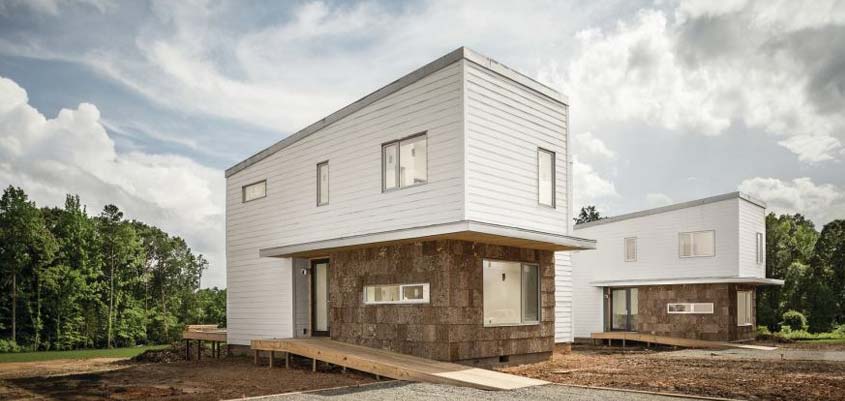
Many of our homes are not prepared for the new regulations on electricity consumption or air conditioning. That is why energy rehabilitation can be key in the cities of the future.
Read moreGreen mortgages for efficient buildings

Green mortgages have better conditions and discounts than normal ones. This is because improving the consumption of our homes is compensated.
Read morePassivhaus Solutions to Stop the Advance of Radon Gas
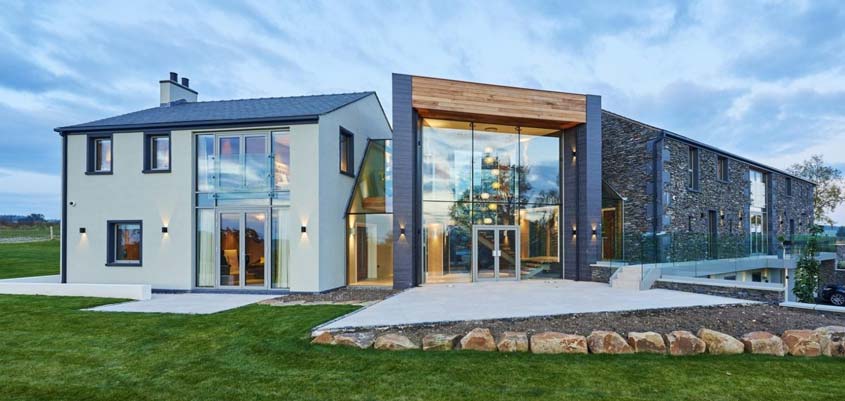
The advance of radon gas in Spain is a very old danger but until recently was a great unknown. Passivhaus alerts us to its presence and offers various solutions.
Read more