Requirements of the RITE regarding ventilation
Indoor air quality
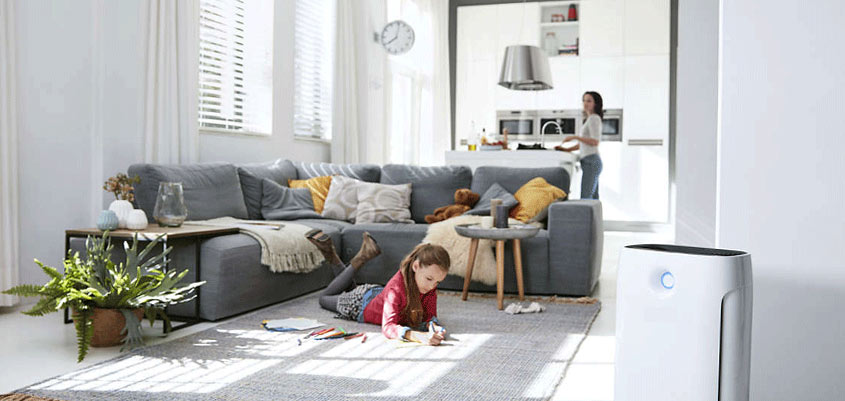
Most of the time we are unaware that the indoor air of the buildings we inhabit is between 2 and 5 times more polluted than the outdoor air. This situation is worsened by the fact that people spend more than 90% of their time in indoor spaces, whether at work or in our homes. Therefore, it can be stated that our exposure to environmental pollutants does not occur on the streets but in indoor spaces. Fortunately, the quality of indoor air is a problem that has a more straightforward, viable, and cost-effective solution than addressing the serious situation suffered by many people living in the world's large cities due to air pollution.Requirements of the RITE regarding ventilation
Since the 1970s, buildings have become increasingly airtight with the goal of enhancing energy savings. As a result, legislation began to be established in many countries to ensure acceptable levels of sanitation in the air we breathe every day in these enclosed spaces.Currently, at the national level, both the C.T.E.-HS 3 (Indoor Air Quality) and the RITE, in its latest update in 2013, require a air quality determined by the type of building: the air must be of optimal quality (IDA 1) in hospitals, clinics, laboratories, and daycare centers. It will have good quality (IDA 2) in offices, nursing homes and student residences, reading rooms, museums, courts, classrooms, and heated swimming pools. The air can be of average quality (IDA 3) in commercial buildings, cinemas, theaters, assembly rooms, hotels, restaurants, cafes, bars, party halls, gyms, and sports centers.
To achieve these standards for air quality, the RITE demands specific renewal levels for each type of air, as reflected below:
- IDA 1 20 dm3/per person
- IDA 2 12.5 dm3/per person
- IDA 3 8 dm3/per person
- IDA 4 5 dm3/person
- ODA 1: clean air that may temporarily contain solid particles (e.g., pollen).
- ODA 2: air with high concentrations of particles
- ODA 3: air with high concentrations of gaseous pollutants
- ODA 4: air with high concentrations of gaseous pollutants and particles
- ODA 5: air with very high concentrations of gaseous pollutants and particles
- AE 1 (Low level of pollution): air coming from premises where the most significant emissions of pollutants originate from construction and decoration materials: offices, classrooms, meeting rooms, and commercial premises.
- AE 2 (Moderate level of pollution): air from premises with more pollutants than in the previous section: restaurants, hotel rooms, changing rooms, bars, and storerooms.
- AE 3 (High level of pollution): air coming from premises that produce chemical products, humidity, etc. Included in this section are restrooms, saunas, kitchens, chemical laboratories, and printing houses.
- AE 4 (Very high level of pollution): air that contains odorous substances and pollutants harmful to health. Included in this section are parking lots, food waste storage, and chemical laboratories.

Siber Ventilation
Related posts