How much can a sustainable house save?
The future of construction is linked to energy efficiency, this is a fact that does not go unnoticed in the construction sector. Besides the necessary legislation oriented towards this, it is also due to the public's awareness in general. The increase in energy and electricity costs is significant enough for users themselves to seek more economical alternatives. This explains the rise of different forms of ecological homes.
However, what can we understand by ecological homes? Although there is no specific concept - since there are different types of sustainable housing - it can be said that an ecological house is one that achieves optimal living conditions with minimal energy consumption. Many factors must be considered, from the simple orientation of the facades when building the house to the land or nature surrounding it. What is essential is that these green homes have a construction model very different from the usual.
As we have discussed, there are many models of ecological houses. From those certified by labels such as Passivhaus or BREEAM to considering the imminent Nearly Zero Energy Buildings or bioclimatic homes, which have a greater connection to nature. The particularities of each of them focus, for example, on the materials used in construction or their respect for nature, beyond energy consumption. But what savings can they generate for users?
We could say that it is possible to achieve up to 90% energy savings thanks to an ecological house. This has been demonstrated by the Korean company LG, which has presented a bioclimatic home capable of cutting energy expenses by up to ninety percent.
However, the project created by LG is novel and very technological. If we refer more to reality, we could say that the ecological houses are capable of saving up to 80% of the energy that a home would require in normal situations. A figure that is already very interesting, as it is estimated that the savings scale could be between 50% and 80% depending on external factors - for example, poor weather conditions - but always getting closer to that 80%.
More interestingly, to achieve that enormous energy savings, the construction costs do not have to be very different from those needed for a common home. In fact, ecological houses can even cost less to build than a normal one. The requirements for these sustainable homes are more focused on the orientation of the building, the use of specific materials, and greater architectural study.
The popularization of ecological houses would be great news for life in cities and also in the rural world, as it is indoors where the highest level of pollution occurs, at least in urban centers. Precisely, LG invests a lot of capital in green housing and in its research because they believe it must be the future of construction.
Characteristics of an ecological house
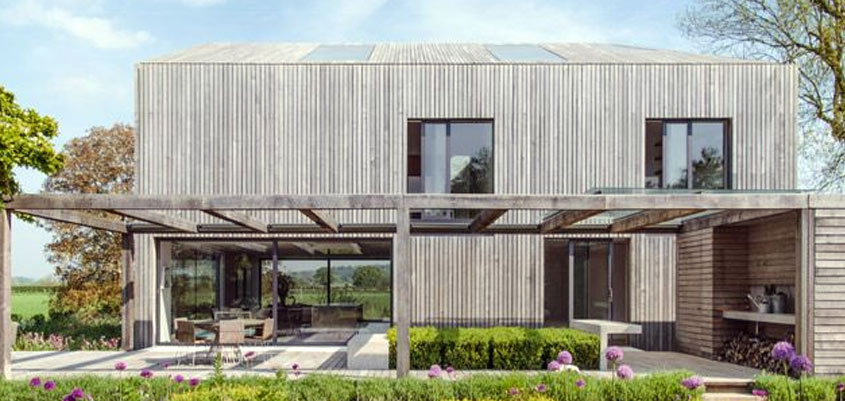
The first differentiation we need to make in ecological houses is whether they take the environment into account during their construction or whether they only reduce energy consumption. In reality, those that do are considered bioclimatic houses. They are in greater communication with the environment and boost that all constructive elements are obtained from nearby and 100% sustainable sources.
But houses that focus on energy saving are also ecological. The main features must be:
- They must achieve great thermal insulation. The walls must be sealed and avoid all leaks. This achieves greater comfort and especially temperature changes.
- The orientation is extremely important. Thanks to a sun orientation, climate control is much easier to achieve by storing sunlight. Some materials have thermal inertia to release heat during the night.
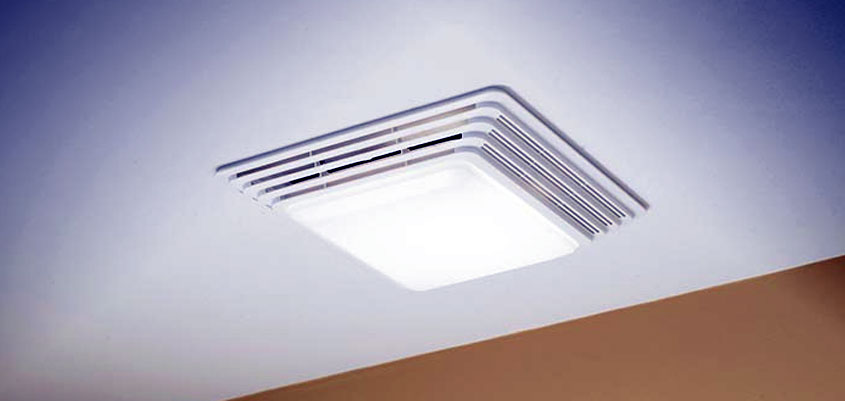
- Of course, ventilation is essential in any ecological house. Aerothermy and geothermal can help achieve greater savings, and with a double flow mechanical ventilation system, it is also possible to introduce warm air in winter and cooled air in summer.
- Normally, ecological houses have efficient sanitary water mechanisms. The most common is rainwater harvesting for use in sinks.

Siber Ventilation
Related posts

Constant flow ventilation systems, how do they work?