
How does climatology affect mechanical ventilation?
No one can ignore the importance of climatology in the home. In coastal areas, for example, spring and autumn can be quite bearable indoors, while if homes are not prepared, it is easy to suffer through summers and winters. But the influence of the climate goes much further, and climatology in ventilation affects how our mechanical systems operate.
Historically, buildings were constructed without much consideration for the climate or how the weather would affect them. Nowadays, thermal insulation is one of the maxims in modern construction, not only due to awareness but also because of the mandatory Technical Building Code. But beyond that, it is necessary to control climatology to know how it will affect buildings and mechanical ventilation systems.
Before constructing a building, where can we consider the climatic conditions related to properties?
- Orientation to the sun. Depending on which way the construction faces, it will have different conditions. We can take advantage of this in winter for natural heating or consider it in summer so it does not affect the interiors.
- Wind in the area. Ventilated roofs and facades can cool in summer and heat in winter. If there is more wind, this natural climate control mechanism can work better.
- Humidity. The amount of water vapor in the air is a critical factor in indoor temperatures and also in comfort at home.
- Temperatures. If it is a cold or warm climate, the installation in air conditioning and ventilation systems will be different.
With a dual flow ventilation system, we can renew the air indoors with filtered, higher quality and tempered air, which avoids using traditional air conditioning methods. It is possible to enjoy warm air in winter and cooled air in summer at no cost, beyond the minimum consumption of the fans. But external climatology individually affects each project, so the meteorological conditions must be considered particularly.
How to control climatology in the installation of a ventilation system?
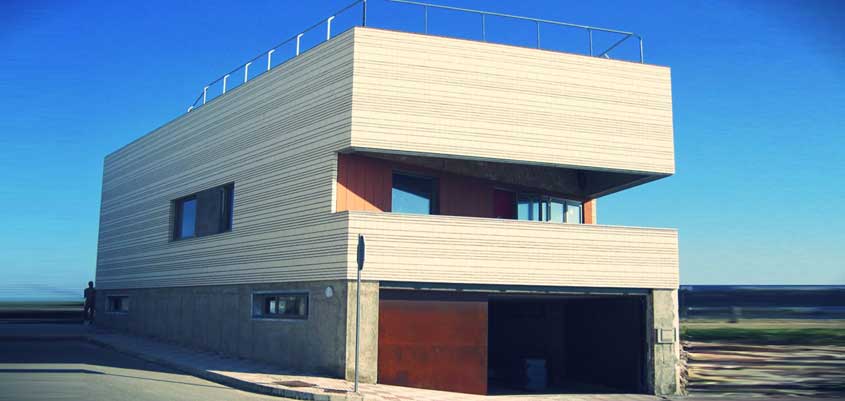
A great example to consider is the 1st Passivhaus in extreme climate of Spain. In this project, a passive house was achieved with a dual flow ventilation system that required no energy for cooling during the hottest summer in Spain.
For this, factors such as orientation, ventilated facades, and dual flow ventilation were taken into account. But to adapt to the climatology of each place, we should primarily consider the following actions:
- Movement of air with temperature. Warm air tends to rise to the ceiling, while cooled air descends to the floor. With traditional air conditioning systems, it is normal to suffer from cold feet and a hot head in winter, and vice versa in summer. This phenomenon can be utilized with ventilated facades.
- If the wind is strong enough in the area where the building is constructed, hybrid ventilation systems can be considered, which combine mechanical solutions with natural ones. If the wind is strong, it can be utilized to generate pressure differences between the facade and an exhaust outlet on the roof to facilitate natural ventilation.
- Humidity is another factor to be considered. Due to water vapor in the air, warm environments are much harder to bear, and in winter, the cold can feel worse. If we eliminate humidity with the ventilation system, then we could lower temperatures and increase comfort in the home. It is possible to use dehumidifiers in buildings located in coastal or high humidity areas.

Siber Ventilation