Thermal stress in the office, problems due to poor workplace climate control
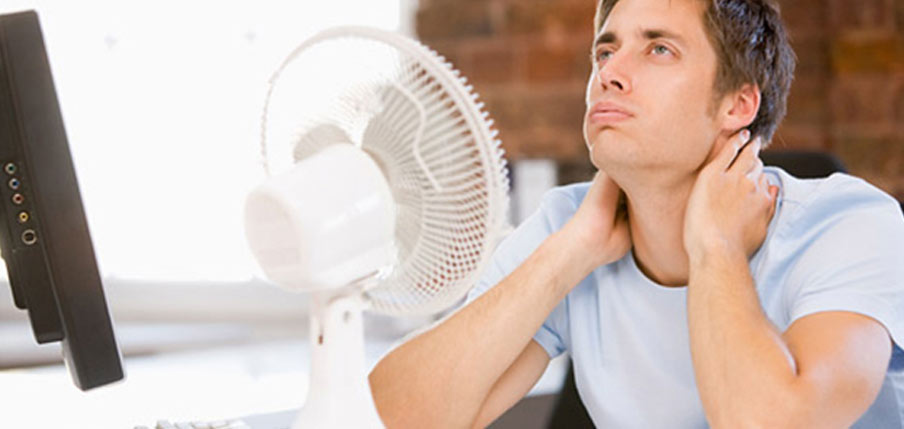
Thermal stress is defined as the discomfort produced by an excess of heat at work, whether outdoors or indoors. It can be due to extreme environmental conditions outdoors or also due to poor climate control. And it can occur in summer if outdoors or in winter if indoors. Technically, this phenomenon is known as the "excessive efforts of the body's mechanisms to maintain an internal temperature at 37°C," among which are sweating and discomfort.
It is very important to thoroughly understand the effects of thermal stress, as it notably influences health and professional performance, as well as the comfort of individuals. Above all, we can mention two types of thermal stress:
- One in which the external weather conditions influence. For example, working outdoors in summer with clothing that has low breathability or performing some physical effort.
- We can also speak of thermal stress when having conditions of excessively high heat indoors. This can be due to a deficiency against heat in summer or also due to poor use of heating systems in winter. Additionally, in places like factories or poorly ventilated areas, where professional operation raises temperatures.
In the same way, we can say that there are four variables that will influence our climatic comfort and can promote the appearance of thermal stress indoors or outdoors:
- The air temperature. Many times the temperature is measured at a point in a room that is in better conditions. Indoors, the ideal values in winter and summer would be 22°C and 24°C respectively.
- Relative humidity in the environment. If it is summer, the values of water vapor in the air should be between 45°C and 60°C. If it is winter, the range is from 40°C to 50°C.
- The temperature of the objects around us and also of the walls, ceilings, and floors. For example, in an office with many machines, it will be easier for a sensation of little comfort to appear due to the heat produced. Other aspects, such as the occupancy of a room, should also be taken into account.
- The air speed. This is why the use of fans can make us feel a better thermal sensation.
It is very important to control mechanical ventilation and climate control indoors to prevent issues related to thermal stress indoors even in winter. Is it too hot in the office during the winter months? That can also create a lack of comfort affecting health and productivity.
Thermal stress due to poor climate control
Many people complain that their offices are too cold in summer and extremely hot in winter. Interestingly, the opposite of what happens outside. This usually happens due to an overuse of climate control systems, which can be a problem for those inhabiting those spaces. In winter, it is possible to suffer from thermal stress in offices.
The Thermal Installations Regulations in Buildings (RITE) warns that in summer we should have temperatures of 22°C indoors. However, for many people, reaching a much warmer sensation is considered well-being that it truly is not. Increasing the use of heating to summer temperatures is not only deficient regarding energy efficiency - with a large expenditure in supplies - but it can produce discomfort in workers and cases of thermal stress. For example:
- Headaches and a feeling of heaviness.
- Drowsiness and lack of enthusiasm for rational activities.
- Slowdowns in daily activities.
- Worse work performance.
- Dizziness and a feeling of disorientation.
- Depression and emotional lows in advanced cases.
For all these reasons, it is worth trying not to overuse heat indoors even in winter. Normally, much of the problems arise from an indiscriminate use of traditional climate control systems.
Heating emits hot air that tends to accumulate in the upper areas of rooms, heating the heads of those present. In contrast, the feet tend to be cold. For comfort at home, it is much healthier to have warm feet and a cold upper trunk, especially the head.
Instead of emitting heat through heating devices, to mitigate the negative effects of climate control it is better to have rooms with greater airtightness and that have a double flow mechanical ventilation system to prevent thermal stress.

Siber Ventilation
Related posts