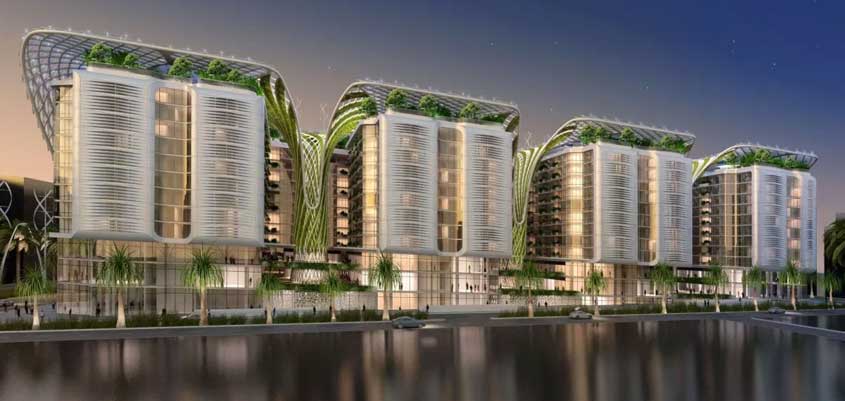
Energy efficiency in buildings, how to achieve sustainable construction?
The future of construction is sustainability. Energy efficiency in buildings is a necessary reality, as most of the energy consumption in our cities occurs indoors, about one fifth of the total.
Furthermore, it is estimated that in Spain there are more than 13 million homes that do not meet the minimum energy efficiency standards. Therefore, starting in 2020, it will be mandatory for all constructions to aim to be Nearly Zero Energy Buildings. However, how do we achieve more efficient buildings?
On the one hand, thanks to Nearly Zero Energy Construction (ECCN), within a little over a year, there will be no need to worry about the construction sector. By then, European measures will be implemented so that new construction achieves homes and professional environments that meet the following conditions:
- Ecological lighting. Beyond energy-saving bulbs, ECCNs must seek better harnessing of solar light to avoid reliance on artificial solutions.
- Passive cooling in summer. It is necessary to prevent heat from entering the premises during the warmer months. For this, ventilated roofs and other options can be used, which do not require the use of air conditioning units.
- Thermal insulation to prevent cold from entering in winter. Tightness in buildings ensures that heating is not needed during the coldest months.
- Photovoltaic panels on the roof to supply other climate control systems, if necessary at specific times.
- Mechanical ventilation systems. They are key to energy efficiency in buildings, as one third of the accepted consumption in this type of building is due to ventilation. Dual flow ventilation solutions are capable of not only ensuring cleanliness in the premises but also providing heating in winter and cooling in summer thanks to their exchanger.
Efficient rehabilitation is somewhat more costly than implementing the same measures when constructing a new building, but it results in significant savings on utility bills, thus compensating for the initial investment. However, how can we determine the level of energy efficiency in existing buildings?
To do this, the energy consumed over a year under normal living conditions must be calculated. Taking into account the use of heating, hot water, lighting, and ventilation systems, if available. The following data must be provided:
- Annual CO2 emissions, expressed in kg/m2 of the building's usable area.
- Annual primary energy, in kWh/m2, also from the usable area of the building.
How to achieve energy efficiency in buildings?
If we find ourselves with an old building, implementing measures for energy efficiency will be somewhat more complicated, but that does not mean it should be neglected. Unfortunately, this is what happens in many Spanish homes, where it is very cold in winter and too hot in summer, due to their deficient level of efficiency.This can lead to situations of energy poverty, even in stable work situations. What can we do?
- Replace traditional climate control systems, such as air conditioning and heating, with an efficient ventilation system.
- The building's airtightness needs to be improved. From the walls and windows to the doors and roof. Shades and ventilated roofs can help a lot.
- It is necessary to use mechanical ventilation systems for air renewal.
- Make use of ecological energy sources, such as photovoltaic panels, whenever possible.
- All lighting must be energy-efficient.

Siber Ventilation