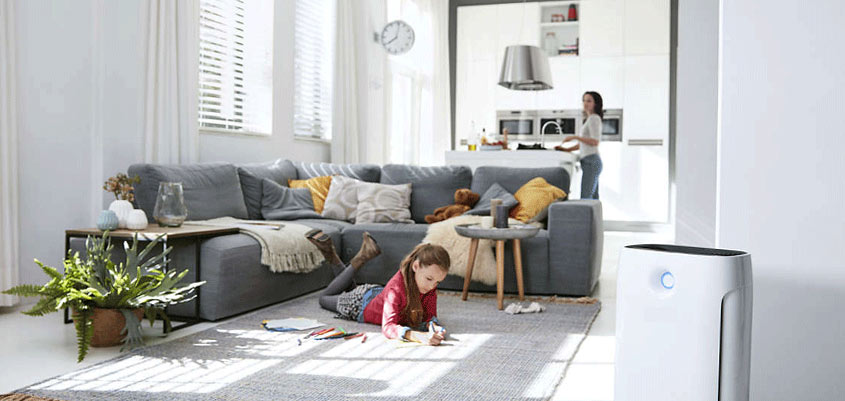
Do you know how thermohygrometric conditions affect us?
Thermal comfort in workplaces
In workplaces, light and sedentary activities are usually performed. It is relatively common to experience a lack of thermohygrometric comfort, due to inadequate levels of humidity and temperature. In this regard, Royal Decree 486/1997 of April 14 establishes limit values for humidity, air velocity, and temperature to avoid discomfort for workers. However, there are other objective factors unrelated to each person's individual perception, such as clothing or mean radiant temperature that also influence the achievement of those levels of comfort.With the entry into force of the Technical Regulations for Thermal Installations in Buildings (RITE), in 2007 the PPD index was introduced as a parameter whose calculation allows us to determine appropriate thermal comfort levels. The PPD, as well as the PMV (its abbreviation in English), are indices that guarantee the overall thermal well-being of the body for sedentary and moderate work performed in enclosed spaces. When both indices are adequate, it is considered that the comfort of 90% of the workers in a large group is achieved. In this case, it is assumed that they all work under identical environmental conditions, dress similarly, and perform the same physical activity.
The perception of ambient temperature is a subjective aspect, especially when intermediate values are presented. When it is very high or very low, the sensation of heat is the same for the whole group. It is very common for thermal discomfort to originate from drafts, temperature differences at different heights concerning the body, or very high or very low temperatures on the surface of the floor.
The Fanger method is one of the most commonly used systems to evaluate whether the thermohygrometric conditions of an enclosed space, such as offices, are appropriate. It is an objective method that allows for the numerical calculation of the PMV and PPD indices, by measuring a series of parameters such as air temperature, mean radiant temperature, air velocity, relative humidity, clothing insulation, and the metabolic rate of the work performed. Fanger used his method with a group of 1,300 people employing a scale with seven levels from +3 (very hot) to -3 (very cold).
Thermohygrometric Conditions
The Technical Code of Building in its basic document HS 3, "Indoor Air Quality," specifies the ventilation systems that must be used to ensure acceptable humidity and air quality conditions. These systems must be hybrid or mechanical ventilation and must allow air to circulate from dry areas to humid ones. This allows for uniform humidity levels throughout the home.The thermal comfort is associated with a series of sensations that a person experiences upon contact with the thermal environment inside a building. Therefore, our body constantly interacts with its surroundings, translating those sensations into well-being or discomfort. Achieving comfortable temperature in our homes and workplaces goes beyond obtaining a pleasant sensation. The World Health Organization associates the concept of comfort with that of health, defining the latter as “a state of complete physical, mental, and social well-being of the individual and not merely the absence of affections or diseases.”
The comfort temperature is closely related to a series of factors that affect our home's installations and the efficient use we make of them. The heating system serves to maintain the comfort temperature in indoor spaces when the outdoor temperature is significantly lower in winter. With an adequate level of thermal insulation in the building's exterior envelope, it is possible to maintain a constant comfort temperature. Traditional systems like radiators or heat pumps have the drawback of accumulating heat in certain areas of the home, conditioning the rooms. Our bodies are particularly sensitive to thermal variations, so the sensation of comfort we obtain with these systems is not entirely optimal. Conversely, air movement is a factor that significantly contributes to enhancing our sensation of comfort. Systems such as ceiling or floor heating use the upward movement of warm air to ensure that the interior temperature of the home is always accompanied by a sensation of thermal comfort.
Ventilation systems have a direct impact on thermohygrometric comfort conditions. Traditionally, natural ventilation systems have been responsible for renewing the contaminated air inside homes. However, this system does not ensure acceptable energy efficiency levels, as ventilation causes abrupt temperature changes, leading to increased energy consumption. The ventilation systems that have been developed in recent years allow for indoor air renewal without reducing the home's energy efficiency. The mechanical dual-flow ventilation introduces outdoor air at the same temperature as that of the air inside the rooms, thanks to the incorporation of a thermal exchanger capable of transferring heat from the contaminated air flow extracted from the home to the clean air flow pushed in from the outside. To do this, it extracts heat from the indoor air that is removed and transfers it to the outdoor air that enters the home at 21 °C, since the outdoor air in winter is at a much lower temperature. This same process, but in reverse, is repeated in summer.


Siber Ventilation
Related posts

Why is mechanical ventilation necessary in homes?