How has housing improved in the last 20 years?
It is very common in the media that, when talking about the improvements in housing in recent years, they always focus on the economic aspect. Real estate investment and the fluctuation of prices. But that is only a detail of a sector - the real estate sector in addition to construction - that has undergone significant changes in recent times. Especially in the past two decades.
Ten years ago, the real estate sector wobbled and suffered a crisis that greatly affected Spain. In this decade, however, construction has managed to adapt housing to a time more in line with what we are experiencing. There is talk of market revaluation, and even new bubbles, but we cannot overlook the significant changes in properties over these years.
Energy efficiency, airtightness, efficient ventilation, low-cost climate control, and of course, the Nearly Zero Energy Building. All of this within a framework of ecology that has transformed the sector, under the guidance of the Technical Code of Construction and its new guidelines. Nowadays, it is no longer enough to build; it must be done efficiently.
We can talk about two main changes in the way we conceive properties. The first is this decade that began with the start of the crisis. During this time, the housing sector has bet on added value in how to build and in cutting the huge expense of buildings.
But we cannot ignore the decade before the crisis, when the construction boom and the high demand created a new panorama, which was also reflected in the transformation of properties. So, considering this new panorama, what housing improvements have been experienced in the last 20 years?
Main improvements in housing in the last two decades
Housing has been transformed for the better in the last two decades, and this is partly due to the slowdown in the sector, which has forced improvements in efficiency and offered greater added value. For example, in 2008, about 50,000 thousand tons of cement were consumed to supply the brick economy. Currently, this figure has stabilized around 10,000 thousand tons, which is much more reasonable.
Also, these days more houses are being sold, and more mortgages are being offered - since 2015, there have been annual increases of up to double digits -, including green mortgages, a type of mortgage loan that becomes cheaper if high energy efficiency constructions are chosen.
Because, without a doubt, the big change has been the bet on energy efficiency in construction. This is partly because the consumer has also redefined the role of their home. Previously, housing was simply where one resided. Today, with the increase of time spent indoors, comfort has surged. And in this case, thermal comfort is paramount. Partly because it makes us feel better at home, and also because of the benefits it brings to our health.
What are the main changes and improvements in housing in these decades?
- There is a focus on energy efficiency rather than on cost reduction. It is no longer enough to achieve the lowest cost; it is necessary to ensure the sustainability of buildings. This, in part, has come about due to government concerns and, in Spain, due to CTE regulations. The airtightness in buildings has reduced the required energy.
- The focus on indoor health is much greater today. It is no longer enough to have natural ventilation; new buildings now need at least a hybrid ventilation system. This allows for air renewal, preventing humidity or stale air from settling in our homes. These mechanical ventilation systems also help improve indoor temperatures.
- New buildings are moving away from small spaces, tiny elevators, and a scarcity of common areas. Many buildings now opt for spaces for owners that allow them to depend less on outdoor areas. Study rooms, playgrounds, and even pools are more common in new buildings.
- Regarding energy efficiency and sustainability in construction, buildings have started using energy mechanisms and resources from ecological sources, such as rainwater collection for sanitary use or harnessing solar energy. Even more advanced means, such as geothermal energy or aerothermal energy.
- Spaces and rooms have gained in optimization, especially in large cities and denser urban areas. This optimization not only offers more livable space in the same square meters -eliminating dead zones- but also improves energy efficiency by avoiding hard-to-climate spaces. In this aspect, the position of the building relative to the wind or sun is now considered more than ever to improve energy consumption, thanks to the use of natural resources.
- Many of the traditional construction materials that were polluting, not eco-friendly in their extraction, or that did not withstand the test of time have been abandoned. Regulations have greatly helped in this aspect, as intervention from public policies was necessary.
- Design has become a fundamental piece in every home, as well as in everything that surrounds us. It is no longer enough for something to be comfortable or functional; it has to be pleasant to convince buyers.
Energy efficiency in current construction
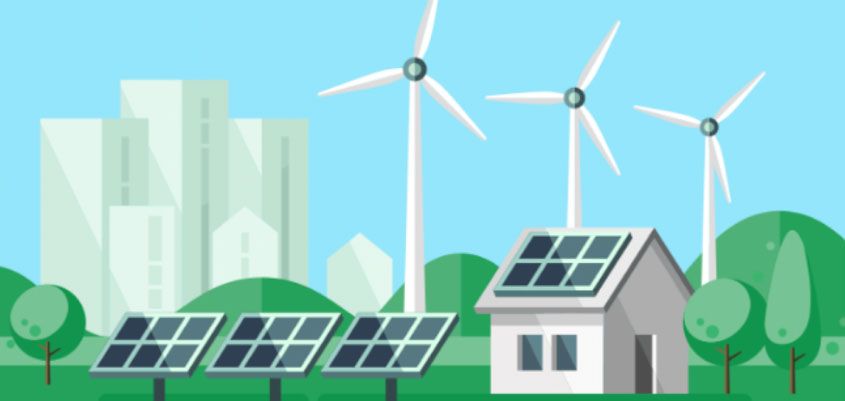
The housing improvements in the last 20 years are primarily notable in the area of energy efficiency and consumption of utilities in the home. Partly, this is necessary as energy poverty has become an established reality. Not only due to the lack of economic resources but also due to the significant increase in electricity and gas tariffs, which can cause any non-sustainable home to end up in an emergency situation due to high consumption.
It should be noted that changes in energy efficiency are linked to health in buildings, and all these have been driven in the Technical Code of Construction through the Basic Document HS3. In it, the necessary measures for all new buildings or renovations to adapt to current needs are gathered.
What are the main improvements in energy efficiency in buildings?
- The implementation of mechanical ventilation is key for both indoor health and reducing energy costs. Air renewal must be carried out through mechanical systems that operate continuously and eliminate poor quality air stored in buildings. Air intake can be either natural or mechanical.
- The double flow mechanical ventilation system is one of the great advances in modern construction. In this case, all air renewal, both intake and extraction, is performed mechanically and automatically. Thanks to sensors and meters, the system knows when to renew the air and what intake and exhaust flow it must guarantee. Thus, humidity, particles, and pollution are eliminated in the right measure. Thanks to air filters in the intake duct, the introduced air is of high quality, healthier than that from the street.
- Alongside mechanical ventilation is heat recovery, using units capable of converting cold outside air into heat, or vice versa. In this way, most heating or air conditioning needs are met, minimizing the use of traditional heating or air conditioning systems.
- The great ally of energy efficiency and mechanical ventilation is building airtightness. Currently, buildings must be much more hermetic, both in doors and windows and in walls and ceilings. This prevents outside air infiltration and easily maintains the ideal temperature indoors. This also makes the use of a ventilation system more necessary than ever to guarantee health.
- On the other hand, automatic sensors and meters have become a common practice to ensure sustainable comfort. There are those that activate air renewal systems through presence detection and those that can measure the humidity percentage in a room and act accordingly.
- Just as windows and doors have become much more airtight and hermetic, light bulbs and other electrical or lighting devices also consume much less. There is also a push for better orientation towards the sun and windows that allow better light and heat passage when necessary, serving as a barrier against weather conditions in summer and winter.

Siber Ventilation
Related posts

Constant flow ventilation systems, how do they work?