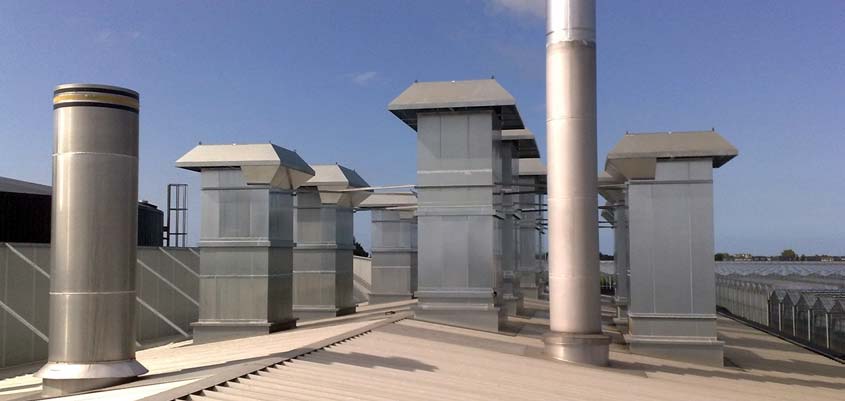
Shunt y caudal de ventilación, ¿cómo se combinan?
El shunt es un elemento muy importante en el desarrollo de un proceso de ventilación, si bien es algo que resultaba mucho más común en la edificación previa al CTE y es habitual en los edificios antiguos. Podemos definir el shunt de ventilación -también conocido con el nombre de hueco de ventilación- como el gran conducto en los edificios que se bifurca en varios conductos pequeños que van a parar a cada una de las estancias, y cuyas funciones eran las de evacuar fuegos y crear una zona de paso de aire gracias a la ventilación natural. Es por ello que es importante conocer cómo se combinan shunt y caudal de ventilación para poder garantizar la salubridad en los edificios.
Gracias al shunt se podía interconectar varios conductos sin el riesgo de que el aire renovado procediera de otra estancia. El aire que entra a través de esta red de conductos a una estancia siempre es del exterior, nunca por ejemplo podría llegar a un dormitorio el aire de un cuarto de baño de otro piso. Era el sistema más común de ventilación natural hasta que el Código Técnico de la Edificación impuso otras directrices para garantizar una mejor salubridad en interiores.
En la actualidad, el shunt solo se podría utilizar en caso de que se apoyara por un sistema de ventilación híbrido que combinara esta forma de renovar el aire con un sistema mecánico. Pero no puede ser el único mecanismo de renovación del aire, ya que en el Documento Básico HS3 se especifica que para garantizar la necesaria salubridad en interiores todos los edificios han de disponer de un sistema de renovación del aire mecánico.
Entonces, ¿qué relación tienen caudal y shunt de ventilación? Básicamente, que en los edificios viejos es preciso calcular si la ventilación natural ofrece el suficiente caudal a través del shunt, en función del número de estancias a ventilar.
El caudal de aire en el shunt no será estable, ya que se trata de ventilación natural. Se debe analizar la meteorología del lugar en concreto, si bien los datos se tendrán que cotejar con el tipo de shunt y los diferentes pasos del aire. ¿Qué resultado nos dará el cálculo de la fórmula de shunt y caudal? Ante todo, el volumen de personas que podrán ocupar cada estancia. En cualquier caso ha de garantizarse una alta ocupación.
¿Cómo usar correctamente shunt y caudal de ventilación?
Como hemos comentado, en la actualidad el CTE no recoge información sobre el uso en exclusiva de los sistemas de shunt, si bien puede contemplar los huecos de ventilación en los sistemas mecánicos híbridos.De esta forma, el Documento Básico HS3 de salubridad recoge dicha información en su artículo 3.2.3 sobre conductos de extraccción para ventilación híbrida.
- Cada conducto de extracción debe disponer de un aspirador híbrido situado después de la última abertura de extracción en el sentido del flujo del aire.
- Los conductos deben ser verticales.
- Si los conductos son colectivos no deben servir a más de 6 plantas. Los conductos de las dos últimas plantas deben ser individuales.
¿Qué futuro tienen los sistemas shunt? Sin duda, hemos de tenerlos muy en cuenta en la rehabilitación y no en la nueva edificación, ya que no sería necesario instalarlos en base a la nueva normativa del CTE. Pero de manera sencilla pueden adaptarse los shunt de ventilación a las edificaciones antiguas que dependan de este tipo de ventilación natural. Es posible instalar sistemas de ventilación híbridos de manera poco costosa aprovechando los huecos de ventilación.
Hoy en día, tal y como avisa el CTE es imprescindible garantizar un caudal de ventilación mínimo. Y para ello es necesario un sistema de ventilación mecánico o híbrido. Para lograrlo podemos utilizar la fórmula para calcular el caudal:
Q= V x S
En dicha fórmula, v es la velocidad de paso del fluido a través de una sección S. Siguiendo las unidades del Sistema Métrico Internacional se expresa en m/sg y el caudal Q queda expresado en m³/sg.
Si bien hoy en día los huecos de ventilación no se suelen implementar en favor de los sistemas de ventilación mecánicos, Aun así, pueden reaprovecharse en la rehabilitación para la implementación de sistemas híbridos que combinen shunt y caudal de ventilación y así poder cumplir con la normativa en el Código Técnico de la Edificación.

Siber Ventilación
Entradas relacionadas

¿Por qué es necesaria la ventilación mecánica en las viviendas?

Sistemas de ventilación con caudal constante, ¿cómo funcionan?