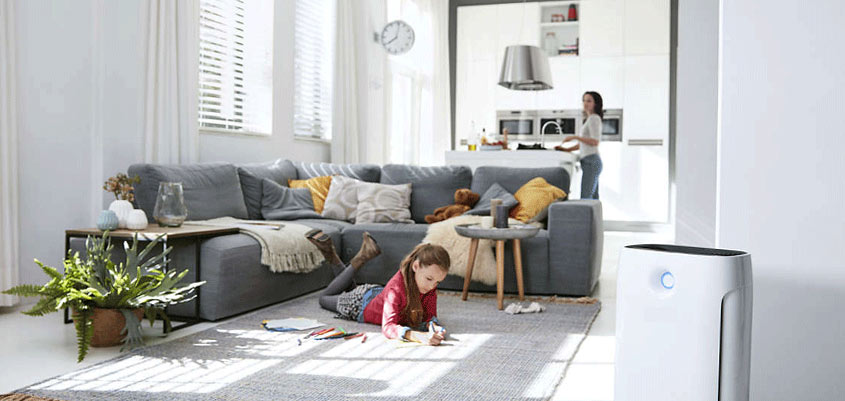
Ventilation systems can prevent discomfort inside a home
How to avoid discomfort through the use of ventilation systems
Ventilating the interior of a home prevents the moisture and harmful substances from accumulating indoors, thus maintaining acceptable levels of health and comfort for individuals. A person exhales about 10 liters of liquid per day and 19 liters of CO2 every hour through breathing. Furthermore, the air becomes contaminated with odors, smoke, formaldehydes, and other substances present in the environment. In a home without adequate ventilation, all these substances remain and accumulate over time, leading to the proliferation of bacteria, mold, and dust mites. These microorganisms cause health issues such as nasal, throat, and eye irritation, mucus, headaches, tiredness, or chronic rhinitis. This lack of healthiness particularly affects children as the accumulation of CO2 above 1,200 ppm reduces learning capacity by 30%.Limiting ourselves to opening a window that does not provide cross ventilation only causes a considerable decrease in indoor temperature, while air quality improves very slowly. There is high energy consumption that is not balanced with an acceptable level of air quality. Therefore, we are only causing high energy consumption and discomfort. The insulation level in Spain until recently was very low. A closed window did not prevent air entry, but rather leaks through door and window frames constituted a "spontaneous" natural ventilation system for homes. However, the new European energy efficiency guidelines have substantially improved thermal insulation levels in walls, windows, and closures. This is a positive fact from an energy savings perspective, but it leads to the accumulation of harmful substances as mentioned earlier in the air of closed rooms. Therefore, better insulation necessarily entails efficient ventilation.
Mechanical ventilation systems. Double-flow mechanical ventilation
Mechanical ventilation occurs through the operation of electromechanical equipment that facilitates a constant and regulated flow of air inside the premises. This air circulation is usually done through a process of mechanical intake accompanied by an extraction process that can be mechanical or balanced. Double-flow mechanical ventilation systems incorporate heat recovery systems. In summer, this system can cool the air coming from outside to introduce it into the home at 22°C, thanks to the extraction of polluted air from the interior. This heat transfer from one flow of air to the other occurs because the two air flows from outside and inside the home never mix. In winter, the process is reversed, so that the air coming from outside is introduced at 19°C. The heat exchanger makes this ventilation system the most efficient as it guarantees appropriate levels of humidity and temperature in addition to significant energy savings.

Siber Ventilation
Related posts

Why is mechanical ventilation necessary in homes?