Bathroom fan to renew air in humid rooms

superadmin
March 26, 2019
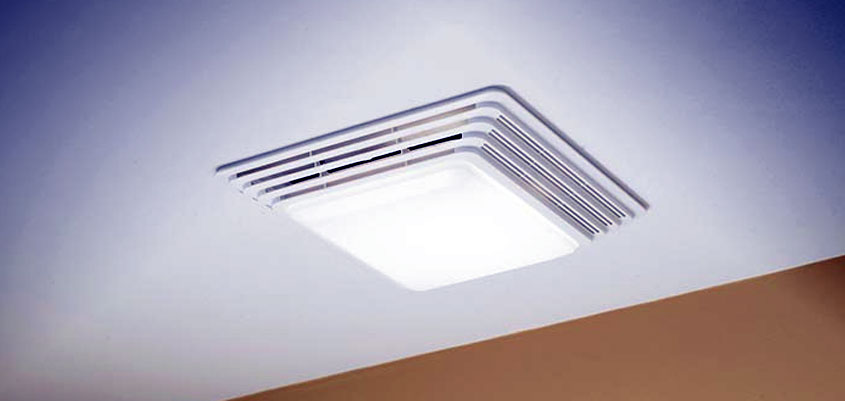
Most bathrooms in Spain do not have windows, especially in older buildings. Thus, the most common solution to extract bad odors and poor quality air is the bathroom fan, also known as an extractor. It is an effective and simple mechanical ventilation solution that allows for better breathing in the home and removes the stale air from one of the humid rooms of the house.
In mechanical or natural ventilation installations, there is a guideline regarding air renewal through extraction and admission. Although historically properties had very little airtightness and outdoor air filtered in, at least it is necessary to introduce and extract air for the needed renewal.
In this way, through the dry rooms, air from outside is introduced, either through mechanical systems -via ducts- or natural solutions, such as opening a window or having ventilation grilles that bring in air.
The humid rooms, on the other hand, are where extraction must take place. This is because they are where the air is most contaminated and because they are areas where there may be excess humidity. For example, the kitchen is one of them, or the area where we do laundry. And perhaps the bathroom is the most important humid room in the home.
For this reason, using the bathroom fan in humid rooms can be one of our greatest allies in achieving quality air indoors.
Thanks to its privileged location -in an area where humidity and many odors originate-, the use of bathroom extractors is essential, and the Technical Code of Building certifies the need to install them in all homes. There are operational and construction requirements so that their use is optimized and serves better to the characteristics of each building. For example, they must be able to operate in very high humidity conditions and be placed where there is the greatest concentration of water vapor in the air.
Characteristics of the bathroom fan in humid rooms
In the case of bathroom fans, other necessary characteristics are:- Automation. The most common way is for them to be activated using the light switch, but it is also common to find motion sensors in, for example, public places. Other options include activation via probes or humidity meters.
- They must guarantee an acceptable noise level. Normally, bathroom extractors can be noisier than other ventilation systems because they will not be on at all times, but they should not be disturbing to the bathroom users. For this, the absence of vibrations is important, as it optimizes operation.
- They must be equipment with sufficient energy efficiency. Fans should be low consumption and offer necessary performance with minimal consumption.
- The protection index (IP) must be IP44, IP65, or IP67 depending on the location zone of the equipment in the bathroom.
- The axial bathroom extractor is installed in short ducts or in direct installations to the facade; it is a less popular solution.
- The centrifugal bathroom extractor is the most common and is installed in places where there is a high load loss in the ducts. With a centrifugal fan, it is possible to use it in long ducts. They are installed where sufficient force is needed to reach the air extraction area.
Motors are usually of low power, between 5 and 10 W if they are 100 mm in diameter. Nowadays, it is easy to find energy-efficient motors in many of the bathroom fan models available on the market, and they are definitely the most recommended. There are also models with backdraft systems, as the problem some old extractors had was that humidity or bad odors returned when the fan was turned off. Due to their simple installation, it is recommended to have at least axial fans in all new construction homes.

Siber Ventilation
Related posts