Ventilation in industrial buildings: regulations and recommendations
The ventilation in industrial buildings is a fundamental aspect. After all, these are workplaces with special needs, which is why they have specific regulations. Below, we will show what they are and provide a series of recommendations to improve air quality in these spaces.
Ventilation in industrial buildings and the regulations concerning it
Undoubtedly, proper ventilation in industrial buildings greatly enables achieving sufficient levels of air quality. When the air is highly polluted, the well-being of the worker can be affected, which ultimately leads to temporary incapacity and long-term health problems.In addition, having a good ventilation system in industrial buildings has many other benefits, such as controlling humidity levels and suspended particles. It also favors the thermal conditioning of the building, thereby reducing air conditioning costs and improving the conditions for workers.
Royal Decree 427/2021
However, the existing ventilation in industrial buildings regulations in Spain is quite limited. The only legislative text that addresses this issue is the Royal Decree 427/2021. Specifically, it states that industrial buildings must have an air renewal of 30 cubic meters per hour (m3/h) for each worker. If it is a space with smoke problems, that figure increases to 50 m3/h.However, these figures seem insufficient, especially when we consider small industrial buildings where there is a large number of workers regularly. In these cases, it is essential to conduct a study to reveal the ventilation needs of the space in question.

Proper ventilation in industrial buildings and recommendations to achieve it
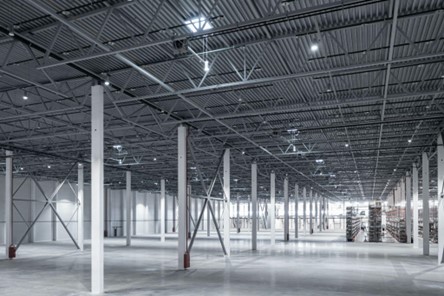
Today, for the calculation of ventilation in industrial buildings, we must use air changes per hour as a measure unit, something that the RD-427 does not do. In other words, the number of times the system can replace all the air contained within the building every 60 minutes.Depending on the characteristics of the building and the professional activity carried out in it, this figure can vary. For example, when we speak of large spaces intended for storing products, four changes/hour are usually sufficient. On the other hand, if the building is small and smoke is present regularly, it is advisable to achieve 10 changes/hour. This way, it is possible to maintain good air quality and the health of the employees.
The design of the ventilation system for the industrial building
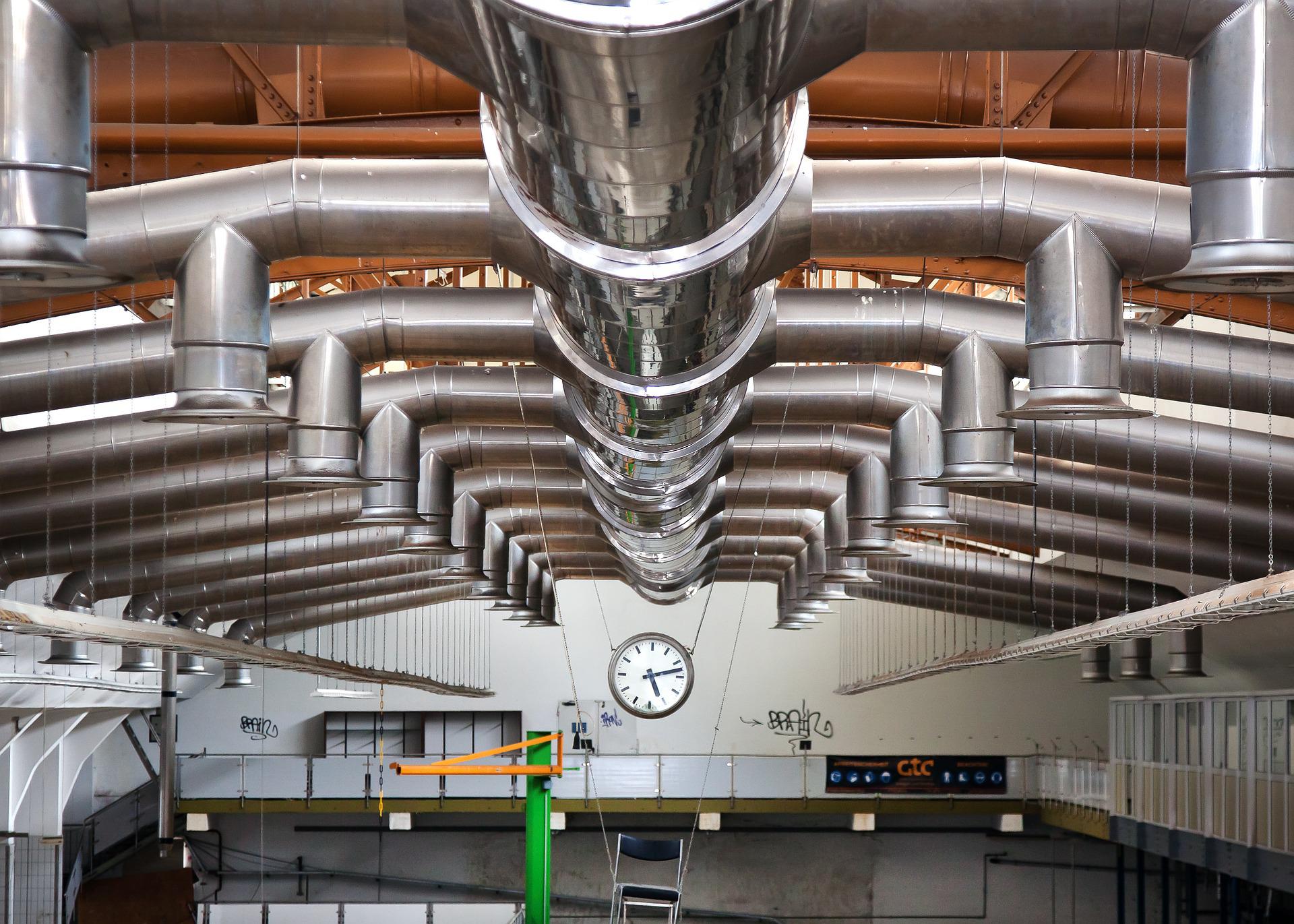
Obviously, industrial buildings have a number of unique characteristics. Therefore, for the ventilation system to function properly, it must be designed and installed with these in mind. We are talking, specifically, about the type of fans needed to achieve the recommended flow rate, as well as the points through which outside air will enter and where the air inside will exit. In this regard, the use of wall-mounted helical exhaust fans is often the most appropriate option.In summary, just as there is a regulation governing air quality in the interiors of multifamily properties, there is also one focusing on ventilation in industrial buildings. However, as we have seen, in many cases, it is quite inadequate. To achieve a constant flow of good quality air, it is essential to conduct a study to determine the necessary number of complete changes per hour and, consequently, design a customized system according to the characteristics of the premises.

Siber Ventilation
Related posts