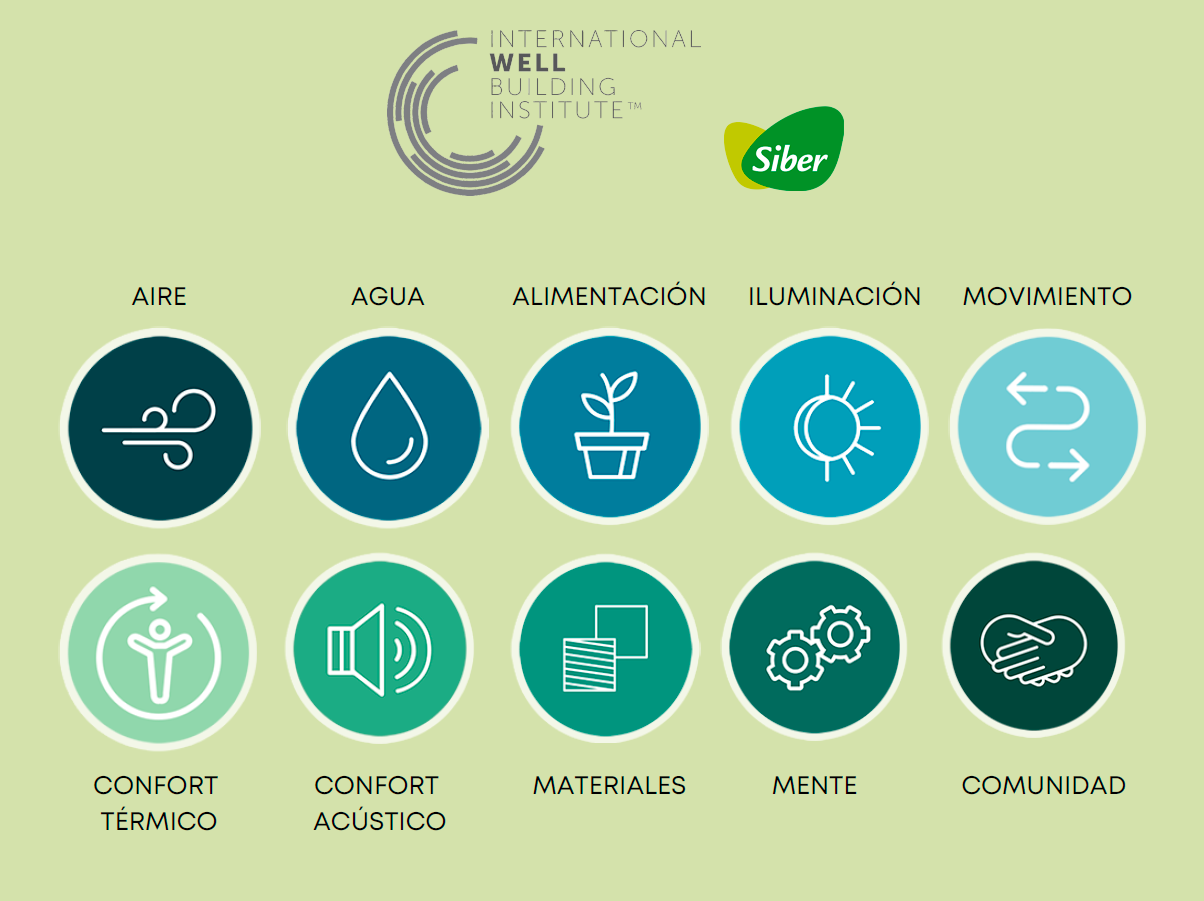
The WELL certificate is investing in the physical, mental, and social quality of people
The WELL certificate is an international system for companies and communities based on ten categories set by the International Well Building Institute. These measures focus on the health and well-being of people, going beyond the more common measurements such as air quality, water, or lighting.
According to the National Human Activity Pattern Survey (NHAPS) of the United States, we spend 90% of our lives indoors, in other words, if you are 46 years old, you have spent approximately 41 years of your life in indoor spaces.
Given such an overwhelming figure, there is no doubt about the need to create dynamic and healthy places whether they are homes, hotels, schools, offices, or shops. It is precisely in this framework that WELL has focused on designing methods and proposals to improve our daily lives and make that 90% less harmful.
Investing in this certificate entails significant long-term benefits. According to WELL, companies that have chosen to invest in a healthy work environment attract and retain talent, especially among young people who tend to prioritize issues like quality and well-being.
Thanks to WELL and its scientific methods, we can accurately identify and measure the health of spaces, becoming more aware of the real impact these scenarios have.
The ten elements that WELL presents are fundamental for creating a balanced, healthy, and pleasant environment. Year after year, the institute continues to study how to perfect the certificate, modifying different categories or incorporating new ones; it is a constantly evolving process. Some of these optimizations are mandatory while others are optional.
To start with, air. This category ranks first and is a key component of our well-being. Parameters such as the ventilation method - whether it is natural, hybrid, or mechanical - and the protection of spaces are evaluated.

Also evaluated is the quality, distribution, management, and storage of water. Proper use of this resource is rewarded. Light, a vital ingredient in our work, is properly examined as it emits radiation, and in the case of artificial light, long-term exposure to ultraviolet light can lead to health problems. For example, the balance between natural and artificial lighting is measured.
Nutrition can be an unorthodox measure to evaluate; however, WELL analysts observe what type of food is promoted in spaces, be it cafeterias, restaurants, or vending machines. One piece of information to keep in mind is the ease of access to these foods. In addition to promoting a balanced diet, movement and an active lifestyle are indispensable habits for improving our health. For example, it takes into account the habits that are facilitated as well as the ergonomics of the furniture.
Next, thermal comfort - monitoring temperature or humidity - and acoustic comfort - the noise from both the exterior and interior of the place - are elements that, despite not being tangible, can produce a negative effect on their occupants. Likewise, the materials used in construction and decoration are relevant as they emit substances, some harmless but others dangerous. This category also includes cleaning products.
On a human level, the understanding and promotion of mental health are highly important factors for WELL. Accepting these diseases corporately favors the improvement and recovery process of the individual. Lastly, but no less important, all the elements and habits combined create an ideal environment to form a community based on communication, respect, and commitment. At this level, what type of activities or services are promoted to motivate and support users is contemplated.
In short, the WELL certificate is a commitment to the well-being of people approached inclusively and comprehensively, adding significant value to the organization and its participants. There are already more than 35,000 projects with the WELL Building seal, and obtaining this certificate guarantees that the necessary ingredients for a healthier future are in place, where well-being takes priority.
You may want to keep reading >> Key elements of a Building Evaluation Report

Siber Ventilation
Related posts

Optimal comfort: hygiene and healthy contaminant levels