The ventilation system of a greenhouse: natural and mechanical ventilation
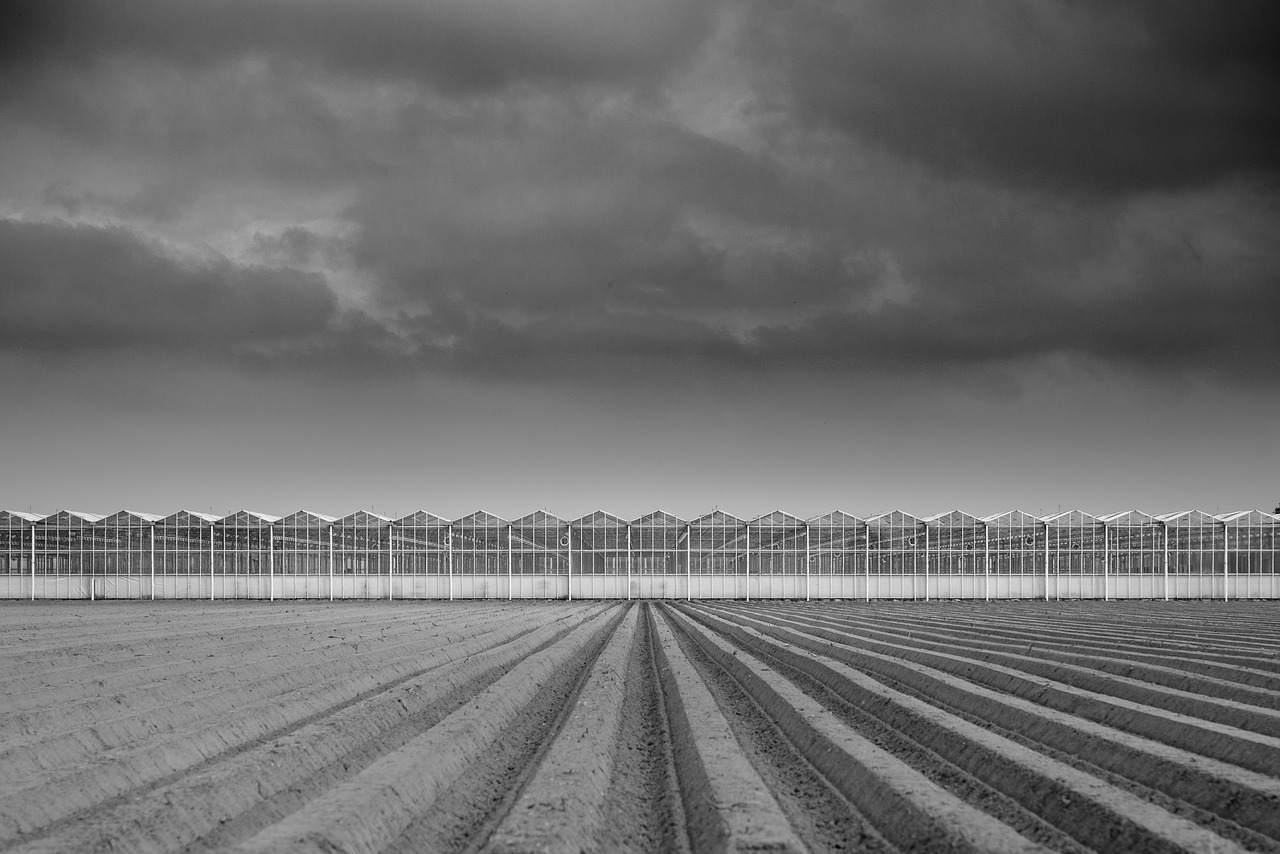
A greenhouse is a closed and static place composed of an outer cover made of plastic or glass, which helps control the temperature, humidity, and other environmental factors, thus promoting the development of crops. The effect of solar radiation is harnessed, which heats the environment as it passes through a translucent plastic or glass. In turn, these emit infrared radiation, which has a longer wavelength than solar radiation, so it cannot pass back through the glass, becoming trapped and causing heating.
The ventilation system in a greenhouse will replace the hotter air found inside with another mass of colder air coming from the outside. This way, a large part of the heat overload can be evacuated, decreasing the temperature and, in turn, modifying the concentration of gases and humidity. Two ventilation systems can be adopted: mechanical ventilation and natural ventilation. The ventilation system to be used depends on the properties of the building and the type of crop being grown.
Natural ventilation
In natural ventilation, the hot air inside the greenhouse rises and exits through two openings located in the roof, while admission is done through two openings in the lower part of the side walls. This creates an airflow that encompasses the entire interior space. For this type of ventilation, large openings are necessary, between 15% and 25% of the roof surface, and it does not allow controlling the impact of airspeed on the plants.Simple mechanical ventilation
Mechanical ventilation is based on renewing the air by installing electromechanical fans in the roof or higher part of a side wall of the greenhouse, while the air intakes from the outside are located at the bottom of the opposite wall. With this system, the minimum interior temperature usually does not exceed that of the outside air. The fans should be distributed throughout the greenhouse, on the roof or on the sides, and spaced between 7 and 10 meters apart. As for the side fans, they should have gravity shutters to avoid counter currents when the devices are not operating. Anti-bird or rodent grilles will be used to protect the air intakes to the outside, while deflectors will be installed towards the inside if the incoming outside air directly affects the nearest crops.Wet mechanical ventilation
The wet mechanical ventilation system is based on saturating the incoming air with humidity by passing it through large panels made of fiber material soaked in water. If the greenhouse is very wide, the arrangement of ceiling fans and air intakes with wet panels on both sides of the building should be adopted. Through this system, the air is renewed, the humidity level inside is altered, and the air is cooled. The drier the incoming outside air is, the greater the cooling effect will be.

Siber Ventilation
Related posts

Why is mechanical ventilation necessary in homes?