Sustainable houses, future or present?
The concept of sustainable houses may still seem like something of the future, but perhaps today it shouldn’t feel so distant. While a few decades ago it was common for homes to be built without considering the environment or energy efficiency, today construction can only look towards a much more sustainable mode of production.
To understand whether sustainable houses are something of the future or if they are already here, we need to analyze current regulations. The Technical Building Code has clarified many concepts such as the need for mechanical ventilation systems and the commitment to greater thermal insulation. These are concepts that will also be present in all types of sustainable construction, though not sufficiently.
The greatest push for sustainable homes will come in 2020 with the implementation of the European standard of Nearly Zero Energy Buildings. Through this, all private and public buildings will be required to meet various energy efficiency criteria, allowing homes and office blocks to operate without the need for conventional energy consumption.
The Nearly Zero Energy Building concept runs parallel to what is proposed by sustainable houses, although this construction model focused on ecology goes much further. Sustainable homes seek to be much less aggressive towards the environment not only in waste generation or energy consumption, but also in the impact when being built. They advocate for local building methods and also for non-polluting materials.
The main characteristics of sustainable houses are based on meeting the needs of those who inhabit them, at any time of the year and regardless of where they are located, while not jeopardizing the well-being and development of future generations and the planet. From a constructive point of view, we can say that they meet the following pretenses:
- They optimize resources and materials through a specific construction and architectural plan.
- They must minimize energy consumption and strive for maximum efficiency.
- Renewable energies are very important in sustainable houses and they must promote them.
- Waste must be kept to a minimum and should not emit more than the accepted minimal emissions.
- The maintenance and functionality of the buildings should be easy to follow.
- They must improve the quality of life for those inhabiting sustainable homes.
Are we really far from popularizing sustainable houses?
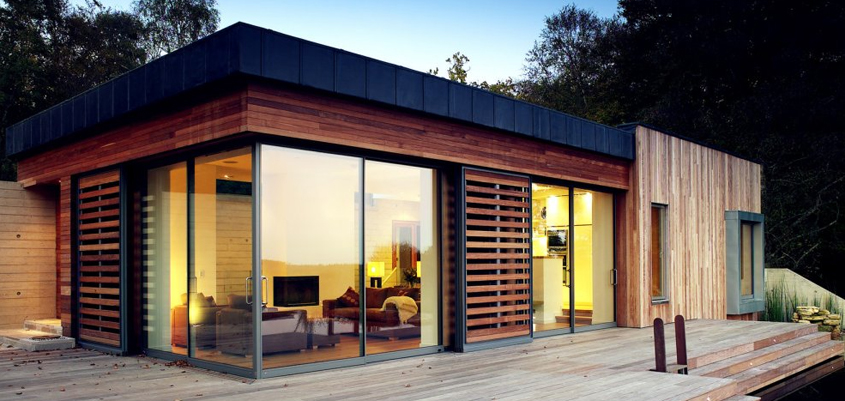
Sustainable houses are easier today than ever, partly due to energy certificates that allow builders to find a way to carry out projects with maximum energy efficiency and greater respect for the environment. The most popular are initiatives like BREAM, Passivhaus and LEED.
In reality, following one of these certificates makes it possible to have healthy and sustainable houses, although in the case of renovations it is more complex. As the director of Breeam Spain, Óscar Martínez, explains, "certainly in sustainable houses, where it is much easier is in new construction, considering it from the project stage. Today it is inexcusable not to do it in any promotion".
The need is real and, as many in the sector say, not considering all new construction as sustainable is a mistake. Therefore, looking ahead to 2020, it is expected that many constructions taking place in Spain can be declared sustainable, due to the requirement of the Nearly Zero Energy Building. What differences could there be between this type of building and those more purely sustainable? In reality, all that concerns energy consumption and efficiency should be the same in a purely sustainable home as in a Nearly Zero Energy Building.
However, sustainable houses must also commit to ecology during the initial project and above all in their construction. Additionally, there is a need to go beyond in relation to renewable energies. Besides popular solar panels or rainwater collection for sanitation purposes, it is possible to take advantage of the wind to dry clothes instead of using a dryer. There are even initiatives that include organic gardens in the land of the ecological home.

Siber Ventilation
Related posts

Constant flow ventilation systems, how do they work?