Air renewal in homes, natural or mechanical?
The Technical Building Code states that ventilation is one of the fundamental aspects when building a home or any other type of construction. And air renewal is essential not only for comfort but also for health. As explained, buildings must provide "a sufficient flow of outside air and ensure the extraction and expulsion of stale air containing pollutants."
This pollution can arise for various reasons. A lack of oxygen, the use of some combustion equipment like heaters, the emergence of moisture especially in bathrooms and kitchens, or stale air laden with toxins pollutes our environment. And for air renewal in homes, there is a key question. What are the differences between natural ventilation and mechanical ventilation?
One answer could be to say that both types of ventilation are optimal and work. Nevertheless, this idea needs considerable clarification. And before building a structure, it must be determined what types of systems will be implemented and how they will interact with each other. In some cases, natural ventilation can be sufficient depending on the construction type, but in others it must be mechanical. Or a combination of both.
If there is not a good ventilation system at home, it is necessary to open doors and windows every day. Mornings are the best time, as during the night the consumption of oxygen in rooms causes an increase in CO2 in the environment.
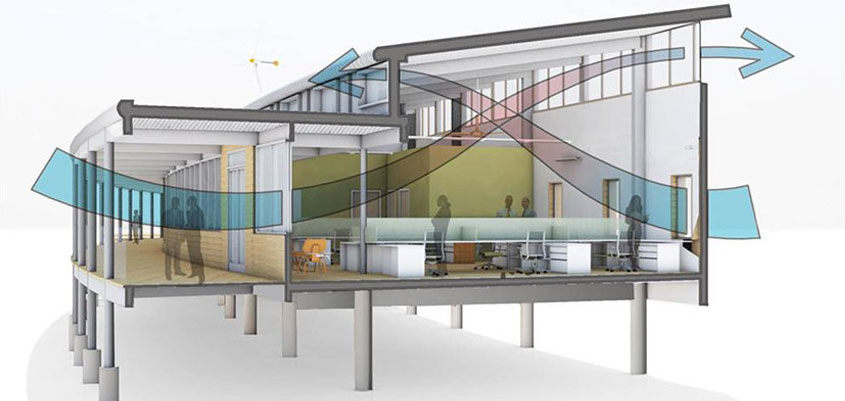
The positive aspect of natural ventilation is its simplicity and immediacy. One only needs to open doors and windows to air out a room. However, its major problem is that it cannot be controlled. Therefore, issues of excess or deficiency of ventilation can arise. However, there are passive methods to improve this ventilation, such as the chimney effect or the ventilated roof.
Due to this lack of control over natural ventilation, the Technical Building Code does not consider this type of resource for air renewal. The text only analyzes the various types of mechanical ventilation.
Air renewal through mechanical ventilation
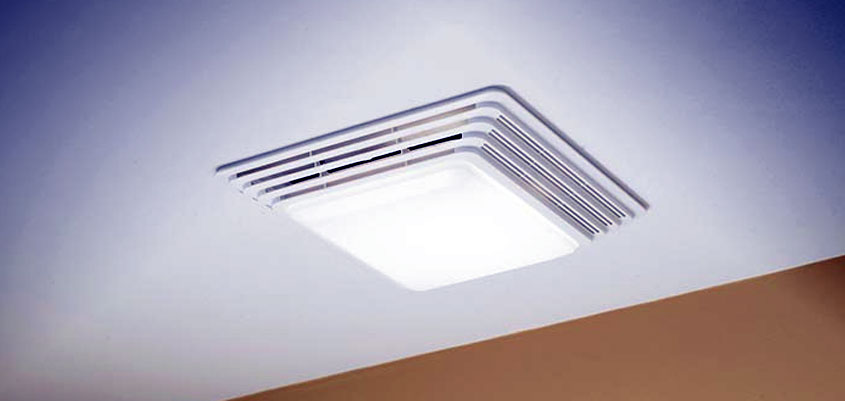
It can also be known as forced or artificial ventilation. Mechanical ventilation is one where air renewal occurs through fans or extractors. It can bring in outside air to then filter it, which reduces dust and pollutant substances entering the home. It is a better solution for cities and areas of high urban density.
There are several types of mechanical ventilation. The first is where extraction is natural and air intake is mechanical. This means that air exits the rooms through grilles in places like the bathroom or kitchen, and air intake occurs via a fan through ducts.
- It is easier to control the incoming air, which can be filtered.
- Street noise is reduced when the windows are closed.
- However, it does not have good energy efficiency.
- It requires cleaning of the intake ducts. In winter, the entry of cold air can be bothersome.
- It is an easy and economical system.
- The air flow is guaranteed thanks to forced extraction.
- It requires little maintenance.
- Temperature changes in winter, unfortunately, are also felt.
- The air intake ducts can generate unnecessary noise.
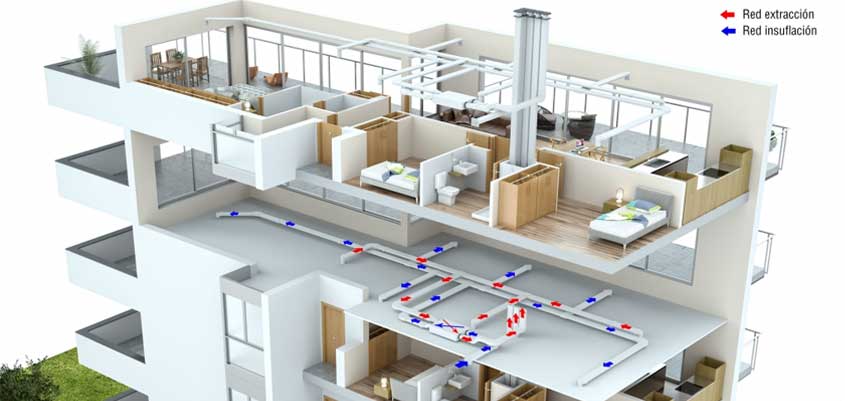
One of them is the double flow ventilation system, with centralized mechanical intake and extraction. The air intake will take place in a duct network throughout the building. These systems allow for the installation of heat recovery units, which can reduce heating needs in winter and cooling needs in summer. It is possible to recover around half of the energy from the expelled air. And it is perhaps the best-placed system in air renewal for homes of the future.

Siber Ventilation
Related posts

Constant flow ventilation systems, how do they work?