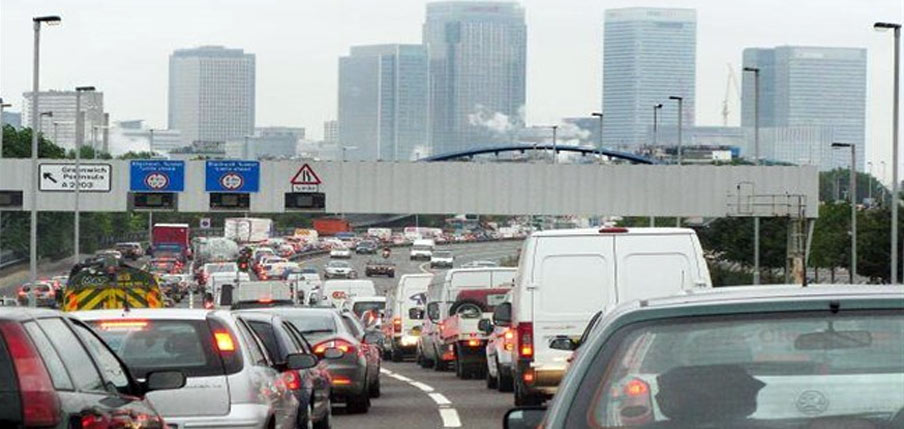
Reducing pollution in cities, solutions underway.
Pollution has become one of the main problems in cities, and also one of the goals of governments to cut down the volume of negative emissions. Although the problem is greater in developing countries, in Spain there are days when some cities perceive high levels of dirt in the environment, especially in places like downtown Madrid. Therefore, reducing pollution in cities is a priority that should not be overlooked.
The air in too many urban centers is filled with CO2 or carbon dioxide, as well as other gases that are equally harmful to health, in addition to polluting the atmosphere and increasing the negative greenhouse effect. Waste or pollution of water and air are also phenomena that cause toxic situations in the places where we live.
The first thing we need to understand is what pollutes the atmosphere of our cities. Normally, the main debate on actions to be taken by governments focuses on traffic. Controlling the entry of cars and also the emissions. But, in reality, is traffic the biggest polluter in cities?
In most cities, the biggest pollutant is actually indoor activity. The buildings are the ones generating the most pollution in our urban centers. The construction process and also the use throughout its life cycle is what generates the most pollution in the localities of our country. Due mainly to the high energy consumption for climate control, which requires the most consumption in homes and workplaces. In any case, the solutions that can be applied to mitigate emissions and reduce pollution in cities are many and also very varied.
Measures to reduce pollution in urban centers

If we take into account that buildings are so polluting in cities, measures should be taken to mitigate their negative effects. However, there are many other measures to consider, as nitrogen oxides or suspended particles -which are responsible for the bad image of city skies- often originate from the smoke emitted in cities:
- Encourage the use of public transport. Many local governments bet mainly on this, with train or metro use as better alternatives to travel by private transport. If the public transport network is improved, with more frequent services, it improves the emission of greenhouse gases. In the case of buses, it is important to bet on electric and lower consumption technologies. Biogas is also a good alternative.
- Traffic restrictions. This is a measure that goes hand in hand with the previous one. The first measure is always betting on attractive public transportation that provides a real alternative. And in case it cannot be remedied for car use in some cases, a measure that usually helps significantly is to prohibit circulation for vehicles with only one person. Other much more incisive measures include limiting speed in specific areas or complete prohibition of car use within the city. Madrid, for example, has taken this measure.
- Installation of charging points for electric cars. To increase interest in electric cars and reduce pollution in cities by emitting fewer harmful gases, it is essential for users to have places to charge their vehicles.
- Measures regarding the reuse of resources and recycling are also essential. Thus, it also limits pollution that comes from landfills and factories. It should be noted that the elimination process in a landfill is significantly polluting, as the gases resulting from decomposition -such as methane- are highly polluting and increase the greenhouse effect.
- Use of renewable energies. Collecting rainwater and also using wind power or solar panels can help a lot in cities. In Portugal, it was proposed whether, in the near future, it could depend exclusively on renewable energies.
Starting in 2020, new buildings that are constructed will be Nearly Zero Energy Buildings, and thanks to this, it will be possible to almost eliminate energy consumption. However, the housing stock in Spain is quite old, so it would be essential to promote reforms aimed at reducing pollution in cities, which basically would involve achieving buildings that need less energy to temper their spaces.

Siber Ventilation
Related posts
Air Purifiers: Functioning and Possibilities in Our Home
Bathroom fan to renew the air in humid rooms