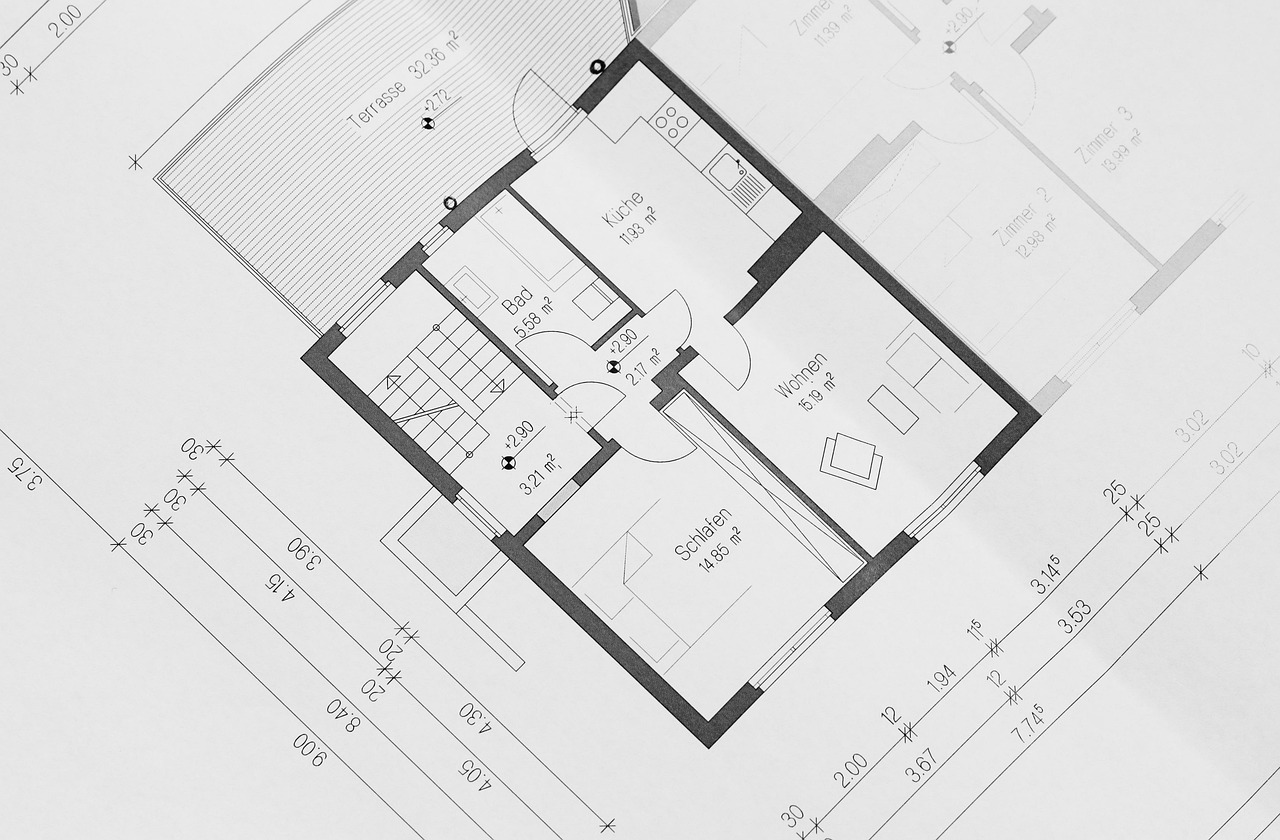
Housing rehabilitation: what it is, what a rehabilitator does and what aid is available
The rehabilitation of housing is a concept that is often confused with that of property renovations. This is something that occurs, even among experts in the field. However, they are not synonyms. At Siber, we want to explain exactly what it consists of, what the work of the professionals dedicated to it is, and what aids and subsidies exist today.
What is considered housing rehabilitation?
To define the concept of housing rehabilitation, we must refer to the Technical Building Code (CTE). First of all, to article 4 of its first part. It establishes that works of rehabilitation will be considered all those aimed at achieving:
- The functional adaptation of the property.
- Its structural adaptation.
 Additionally, a specific section is added for the remodeling of residential buildings. It is considered a rehabilitation work when the number of houses inside or the occupied area is modified.
On the other hand, the concept of renovation is not clearly specified in the CTE, so it is inferred that it is encompassed within the aforementioned. Specifically, it would refer to a series of small-scale works (changing a bathroom or a kitchen, for example).
Additionally, a specific section is added for the remodeling of residential buildings. It is considered a rehabilitation work when the number of houses inside or the occupied area is modified.
On the other hand, the concept of renovation is not clearly specified in the CTE, so it is inferred that it is encompassed within the aforementioned. Specifically, it would refer to a series of small-scale works (changing a bathroom or a kitchen, for example).
What does a housing rehabilitator do?
The figure of the housing rehabilitator was created with the Royal Decree 853/2021, whose objective is to rehabilitate more than one million properties in Spain before the year 2030.
In this sense, the housing rehabilitator is the professional responsible for driving, monitoring and managing the works. To do this, they use the public aids provided in this legal text as a reference framework.
But what are their functions exactly? Let's see them:
- Prepare and generate the required technical documentation.
- Draft rehabilitation reports.
- Manage the necessary bureaucratic procedures.
- Ensure that the execution deadlines of the works are met.
- Seek the best system to ensure the energy efficiency of the property.
- Coordinate all actors in the rehabilitation process during each of its parts.
- Request the available aids and subsidies.
Aids and subsidies
The Recovery, Transformation and Resilience Plan (PRTR) approved by the aforementioned royal decree provides for a series of very important aids and subsidies for housing rehabilitation. Specifically, it will allocate 3.42 billion euros from the Next Generation funds of the European Union for this purpose.
The subsidizable actions on housing are the following:
- Installation of solar and photovoltaic panels.
- Aerothermal energy.
- Replacement of windows with others that have greater insulating capacity.
- Improvements in insulation in facades and roofs of residential buildings.
- Removal of asbestos.
- Improvements in the accessibility of buildings.
In total, each rehabilitated home can receive a subsidy of up to 21,400 euros. In any case, the amount must be between 40% and 80% of the total cost of the action. It may reach 100% if the applicant is in a situation of social and economic vulnerability.
These aids and subsidies aim to reduce Spanish energy dependence on fossil fuels by 30%. They also aim to decrease the energy poverty suffered by many households, which could become more pronounced in the future.
The execution of the different phases of a controlled mechanical ventilation system installation project is indispensable in any housing rehabilitation project. After all, it is a technology that allows for significant energy savings, is completely clean, and also guarantees the highest possible levels of air quality.


Siber Ventilation