Radon, a harmful gas for us and our buildings
It is not very well known nor does its name often sound familiar. Moreover, it is invisible and has no smell. Its devastating effects, however, become visible when exposure is prolonged in a home. It is the radon, not very well known but, according to the World Health Organization, the second leading cause of death from lung cancer. It is estimated that radon can be responsible for up to 14% of these malignant tumors.
The problem with radon gas is that this poison is found in many homes, in buildings, and in basements. But what exactly is it, and how can we prevent it?
This gas is produced from uranium that is commonly found in the soil. When it decays, it transforms into radium and remains in the soil. But as it decays, it becomes a gas, radon. And this harmful contaminant can reach us until it accumulates in our respiratory system and produces radiation.
In Spain, radon is quite widespread. According to institutional sources from the Nuclear Security Council, Galicia and part of Castilla y León are two of the most affected regions. Extremadura, Madrid, and part of Castilla La Mancha also have high levels of radon.
The knowledge of the existence of this gas is relatively new and dates back to the mid-20th century. While even at low concentrations it can pose too many risks, in moderately affected areas the risk of lung cancer is very high. Moreover, exposure to radon is particularly harsh for smokers. According to again the World Health Organization, smokers have a risk of cancer from radon about 25 times greater than that of non-smokers.
In homes, radon gas can appear after having accumulated in the soil where the building is located. It can also be in the walls, in the ceiling, and even in the water outlets. It can enter the home through any opening, from a door to a tiny crack.
It not only negatively affects living beings. This radioactive gas weakens buildings and can produce what are known as "sick buildings." Those in which it is estimated that the occupants may suffer some health problem due to weakened living conditions.
Detecting radon gas in our buildings
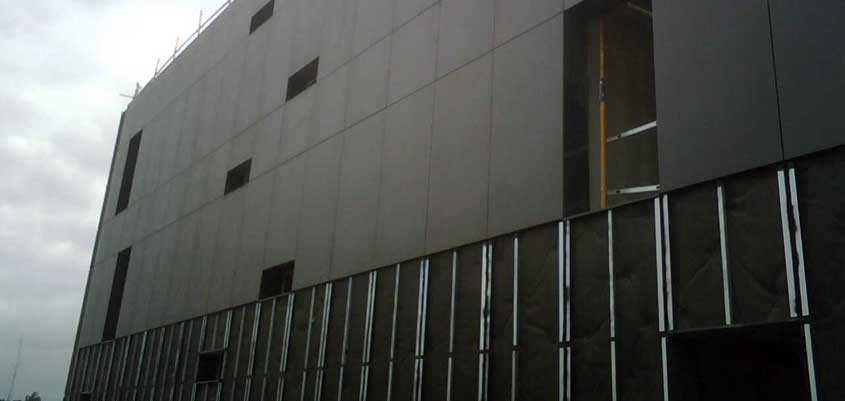
In order to detect this gas which is also very difficult to discover if it has affected our home, we first need to know why it ends up entering our houses.
Enclosed spaces are a problem for radon. While public buildings and homes are not the spaces with the highest levels of exposure—those are in basements—it can, however, reach concerning levels. Being always close to the ground, the highest levels of radon are found in basements and cellars, but also in ground floors. Everything that is in contact with the ground has a higher risk of exposure.
Likewise, the gas can filter through construction materials. Through the walls, it can rise to higher rooms. According to the World Health Organization, the concentration of radon in a housing will depend on:
- The uranium contained in the rocks and in the land where the building is located.
- The leaks through which radon can find a way to expand.
- The renewal of indoor air, so ventilation of the space will be essential.
To protect against a possible entry of radon gas, the World Health Organization offers a series of recommendations:
- Improve ventilation. Both in the basement of the house and in all rooms.
- Mechanical extraction systems in the basement can remove radon in areas considered to have high concentrations.
- All leaks that may occur from the basement should be sealed. Any small crack can be lethal for the entry of gas. The space between the floor of the building and the ground can be depressurized to help prevent the gas from expanding into the rooms.
- The walls should be properly sealed.
The radon gas is a poison that affects many people and should be taken into account. In regions where there is a higher level of exposure and in homes with basements or contact with the ground, it is very important to keep this in mind. As requested by the World Health Organization, we must minimize the chances of this gas entering our homes.

Siber Ventilation
Related posts

CTE HR Why is the Technical Code so demanding in matters of noise protection?

How to make air turn your home into a comfortable place