Energy poverty, what is it and how to protect yourself from it?
The economic crisis exposed the relevance of a concept that, years ago, was unknown. The one of energy poverty. A problem that harms much of the world, except in areas with moderate climates, although any person in the world could feel its effects. In Europe, energy poverty is a reality, and in Spain too, especially in the coldest months of the year. However, what does this problem mean?
The energy expert Brenda Boardman, who is considered the mother of energy poverty as a concept, defines it as the "inability for a household to obtain an adequate amount of energy services for 10% of the available income". To explain this, we could put a simple example. If a couple lives with 1,200 net euros monthly and spends more than 120 on energy, they would already be considered energy poor.
The concept coined by Boardman goes a little further, although it has the UK as a reference. According to her, energy poverty is real when the appropriate dwelling temperature is set at 21ºC in the main living room and at 18ºC in the rest of the rooms of the dwelling. And if more than 10% of the household's monthly income is needed to maintain these values, they would fall into the category of energy poor.
Energy poverty is always taken into account regarding how to heat the home, and above all to keep it warm in winter. But that doesn't mean that the cost taken into account is only that, but all those related to energy: electricity, gas, water, and others. What is spent to watch television, charge our mobiles, or turn on the light is also counted in the energy calculation to determine if we are energy poor or not.
Likewise, we speak of energy poverty always in relation to winter, mostly because the lack of heat in the coldest months not only reduces comfort but also puts health at risk. But we must also consider it in extremely warm places, where we can be energy poor in order to combat the heat.
In the same way, a home is considered to suffer from energy poverty if at any time of the year it exceeds that threshold of 10% of household income spending, for example, in the coldest months. Even if this barrier is crossed for just a few months a year, the home is considered within this category.
The consequences of this malady are many for the affected families, among which are problems such as the following:
- There is a loss of comfort due to the inability to afford significant energy expenses.
- It is possible to develop health problems due to energy insufficiency, as can happen by keeping homes at too low a temperature in winter.
- In summer, pathologies related to excessive heat may develop, ranging from dizziness to skin problems.
- Houses that are energy poor tend to promote humidity problems or stale air.
Energy poverty due to unemployment and rising supply costs
On October 7th last year, the Government launched the new rules to access the electric social bonus, a measure designed to tackle energy poverty. To this day, it is considered that this malaise affects 10% of the Spanish population. This was acknowledged by the Executive, who warned that upon implementing the aid, about 4.5 million people suffer from this scourge in our country.
In most of these cases, energy poverty is a consequence of the economic crisis. On one hand, electricity has reached historical highs, even this September, where it peaked with the highest electricity bill of the last decade. According to the president of the Renewable Foundation, Fernando Ferrando, we could enter 2019 with a base electricity cost double that of 2009. "The tariff is designed to maximize the bottom line of those who provide electricity, i.e., electric companies, but not as a public service," comments the energy expert, pointing out that the solution would involve betting on ecological sources.
If we combine this cost factor with unemployment, we have one of the most concerning causes of energy poverty. Many families have seen how they could not afford to pay for electricity, gas, or water to such an extent that they have found themselves in serious situations of helplessness.
As a conclusion, we must consider that we cannot depend on energy prices in the market. It is possible that prices will continue to rise, so we need our homes to be much more efficient to avoid dependence on energy suppliers.
Energy poverty due to the poor condition of homes
While the media have focused on rising supply prices along with unemployment or shrinking household incomes for many Spanish families, the concept of energy poverty was created from another point of view.
Precisely, Brenda Boardman states that when coining the term, she pointed out that "the first cause [of energy poverty] is that the house is energy inefficient because it has not received the necessary investments". This occurs, according to her, in the large number of houses that are energy inefficient and that rely on excessive spending on heating and cooling.
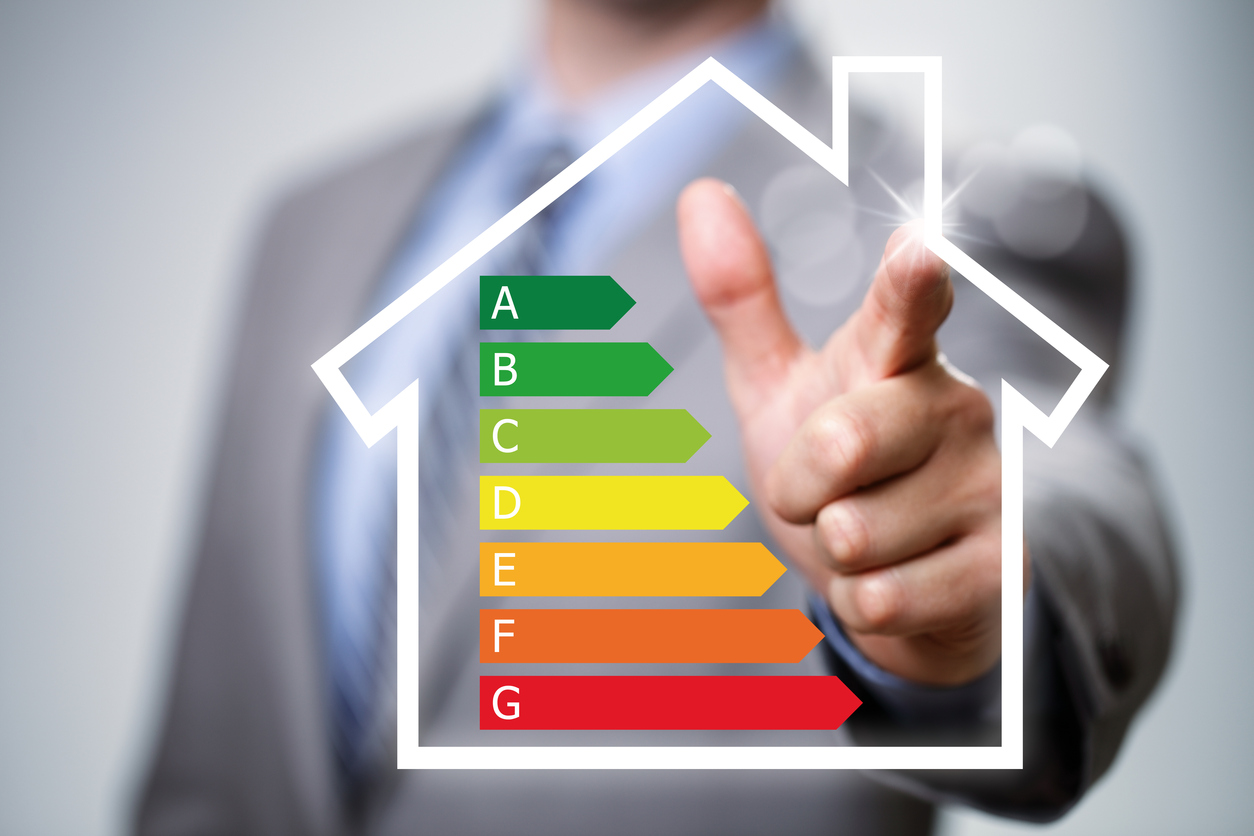
"Normally, the lowest possible energy certificate is obtained in relation to the income level of the person living there and, therefore, this person has to pay very dearly for both hot water, heating, and light," explains Boardman, who considers it essential to raise awareness among the population - through informative campaigns and also with the application of regulations - about the need to bet on energy efficiency. In too many cases, the buildings that were constructed in Spain prioritized cost savings and never aimed to be efficient.
The creator of the term goes further and comments that "there would be energy poverty if homes were super efficient, with A or B type certificates," and that even the poorest and most helpless people would cease to be energy poor, even without income, since the homes would require practically no investment in energy.
In Spain, the problem of energy poverty is relatively recent, which is why until very recently it was not being fought against. To address this, it is not enough to only offer subsidies or aid to those who are helpless, but also to facilitate energy rehabilitations and the popularization of sustainable homes. The European Commission, however, has mandated Spain to do so. And starting in 2020 throughout the country, it will be necessary to build only Nearly Zero Energy Buildings.Tackling energy poverty in Spain
First of all, we must consider that the problem of energy poverty may spread with the rise in supply prices. For this reason, in the near future, we might find that many homes are in energy poverty, despite being occupied by families with sufficient income.The price of electricity and other expenses is unfortunately going to keep rising, according to many experts. In the best-case scenario, they would stagnate at a level that would still be quite high. Thus, the only way to combat energy poverty is to adapt our homes.
Despite the cost it may entail, it is important to note that investing in energy efficiency ultimately benefits us in the medium term, thanks to lower supply spending. Furthermore, it improves our living conditions by contributing to the environment and sustainability.
As Brenda Boardman explains, "it suffices to invest in efficient homes because, if the house is efficient, people have cheap heat, do not get sick, do not go into debt, are more productive, children can go to school and..., in short, everything goes better".
The most affected due to unemployment and precariousness have limited options to invest in energy efficiency, which is why governments should implement a series of improvements in the affected homes and also review energy certificates.
Among the improvements that a home can receive to improve energy efficiency are the airtightness of the building and also ventilated roofs and facades. One of the key renovations is installing a mechanical ventilation system. Thanks to this, we can tackle energy poverty by lowering the temperature in summer and keeping the heat in winter without spending on air conditioning.
Siber Ventilation
Related posts