PM2.5 particles, are they the most air-polluting?
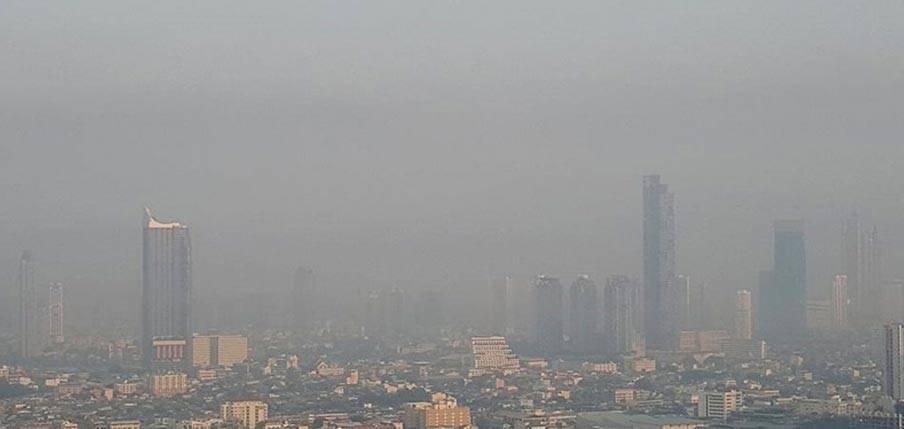
At the end of September, Spain approved the first National Program for Air Pollution Control (PNCCA) to align with European directives aimed at reducing emissions of certain pollutants. A series of urgent proposals that include as a priority reducing fine particle emissions or PM2.5 particles (as per their English initials) by 50% by 2030. But what are these particles and to what extent are they polluting and harmful to health?
The initials PM stand for particulate matter or particle pollution and is the term used to refer to a mixture of solid particles or liquid droplets that are suspended in the atmosphere and are responsible for the poor air quality we breathe.
These particles come in a wide range of sizes and can be made up of hundreds of different chemical products. Some, like soot, dust, or smoke, for example, can be seen with the naked eye. However, there are others so tiny that they can only be found with an electron microscope.
PM2.5 particles are classified based on aerodynamic diameter into PM10 (particles with an aerodynamic diameter of less than 10 micrometers) or PM2.5 (aerodynamic diameter of less than 2.5 micrometers) and, of these, the latter, which are similar in thickness to human hair, are the most dangerous to health.
In fact, the reduction of PM2.5 particles is currently one of the greatest challenges facing countries around the world for three reasons:
- They are more harmful to human health than any other pollutant.
- The health effects occur simply due to exposure to air.
- Currently, it is practically impossible to escape them, and they affect both people in rural and urban areas, in developed and developing countries.
Harmful effects of PM2.5 particles
The lightweight and tiny nature of so-called fine particles means they remain in the air longer than heavier particles, increasing the chances that both people and animals inhale them. It is not only impossible to prevent them from entering the nose, but also that once inside the body, they can travel down the throat and reach the alveoli or even enter the bloodstream.Of all fine particles, the ones that pose the greatest risk to health are PM2.5 particles and among the main issues they cause are:
- Premature death. Numerous studies have found a correlation between exposure to fine particles like PM2.5 and premature death from heart and lung disease.
- Respiratory diseases. It is known that fine particles trigger or worsen chronic diseases such as asthma, heart attack, bronchitis, and other respiratory problems. In this case, symptoms can range from a feeling of tightness in the chest and difficulty breathing to wheezing (whistling while breathing).
- Irritation. In both the eyes and throat and nose.
- Heart problems. There are studies linking prolonged exposure to PM2.5 with the formation of plaque deposits in the arteries, which would cause vascular inflammation and hardening of the arteries that could ultimately lead to a heart attack or stroke.
How can I reduce my exposure to PM 2.5?
Individually, it is challenging to avoid exposure to air pollutants, given that, as mentioned earlier, this situation requires public authorities to take action urgently. Nevertheless, we can take certain precautions both outdoors and indoors.One option is to check the daily air quality forecast and on days of high pollution, reduce physical activity time outdoors. Especially if it entails prolonged or heavy effort, or replace it with another requiring less effort, for example.
As a general rule, and until PM2.5 particle emissions are reduced, it is advisable not to exercise near heavily trafficked streets, considering that particle levels are generally higher in these areas.
Indoor spaces are not exempt from air pollution caused by PM2.5 particles. In these cases, certain measures are recommended, such as not smoking and reducing or eliminating the use of candles, wood stoves, and fireplaces. Above all, the most effective way to enjoy fresh and non-contaminated air at home is to purify the air, and for this, the best option is to opt for double-flow mechanical ventilation.
Double-flow systems are the best option to achieve energy efficiency at home and ensure health indoors. Therefore, optimizing them is crucial to guarantee the necessary comfort and, above all, they represent cost-free conditioning. They are also the best solution to close the doors to PM2.5 particles at home.

Siber Ventilation
Related posts