Kitchen Extractors: Fundamentals of Their Installation
The reason for ventilating inhabited spaces is to provide a hygienic and comfortable environment for its occupants, as it is estimated that people currently spend 90% of their time in enclosed places. For this reason, it is necessary to control humidity, temperature, and pollution that arises from our metabolism, furniture, paint, carpets, and the floors of buildings. It is also important to consider kitchen extractors and bathroom extractors and to implement them correctly to renew the contaminated air.
Localized Ventilation
This type of ventilation is used when the source of pollution can be clearly identified. In these cases, it is the most effective and economical system. To use localized ventilation, the following steps should be taken:- Identify the points of pollutant production
- Encapsulate it under a hood
- Establish a suction capable of capturing, dragging, and transporting air laden with contaminating particles
- The capture
- The duct or channel
- The separator or filter
- The air extractor
Do you know how kitchen extractors work?
The quality of air indoors is particularly significant in a kitchen, where fatty vapors, smoke, and odors are released daily. When installing kitchen extractors, the following aspects must be considered:- Determine the required clean air flow, expressed in m3/h.
- Define how the capture of contaminated air will take place, as this factor will affect the design of the hood.
- Locate where the captured air will be discharged.
- Seek maximum energy savings in the extraction of air.
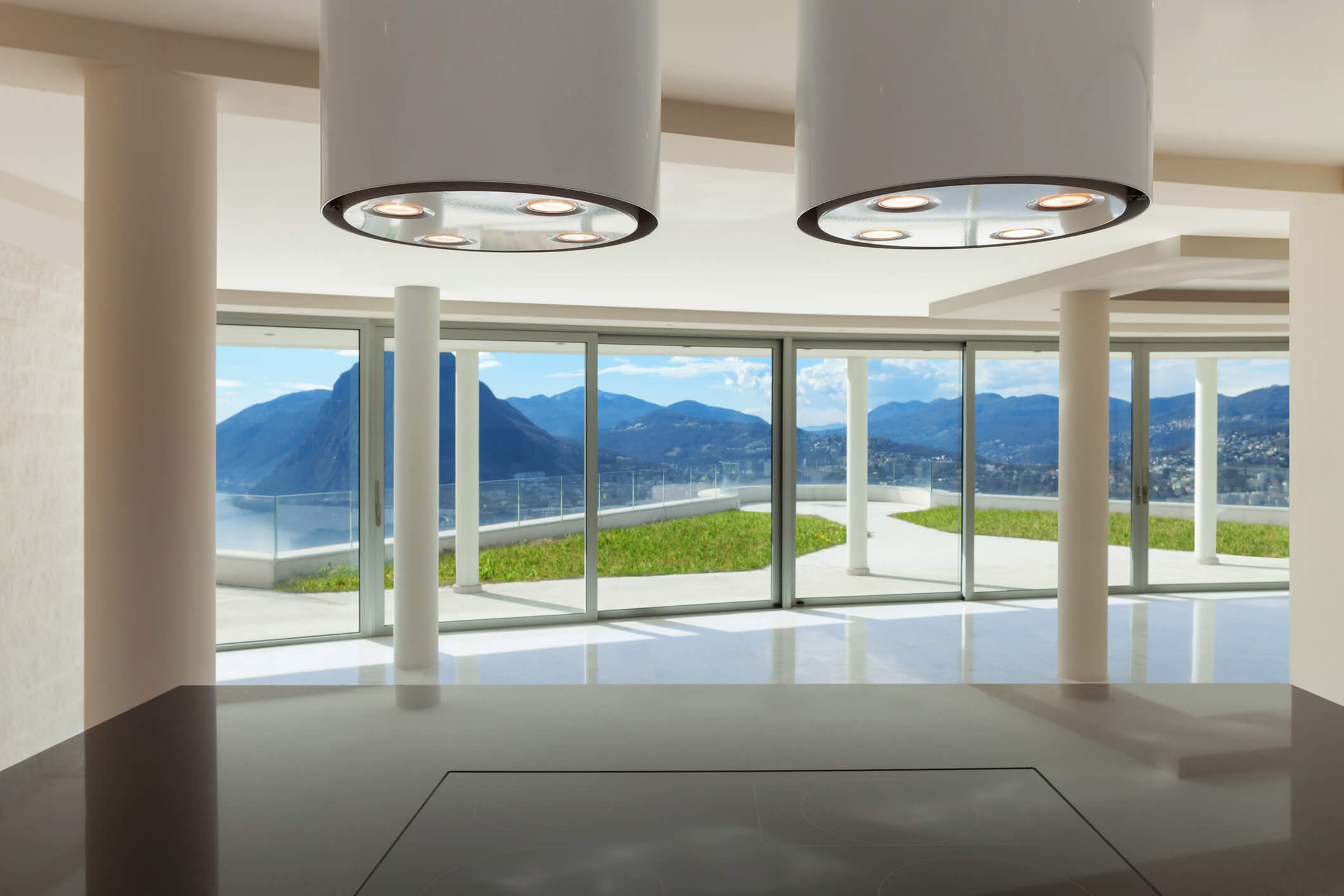
The compact hoods are furniture that incorporates an air extraction unit, filters, and light. They have the disadvantage of using small extraction devices, with reduced suction capacity, and they usually do not retain smoke in their extraction plate.
The vented hoods can house a mass of contaminated air within them. They allow the installation of an air extractor of the user's free choice. In this way, it is possible to use high or low pressure models, with higher or lower flow rates and different types of mountings.
The hoods with an air curtain are characterized by pushing a sheet of air coming from outside. Their function is to separate the kitchen environment from the contaminated air situated beneath the hood. Thanks to their orientation, it mixes and dilutes with the rest of the air in the space, directing it towards the extraction mouth. In this way, significant energy savings are obtained when conditioning the kitchen.


Siber Ventilation
Related posts

Why is mechanical ventilation necessary in homes?

Constant flow ventilation systems, how do they work?