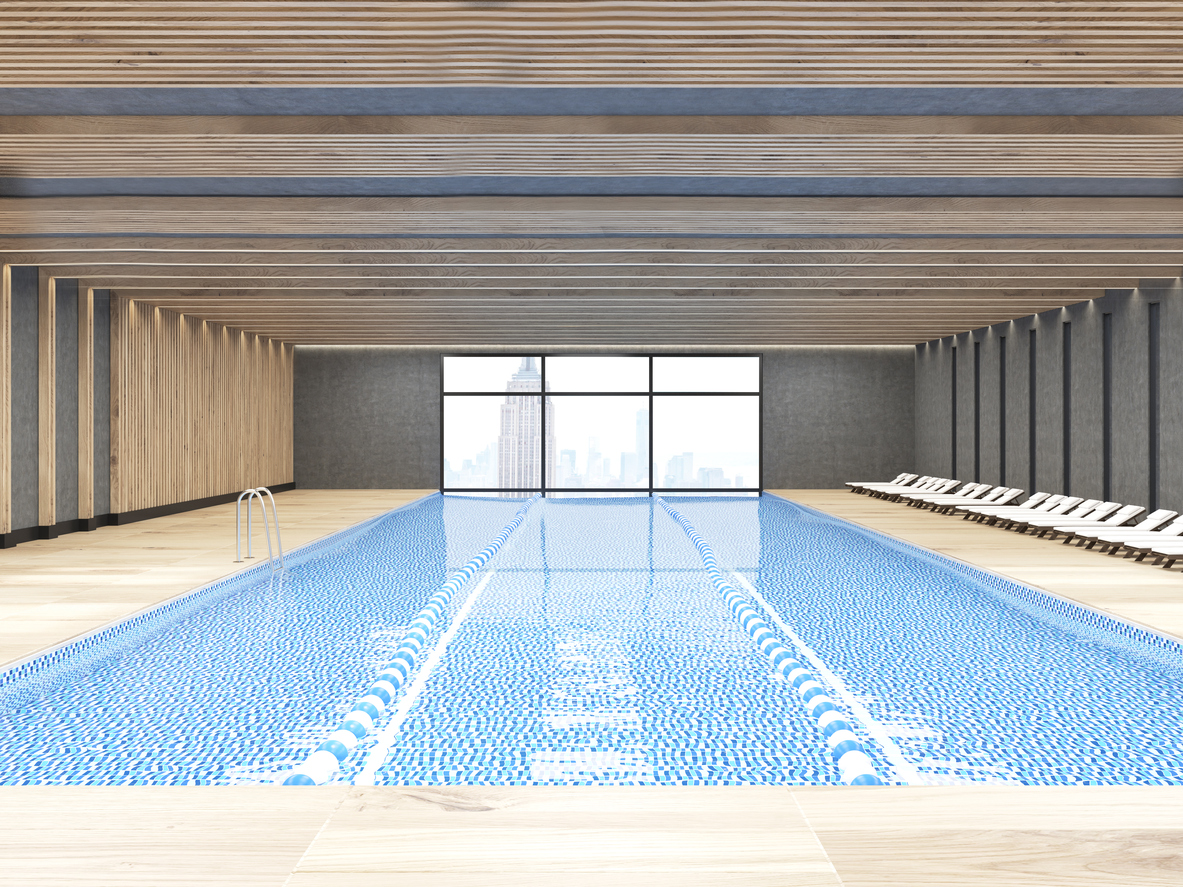
Importance of ventilation in indoor pools
Indoor pools, since they are spaces with a very high relative humidity rate containing chemical pollutants (chlorine), must have a good controlled mechanical ventilation system that ensures quality indoor air that does not jeopardize the health of its occupants or the building itself. In this article, we explain the importance of the ventilation system in indoor pools.
Ventilation in indoor pools: the best risk prevention
In these types of facilities, the existence of chemical agents can pose a threat to the quality of indoor air. Impure and contaminated air with inappropriate temperatures and high humidity negatively affects not only the health of users and workers of the facility but also the state of the building itself. It is important to note that humidity levels above 70% not only jeopardize various construction elements but also endanger the electrical installations of the equipment.Requirements of the facility
There are several factors that must be taken into account if the goal is to achieve quality indoor air:- The pool area must always be maintained under depression.
- The water temperature should not exceed 27ºC, as a higher temperature would result in condensation of water vapor.
- The relative humidity cannot exceed 70%.
Pollutants in the air of indoor pools
There are several chemical products to which users and workers of the pools are exposed: chlorine, ozone, and chemical agents resulting from the products used to treat the water and disinfection and cleaning products.The highest concentration of pollutants in an indoor pool is in the volume of air just above the water surface. This fact is particularly significant, as it highlights that these pollutants mainly affect the users (as the proportion of pollutants decreases the further we move away from the water surface of the pool). Undoubtedly, taking care of the quality of indoor air in indoor pools is vital for the health of people. Therefore, it is essential to have good ventilation that eliminates unnecessary hazards.
UNE-100.011.91 regulation
According to the UNE-100.011.91 standard, Ventilation for acceptable air quality in the air conditioning of rooms, the minimum ventilation flow necessary for these types of buildings must exceed 15 l/s per person, or 2.5 l/s per m2 of surface area (always using the highest value).According to the NTP 341, exposure to chlorine in indoor pools, the level of chlorine, a parameter that directly influences the contamination of the pool, should be between 0.5 and 2.0 ppm. Mechanical ventilation will minimize the percentage of chlorine in the air, thereby preventing the unpleasant smell of chlorine in the environment and eliminating the negative adverse effects that a high concentration of this chemical element has on people.
According to various studies, it is estimated that the maximum acceptable percentage to avoid irritation is 0.5 ppm, that is, 1.5 mg/m3. It should also be noted that the presence of hypochlorite and electrical ozone increases the risks of air contamination. In these cases, strict control of these two substances should be carried out to proceed with their elimination.


Siber Ventilation