




Efficient ventilation management in large spaces
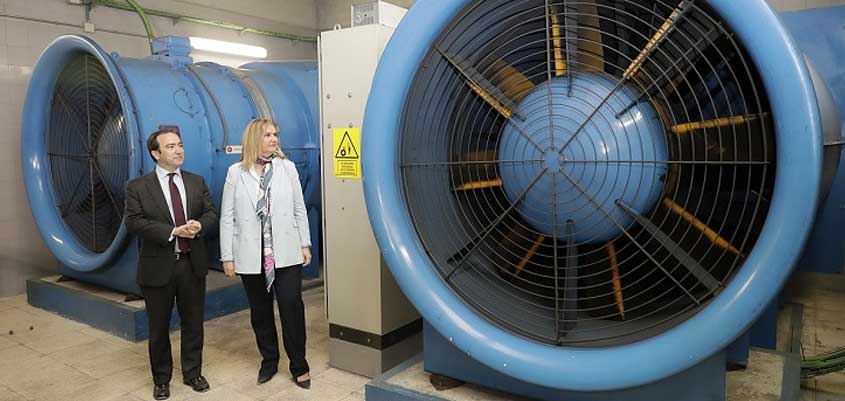
The image that appears above these lines belongs to the new smart ventilation system used in a subway station in Madrid since the end of last year. This installation represents a reinvention of air conditioning in large public spaces, which is a benefit for the environment and also for energy efficiency criteria. Traditional systems for acclimatizing large closed areas in winter and cooling them in summer account for most of the energy costs in places like the subway. What does this new ventilation management system in large spaces implemented in the Madrid subway mean? So far, it has reduced the total energy cost in the stations by 25%.
This example serves to illustrate the benefits that the installation of an advanced ventilation system in large spaces can bring. In addition to this one-quarter reduction in energy needs, CO2 emissions in the Madrid subway will also be reduced by 93 tons per year. What does that mean in economic savings?
Sources from the regional Transport Department explained that this new system has meant an investment of 1.14 million euros for the Pinar de Chamartín station. In contrast, its impact on energy savings for that same station will be 4 million euros annually. The investment is paid back very quickly.
In the case of ventilation management in large spaces of this new system, the technological advancement comes from the computer control unit that regulates the intake and extraction of air. The system has an algorithm that adapts to the needs of each fan individually. It is also capable of considering the conditioning factors of the trains that are circulating, the number of passengers, their location, the air temperature, or electricity rates.
The fans are adjusted to provide the best comfort at the lowest cost, and travelers also notice an improvement in climatic comfort. What does this mean for the environment in this specific case?
First of all, it should be clarified that in the stations, the greatest expenditure is on ventilation and air conditioning, accounting for almost 40% of energy consumption. The energy efficiency achieved reduces the carbon footprint in our environment.
These advances in ventilation can also be applied in other large spaces, such as very large offices or industrial warehouses. Good ventilation in large spaces is necessary to improve people's health and helps to reduce energy consumption in important industries and high-consumption areas.
Large spaces and ventilation management
To seek greater energy efficiency and reduce damage to the ozone layer, large public spaces, whether publicly owned or privately owned, must control their expenditure.
The opposite case to the example of the Madrid subway station is the new Asian capitals, where there is no regulation in place for energy consumption in air conditioning. In Bangkok, the capital of Thailand, there are shopping centers that consume more than entire provinces of 12,000 square kilometers and 300,000 people. This is because their air conditioning methods rely almost entirely on air conditioning units that cool to about 15 or 20°C in a tropical climate.
The use of large air conditioning units in summer also causes the city to suffer overheating. This is why the temperature rises - cooling interiors heats the outdoors - additionally increasing pollution.
With the new obligation to build Nearly Zero Energy Buildings, in force for public tenders from now on and for all others in 2020, large spaces and buildings require ventilation management that uses mechanical systems and restricts the use of traditional air conditioning systems.
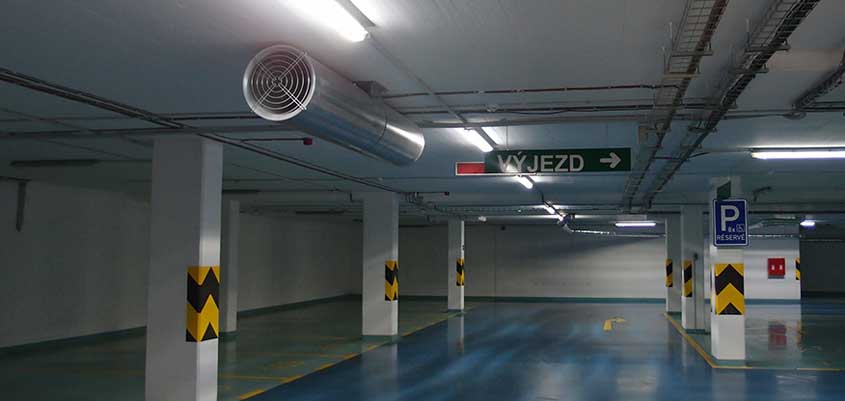
One of the large spaces that needs efficient ventilation management is parking lots. In this case, the most important thing is to eliminate the gases produced by vehicles indoors and ensure the health of the people who are in them.
Looking ahead to the future Nearly Zero Energy Buildings, mechanical ventilation systems will be essential and, as stated in the DB HS3 of the Technical Building Code, air extraction must be mechanical. To improve energy efficiency and ventilation management, automatic systems capable of analyzing each specific situation are also ideal. Like the example of the Madrid subway. Mechanical ventilation systems with dual flow, while not as precise, are also automatic in detecting when it is necessary to extract or renew the air, and in what quantity.

Siber Ventilation
Related posts

Constant flow ventilation systems, how do they work?