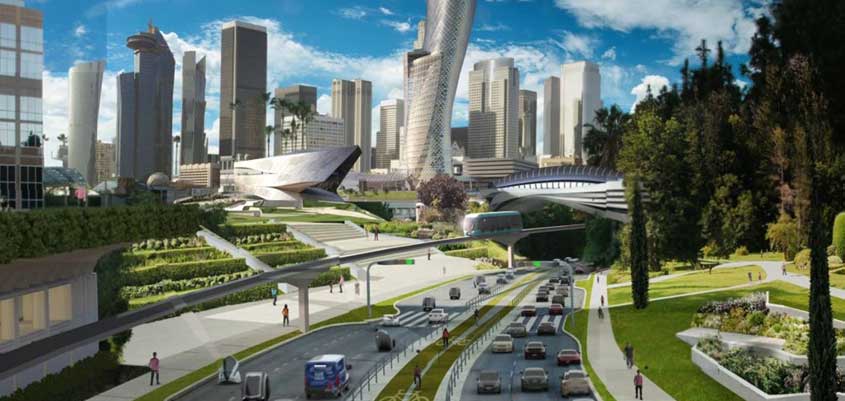
Future of Cities: Ecological Buildings and Energy Efficiency
If we were to ask ourselves what the future of cities will be like, what could we say? Beyond the fantasies of science fiction, of cars without wheels, what we could almost assure is that the cities of the future will be much more efficient and green. They will be ecocities. And it is in the West, especially in Europe, where it will be easier to see these advancements.
The almost immediate rise of ecocities - which is already beginning to be seen around the world - is largely due to the requirements of new sustainability regulations. Both buildings and public places must adapt to emit fewer air pollutants and be energy efficient.
This is the basis of ecocities or the future of cities: achieving minimal environmental impact. Whether it is due to lower consumption of people and workloads in their environment, or through technological changes that ensure greater performance with less consumption. With this, we can advance in economic development without having to mortgage the future of the next generations.
The European Union is one of the international bodies that has been most committed to the future of cities as much more sustainable urban areas that are respectful of the environment and act as energy savers.
For example, a sample of the future that is already arriving is the European project CITYnvest, launched in 2015 and ending this year. It is a pilot plan to test the capabilities of local governments to implement a modernization of public buildings for energy savings. This initial test is being conducted in the cities of Liège in Belgium, Rodope in Bulgaria, and also in Spain, in the Murcia region. The funding comes from the European Union with 180,000 euros.
Another major agreement on green policies coming from the European Union is the Covenant of Mayors, another initiative to combat climate change that involves more than 6,500 municipalities across Europe. What is its goal? To reduce energy consumption in localities by 20%, reduce greenhouse gas emissions by another 20%, and finally increase renewable energy production by 20%.
All of this warns us that the future of cities involves minimizing pollution and rationalizing energy use. What is intended for public buildings in the coming decades and what requirements will they meet?
- They must use ecological air renewal systems to climate buildings, such as aerothermal and geothermal energy, in addition to producing energy from renewable sources, such as solar or wind.
- Heat pumps should also become more common in place of traditional heating systems.
- Mechanical ventilation systems must become a standard for air renewal.
- The use of air quality sensors and meters should become commonplace.
- Buildings will need to be much better insulated to prevent heat loss.
'Green' Buildings in the Future of Cities
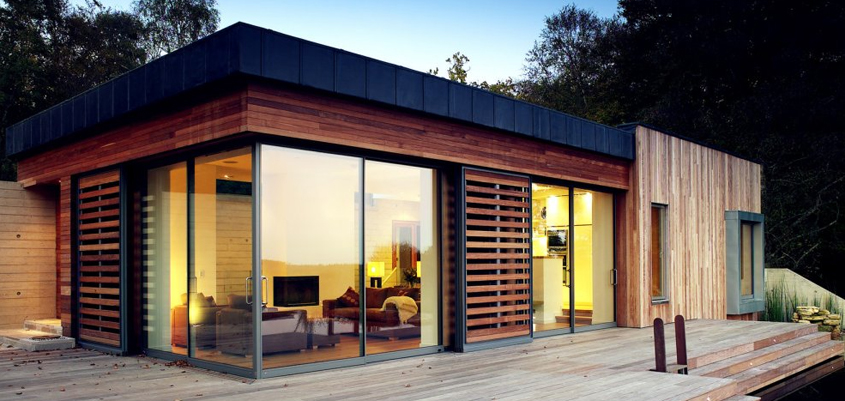
On a private level, the obligations to develop much more sustainable cities pass through sustainable homes. For this, there are options with certification seals for ecological buildings, such as BREEAM or the passive houses of Passivhaus.
In general, buildings meet the following requirements:
- Their architectural design is based on energy savings.
- Reducing energy consumption must be a priority.
- They use renewable energy sources, such as solar or aerothermal energy.
- They must produce minimal waste.
- Their maintenance must be minimal.
An important step in the future of cities is the Nearly Zero Energy Building, which in 2020 will obligate all constructions in Spain to adopt a series of measures aimed at minimizing energy consumption to the fullest, through the use of ventilation systems, alternative energy sources, and specific construction methods.

Siber Ventilation
Related posts
Why is mechanical ventilation necessary in homes?