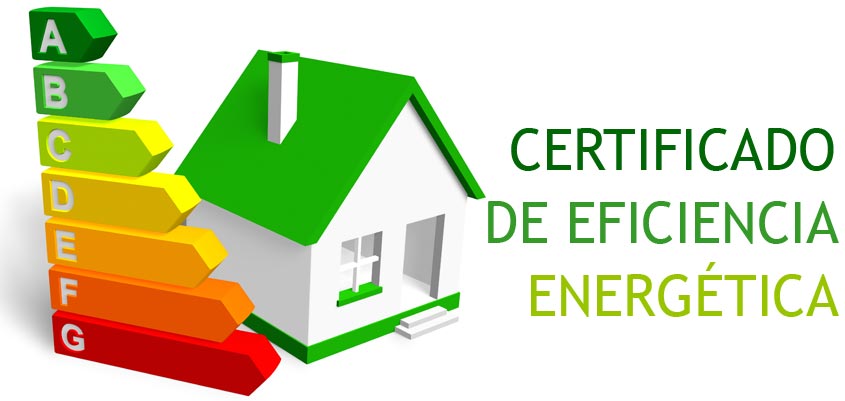
Energy Efficiency Certificate: Requirements and Optional Labels
The real estate sector, along with construction, must currently commit to energy efficiency. It is not only a thing of the future, but for years there have been important obligations for Spanish buildings to have a broad minimum of sustainable options. Thermal insulation, mechanical ventilation, controlled low-consumption lighting, or efficient air conditioning. For all these reasons, it was necessary to implement a energy efficiency certificate standard that can indicate the extent to which a home or workplace complies with sustainability and energy cost savings.
First of all, we need to differentiate between two types of energy efficiency certificates:
- Official Energy Certificate. This is the official document that must be drafted by an accredited technician and includes real information about the characteristics of the property in question. An energy assignment is given with a label that provides clear information about the situation of the construction regarding its energy resources. This certificate is mandatory.
- Optional Energy Efficiency Certificates. They provide added value to properties and give clearer and more concise information about the real situation of each building regarding its energy consumption. They are highly recommended, as they allow a buyer to know firsthand the real characteristics of the property, beyond what is specified on the mandatory energy label. Some of the most common and reputable ones include Passivhaus, BREEAM, or LEED.
If we are satisfied with simply complying with regulations, we will suffice with the energy certificate. But if we choose to offer added value in energy efficiency, it is highly advisable to obtain one of the optional certificates. Thanks to them, we will not only detail the benefits of the construction in energy savings, but by adhering to their recommendations, we will have greatly complied with the foundations of energy savings.
This can help us, for example, easily access the European regulations for Nearly Zero Energy Buildings, which will come into effect in 2020. Precisely, from that moment the current requirements of the energy label will fall below the new obligation of the European Union.
Content of the Mandatory Energy Efficiency Certificate
[caption id="attachment_3843" align="alignright" width="250"]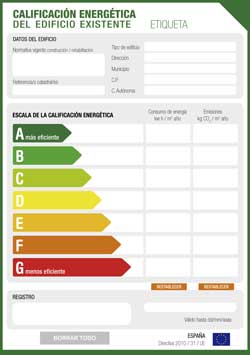 Example of the most common energy label in Spanish buildings, of a mandatory nature.[/caption]
The energy certification that is proposed in Spain as mandatory is something that all owners must undergo, although there are exceptions, in any type of building that may be part of a purchase, sale, or rental operation. Regardless of whether it is a home, a commercial space, an office building, or a work area.
The content of the mandatory energy efficiency certificate must include at least the following aspects:
- Identification of the building or part of the building that requires certification.
- Identification of the procedure chosen to obtain the energy efficiency rating. You can choose between the general option, the computerized program, or the simplified one. It must include the following information: -Description of the energy characteristics of the building: its thermal insulation, the number of inhabitants, and its operation under normal conditions, or the installations for energy savings. -Identification of the regulations applicable when built under energy savings and efficiency regulations. -Comprehensive detail of the tests carried out, inspections, and checks made by the certifying technician during the energy rating.
- Energy rating. This is graphically done through the label with a color coding.
- Recommendations document from the certifying technician according to technical and economic feasibility, as well as the energy impact they would have, provided the owner agrees to make these modifications voluntarily. They should include an increase in the efficiency scale, of at least one point.
How to obtain it? The client must first contact a specialized technician who has the necessary authorizations, as well as the academic and professional qualifications to carry out such procedures.
Who are those who can usually grant these mandatory energy efficiency certificates? Usually, technical architects, engineers, or authorized personnel. It is common for them to visit the properties to inspect them, examine them to grant the certificate, and finally provide the owner with the relevant document.In terms of cost, there is no stipulated price for the mandatory energy certificate and each of the specialists will set it according to their work and also the market conditions. It is better to ask for various quotes. It is also important to consider that the mandatory energy certificates have an expiration date, which will vary according to regional regulations in each of Spain's regions.
Opting for a Non-Mandatory Energy Efficiency Certificate
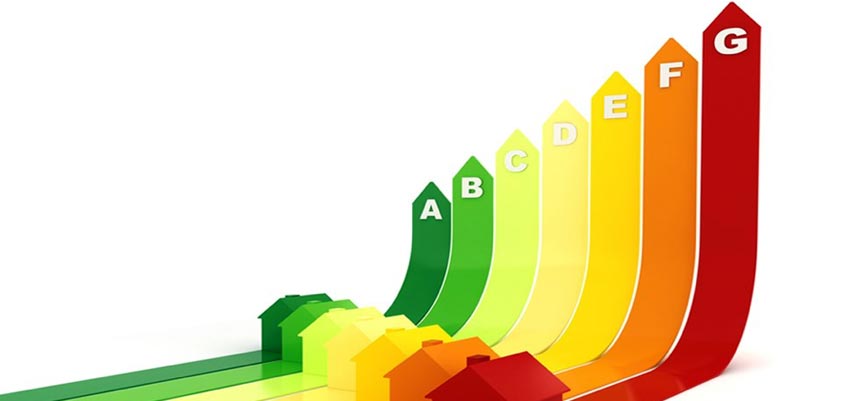
The obtaining of the mandatory energy efficiency certificate can be a problem for those buying or selling a property, as if it is in a situation of poor energy savings it will be directly indicated to potential buyers or renters, lowering the property's value. However, there are no previous guidelines on energy efficiency. Only the recommendations of the technicians who carry out the inspection will be available to potentially increase at least one category.
On the other hand, there are in Europe and also in other continents voluntary energy efficiency certificates that can greatly increase the value of a building, but they will also provide us with guidance to implement an energy savings plan in a construction.
We must say, however, that the energy efficiency certificates that are optional work much better when it comes to new construction buildings. It is then that implementing the necessary applications is easier. On the other hand, it should be noted that, in many cases, applying the bases of these certificates should not imply an increase in costs, while the energy savings will be very high.
There are three main voluntary energy certificates:
- BREEAM. This energy label aims to certify the feeling of well-being in a property, with an emphasis on controlled humidity and also other aspects such as clean and odorless air. It also cares about outdoor air. Its application is voluntary and energy efficiency is measured with a very simple point system, which then measures sustainability on a scale.
- Passivhaus. Developed in Germany, it advocates building passive houses. That is, they do not have traditional air conditioning systems that generate expenses, and only mechanical ventilation is allowed as a non-passive system. It is ideal for cold climates, but it can also be applied in very hot places.
- LEED. This certification operates through points that buildings must earn, which will give access to various categories in energy savings. It places special emphasis on sustainability, water savings, energy used, and atmosphere.
That's not the only positive aspect. Buildings that decide to obtain this type of certification will be much more durable and, above all, consume much less energy. In addition to the always necessary comfort at home, they provide us with a better buying and selling opportunity in the medium and long term, in addition to the basis of everything: energy savings that justifies their investment, thanks to the monthly savings.
What do Voluntary Energy Efficiency Certificates Focus On?

The energy efficiency is the central pillar of these types of voluntary certifications. Energy savings, in addition to sustainability, is perhaps the most notable, but we must also consider that the benefit is something shared with cities. The two main beneficiaries of the application of these certificates are the buildings themselves and also the communities where they are located.
Both BREEAM and Passivhaus or LEED have common guiding lines, although they may differ in their implementation or in minor aspects. However, the three certification labels usually aim for the following:
- When budgeting for housing construction or renovation, energy efficiency is the central and priority pillar.
- The orientation of the building and its placement on the plot cannot be studied based on personal decisions, but on energy efficiency. The placement in relation to the sun must be correct to take advantage of natural light and also the ideal natural air conditioning.
- The energy certificates seek the use of renewable energies, such as using solar panels to heat sanitary water.
- Most of the construction materials must come from ecological sources.
- Noise and other sources of pollution must be kept at bay.

Siber Ventilation
Related posts

Why is mechanical ventilation necessary in homes?

Constant flow ventilation systems, how do they work?