




Control the relative humidity indoors, how to achieve it?
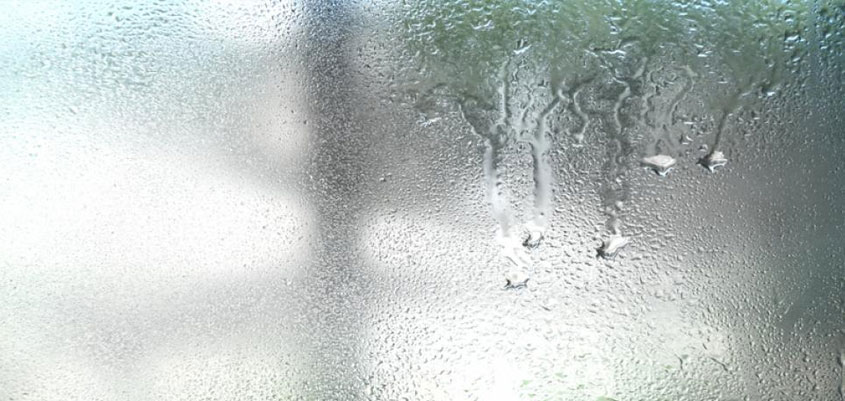
When we talk about improving comfort at home we always think about temperature. For example, when someone turns on the air conditioning in summer, they usually consider the temperature, but there is another value almost as important as the values on the thermometer, which is the water vapor in the air. Controlling the relative humidity indoors can be key to improving the feeling of well-being at home, how does it affect us?
It is important to note that many traditional climate control methods do not modify humidity values, but simply change the temperature. The air conditioning emits cold air and the heating warms it up, but the relative humidity remains at the same values.
Due to the relative humidity in the environment, we can notice the following effects:
- Increased feeling of heat in summer.
- Difficulty naturally cooling a room.
- Frequent sweating, as the water vapor in the environment does not allow sweating to occur efficiently.
- A more intense cold in winter and indoors.
 In addition, relative humidity can damage furniture or walls and also negatively affect the interior of our homes. Even worse, excess water vapor in the air is a source of health problems. From asthma to respiratory complications, humidity can negatively affect those living in an affected area.
What values of humidity are within acceptable limits? For that, we need to calculate the relative humidity in the environment, which technically is the “mass of water vapor in the air per volume divided by the mass of water vapor per volume at the saturation point at the same temperature”. But beyond the technical explanation, it is enough to know the values and understand how they affect.
We can consider that the saturation point will be 100%. The relative humidity will be lower, and can tell us key aspects in a building. For example, if we want to dry laundry, it will be very difficult if it is at 70%, which will be a high value. But if it is below 30%, we will notice a feeling of dryness.
The recommended values for controlling relative humidity at home are as follows, according to RITE:
- During winter, the relative humidity should be between 40% and 50%. The ideal temperature would be 22°C.
- In summer, the relative humidity should be placed between 45% and 60%, with the temperature a couple of degrees higher.
How to control relative humidity at home?
Considering the harmful effects of water vapor in the air inside our houses, the first step would be to control the relative humidity knowing the more or less exact value we have. For this, there is a hygrometer, also known as a humidity meter, which simply gives us the more or less exact values of relative humidity.If we have a value of water vapor in the air greater than the recommended -in our country, it is more common to have excess humidity than a need-, it is advisable to take measures to remedy it, such as the following:
- Open the windows if you do not have a ventilation system, especially in winter when it is common for them to be closed for a long time. Ventilation is essential to eliminate humidity, so if you have no other option, at least let the street air in.
- Do not cover areas affected by humidity. If the floor baseboards or walls show traces of humidity, the worst thing is to cover them or paint over them. Let those areas of the house air out and breathe.
- Avoid drying clothes indoors, even if it is winter or raining. Try to do laundry on sunny or dry days to avoid drying indoors.
- Baking soda or salt can help improve an area affected by humidity.
- If there is always a lot of humidity in the house, you can buy a dehumidifier that will eliminate water vapor in the air. With that, the feeling of comfort will be greater.
- The best solution is to install a mechanical ventilation system that renews the air. In combination with the dehumidifier, we can improve the climatic conditions of our home.


Siber Ventilation
Related posts