How can we regulate air flow in ventilation?
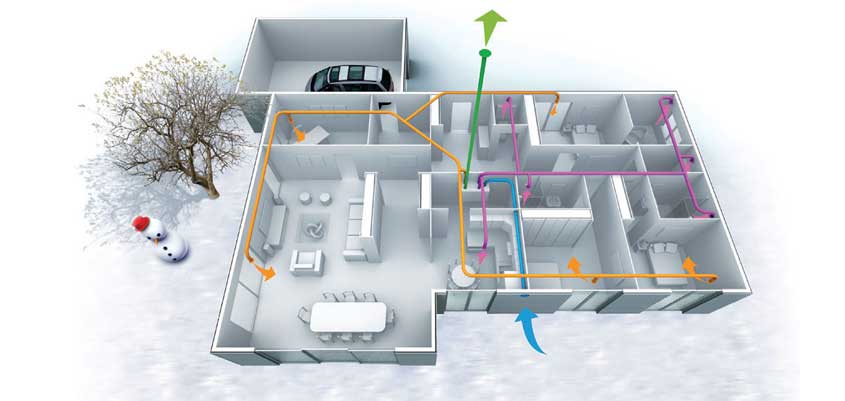
The ventilation flow is of utmost importance when airing rooms. Because it is the volume of air that will enter each room based on the needs of our home. In double-flow systems, which have an extraction system along with an air introduction system, the flow must maintain the optimal and necessary air level. So, how can we regulate air flow in mechanical ventilation? Or, in other words, the volume of air delivered to a room.
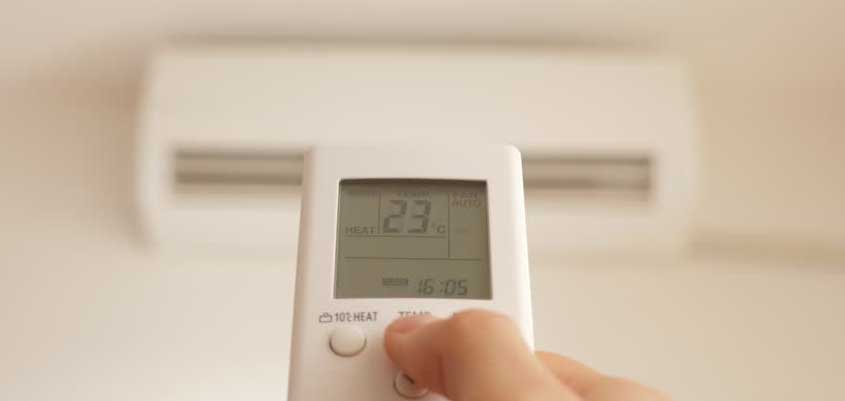
The most important thing is that the air flow is optimal when regulated automatically. While in air conditioning units, it is the user who must decide the volume of air introduced and also the temperature, this is not the case in mechanical ventilation systems. In this case, the flow must vary according to health needs, above all. For example, if there is excessive humidity, dirty air, or smoke, it must extract more air and also introduce more. To do this, it will be necessary to regulate the flow automatically and to push in more air.
The volume of flow, however, must be established based on current regulations. And also depending on the location where the mechanical ventilation system is installed. In the case of a residential building, we must apply what is stated in the Technical Building Code (CTE) and in its Basic Document HS3. In this way, we can establish the flow for all areas of the house in question, as well as the speed of air and maximum flow. Always with the idea that it does not generate annoying noises.
In the CTE, the air flow requirements for parking lots and storage rooms in residences are also specified, in addition to basements. In contrast, it is the RITE where the regulations for buildings that are not residences appear. From hotels, offices or schools to factories or warehouses.
To regulate ventilation flow, the specifications of each location must be taken into account according to current regulations. From there, the volume of air extracted or introduced into each room must be carried out automatically, depending on the needs of each place. Public parking lots, for example, are extremely important sites where the flow will be calculated to collect smoke in an enclosed space. Hospitals and schools are also of great importance.
Even so, the needs of ventilation flow include a mathematical formula with which the ventilation values can be calculated. The ventilation flow formula is as follows: Q = v x S.
In this formula, v is the velocity of fluid passing through a section S, and the speed is expressed in m/s, while the area is determined in m2. The flow Q would be expressed in m3/s. By using this, we can determine the flow needs for any situation or activity. Still, with the specifications from the CTE and the RITE, it should be sufficient.
The importance of regulating ventilation flow
The ventilation flow is one of the most important values in a comprehensive system. We cannot have a flow below the needs - which would worsen health and comfort - nor above, since in this case it could be very noisy or have unnecessary energy consumption.
In mechanical ventilation systems, regulation must not only be automatic but also vary according to the real needs of each location. For instance, to guarantee the same flow, at some point, it will need to extract more air and push in more, as conditions vary depending on the situations. The double-flow mechanical ventilation systems automatically measure some values like smoke, airborne pollutants, or humidity, and will adapt to that.
Another important factor where the system will take care of regulating ventilation flow based on current needs is to adapt to air filters. If, for example, the filters get dirty, they will not allow the same amount of air to pass with the same ventilation force. So, to maintain a constant ventilation flow, the system must be adjusted, and ventilate more strongly, which will result in increased noise and energy costs.
In any case, to know how to regulate ventilation flow, it should be taken into account that this flow must be constant and the system must always be in operation.

Siber Ventilation
Related posts