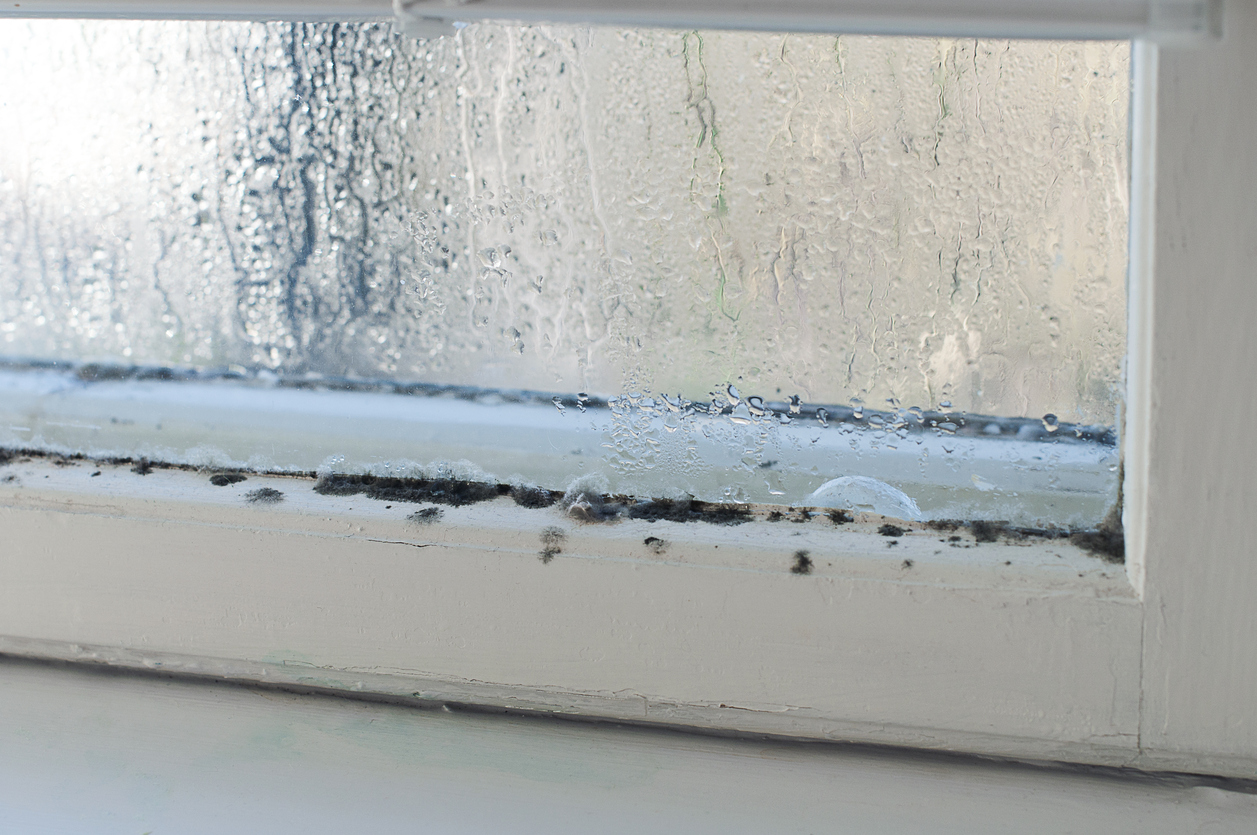
How to prevent water vapor condensation in our homes

superadmin
July 26, 2017
According to the CTE DB HS 1 Protection against humidity, buildings must minimize the predictable risk of humidity or water vapor accumulation both inside and in their enclosures. This presence of water may come from rainwater, runoff, the ground itself, or condensation. Therefore, mechanisms must be provided to prevent the entry or appearance of water or to allow its evacuation, in case it has already appeared, without jeopardizing the structure and materials of the building.
Origin of humidity
The presence of humidity in our homes can be due to three causes, depending on their origin:• Humidity due to condensation. It occurs when the water vapor contained in the air (ambient humidity) turns into a liquid when it comes into contact with a surface that is cooler than it. It manifests itself in the corners of walls and ceilings, and around the windows, in the form of dark spots. • Humidity due to capillarity. It occurs as a result of the rise of water from the ground through construction materials. It can also be due to the breaking of a water pipe. • Humidity due to lateral infiltration. It occurs when moisture from the ground is transmitted to adjacent premises due to walls being in direct contact with the ground (buried or semi-buried enclosures).
Causes of humidity
The causes of humidity due to capillarity or lateral infiltration are due to construction defects or inadequate construction solutions that have not taken into account the waterproofing, drainage, and ventilation of the walls in contact with the ground.Among the causes of humidity due to condensation, we find the following:
- Insufficient air renewal (inadequate ventilation system).
- Insufficient thermal insulation of the enclosures and windows.
- Inadequate construction solutions or construction defects.
- Inadequate heating system (incorrect distribution of warm air).
How to prevent water vapor condensation inside our buildings
Some good practices to prevent condensation are the following:• Increase the thermal insulation of the building's envelope, in order to avoid condensation on the walls due to the temperature difference between the outside and the inside.
• Install in our buildings a system of controlled mechanical ventilation with double flow that guarantees the correct renewal of the indoor air. Since it is a completely airtight and monitored system, the relative humidity level of the premises can be controlled at any time and the minimum ventilation flow rate can be guaranteed for the correct renewal of air.
• Have a dehumidifier. Installing dehumidifiers in the dampest areas of the home will help maintain relative humidity around 50%.


Siber Ventilation