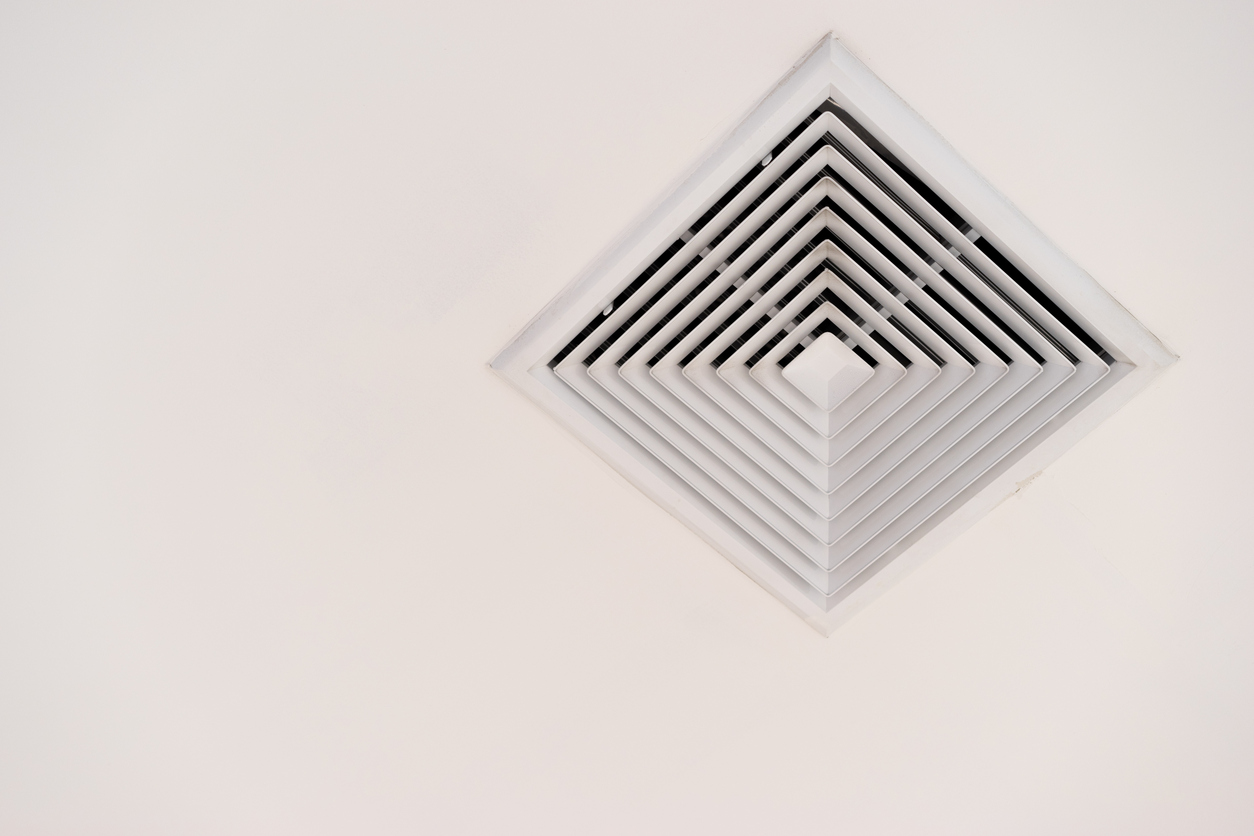
How does air flow through ventilation ducts?
Characteristics of ventilation ducts
There are different types of ventilation ducts based on their composition and geometry. Regarding their composition, ducts are usually metallic, although they can also be made from insulating materials (mainly fiberglass and rock wool), textile materials, or reinforced aluminum. In this last case, they would no longer be rigid ducts but flexible ones. Another material commonly used for their manufacturing is thermoplastic. In terms of geometry, they can be rectangular, circular, and oval.Air circulation through ducts
When ventilating a space, whether expelling air or extracting it, it is very common to have to connect the extractor with the rest of the installation through a duct. As air flows through the duct, it absorbs energy from the fan extracting it due to friction with the walls, changes in direction, or obstacles encountered along the way. The efficiency of the installation necessitates minimizing this energy consumption part.The airflow is called laminar when its trajectory is uniform. It is referred to as turbulent when the particles' paths of the fluid are irregular and constantly changing, leading to the emergence of vortices.
Pressure loss is the air pressure required to overcome friction within the duct. This loss determines the energy consumption of the fan. Air ducting is not always composed of straight sections; often, there are accidents in its trajectory requiring the use of elbows, deviations, exits, etc. All these elements offer resistance to air passage, increasing pressure loss, so it is preferable to limit their use even during the design phase of the installation. In the case of elbows, they are usually of curved tracing precisely to minimize pressure loss. When space constraints do not allow for curved elbows and straight elbows must be used, they typically have curvilinear pieces called guide vanes, which are curved pieces located in the elbow’s diagonal. These can be of uniform thickness, made from sheet metal, or adopt aerodynamic profiles. The placement of guide vanes with progressive separation between them serves to optimally distribute the airflow, thereby reducing pressure loss within the elbow.
It is also very common that due to construction imperatives, changes in section, reductions, or increases in duct passage must be made. These changes in section must be done progressively and not abruptly to reduce pressure loss. Another very important section within a duct network is the vertical exits through roofs. The best solution is to equip the duct at the exit to the outside with a tubular envelope that acts as a nozzle, diffusing air vertically. It also drains rainwater that can enter the mouth. Water flows along the inner walls of the envelope, which, having a diameter larger than the duct, allows the water to flow back outside.


Siber Ventilation
Related posts