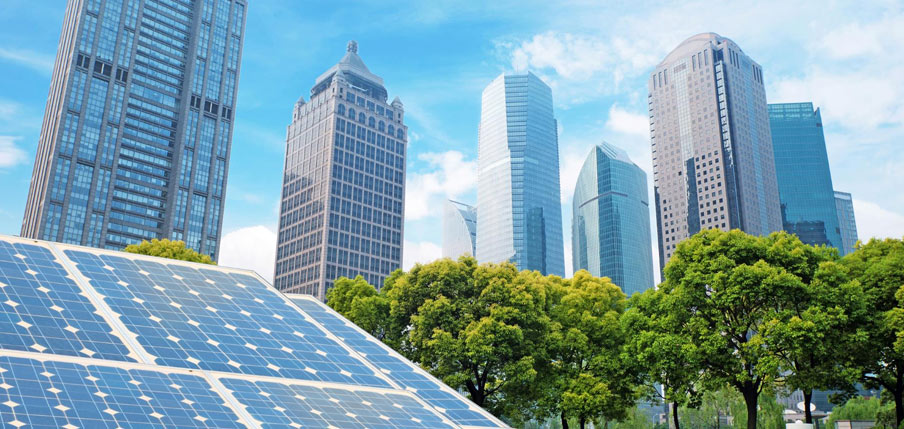
Ecological cities, what will the cities of the future be like?
Can the cities of the future be more sustainable? Undoubtedly. And precisely that is the challenge posed by modern construction, as seen in the imminent mandatory compliance with the guidelines of the Nearly Zero Energy Building. But, can they be considered ecological cities? That is the prospect in some developing countries - such as China - where they want to create authentic green localities. Although their characteristics are applicable to current cities.
There has been much discussion in recent years about smart cities and above all about energy efficiency. However, ecological cities have a somewhat different concept, at least in their complete idea. To summarize it in one concept, we can say they are "healthy cities". In a way that each city is unique and has its own personality, as there is no model to define what the health of cities is. However, that is the most accepted definition since it was devised eight years ago in Canada by the consulting firm Ecocity Builders and the International Ecocity Standards and Working Groups Association. Both organizations are considered the main entities of this architectural movement.
As both entities defined in 2010 what an ecological city is, this was the definition:
"An ecological city is a human settlement modeled on a structure of self-sufficiency and supply and with functions of ecological and natural systems. Ecological cities provide a healthy abundance of resources for their inhabitants without consuming more resources (renewable) than they produce, without generating more waste than they can assimilate, and without creating toxicity for the city itself or the ecosystem. Their ecological impact on their citizens reflects a lifestyle beneficial for the planet; their social order reflects the fundamental principles of justice, equality, and equitable distribution".The problem faced by trends that bet on ecological cities is basically that they are difficult to implement in cities conditioned by their past, as after all, it is the buildings that are the main polluters, and nothing can be done with old, high consumption, and low efficiency constructions. That is why ecocities are more common in new city projects in states like China.
Although there is no official decalogue of the characteristics of an ecological city, there is a widespread agreement on what this type of city should carry out:
- Ecological cities operate a self-sufficiency economy and obtain resources locally.
- There is no dependence on coal, and techniques of supply such as the production of renewable energies are promoted.
- The design of the city is created based on resource utilization.
- The geographic distribution should favor the use of bicycles, public transport, and walking over car use.
- They promote resource conservation with energy efficiency and water reuse, without creating waste.
- They use mechanical ventilation systems in buildings to ensure healthiness.
- They bet on the renewal of polluted urban areas.
- They ensure housing accessibility under equal conditions and improve job opportunities for marginalized groups, such as immigrants or people with disabilities.
- They emphasize local agricultural production.
- They include mechanisms for orderly growth in the future.
What can the concept of ecological cities contribute to sustainability?
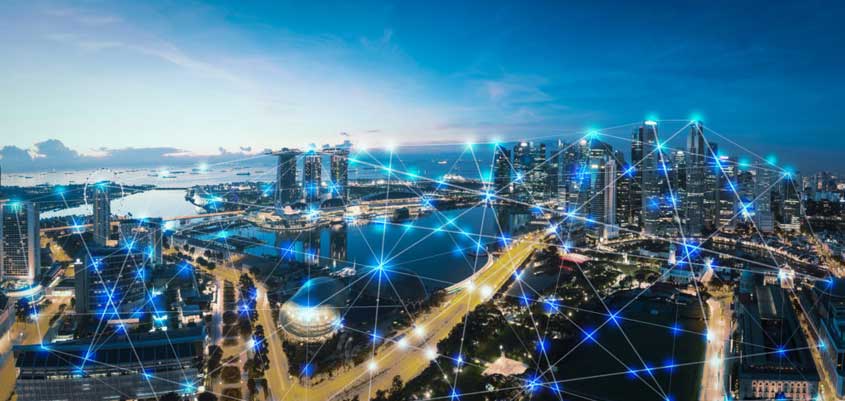
Although the concept of ecological cities has lost strength by trying to be something that starts from scratch - instead of reusing the possibilities of current cities - it does lay interesting foundations for what a city of the future should be, focused on responsible resource consumption and on supplies of high energy efficiency.
Currently, ecological cities have lost momentum in favor of something more realistic and almost immediate future, such as smart cities. In this case, it is much easier to approach concepts in line with reality, as smart cities are developed through current cities. For example, Barcelona is considered in Spain as a territory that can be regarded as a smart city in many areas.
Ecological cities share many common points with smart cities, as both seek a model of local development, where new technologies aim for efficient resource consumption with emphasis on local production. This is where the construction sector wants to head at present.

Siber Ventilation
Related posts

Constant flow ventilation systems, how do they work?