Eco-friendly houses, a bet on sustainability in the home
It has become quite normal to see how the rise of sustainable homes is increasing. Whether it is due to Nearly Zero Energy Buildings -which will imminently become mandatory in Spain for all new constructions starting from 2020- or simply due to the need for energy efficiency in the home. However, it is still not so common to hear about eco-friendly houses, a concept within the residential commitment to ecology and sustainability that encompasses some very interesting ideas.
First of all, it is necessary to understand what the concept of eco-friendly houses means. We might say that they are those homes that utilize natural resources from inexhaustible energy sources, such as the sun or wind, to make responsible use of the environment both in construction and throughout their lifecycle. Even regarding the waste generated.
This is why eco-friendly houses are those that respect nature and the planet in their energy use, in addition to implementing a bioclimatic design in their construction. For this reason, they are very close to bioclimatic houses.
What does this bioclimatic design mean in eco-friendly houses? Mainly, making use of inexhaustible energies to climatize the home. For example, ensuring that the architecture of the home takes advantage of sunlight to warm the house in winter, or that the wind can cool the rooms. All this, of course, done with sustainable materials that are easy to obtain, preferably from nearby locations. The idea is that every eco-friendly house is not only sustainable in its construction and residence, but also with the surrounding environment.
We can define that the design of eco-friendly houses, to adapt to these bioclimatic functionalities, must be governed by various parameters:
- It is necessary that the houses are airtight, without leaks. The thickness of the insulation material must be greater than that of conventional construction.
- It must be oriented towards the sun, for example, on the southern side of the house it must take advantage of the possibilities of climatization offered by sunlight. To store the heat from the sun's rays, it is possible to use thermal inertia materials that will retain that heat during the day and release it at night.
- Ventilation is essential in eco-friendly houses, first utilizing methods such as interior patios to achieve cross ventilation. We can opt for systems such as aerothermal or geothermal to make even better use of the capacities of air and ground. With a double flow mechanical ventilation system, we can also introduce warm air in winter and cool it in summer.
- Hot water could come from natural sources, such as rainwater harvesting.
Different types of eco-friendly houses
Eco-friendly houses offer, alongside bioclimatic ones, true construction rewards. In these cases, the inventiveness of architects achieves housing models that break many barriers. Besides respecting energy efficiency, they utilize materials that are sometimes very uncommon, requiring little energy to produce and even transport.All materials must be free of toxic or chemical elements, they cannot alter the home's magnetic fields and must contribute to creating a harmonious environment. It has even become a trend to use elements that naturally improve environmental conditions, such as hygroscopic materials, capable of enhancing indoor humidity. There are various types of eco-friendly houses, but we can mainly mention three types:
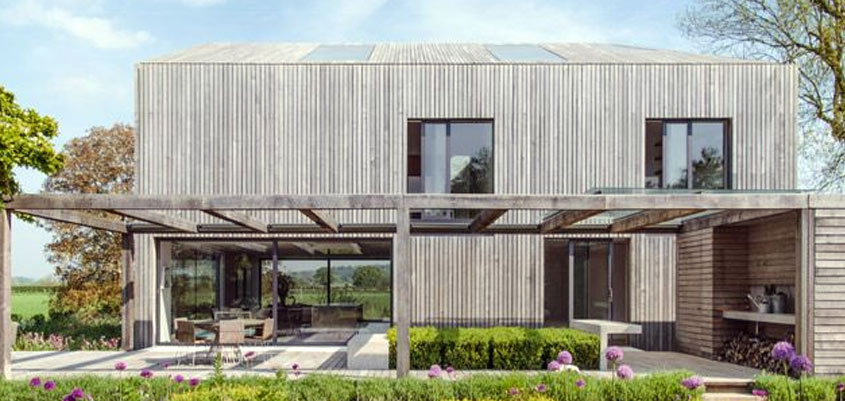
- Wooden houses. They are more difficult to construct, but wood is the most characteristic element of eco-friendly houses. As a material, it has hygroscopic properties, so it maintains humidity at an optimal level. Additionally, it adds warmth in cold climates.
- Eco-brick houses. They require a much thicker profile than conventional houses, and limestone bricks are usually used. It is very important to consider the method of joining the bricks, which must be done with cement-based glues, totally free of toxic agents.
- Concrete houses. Indeed, this material is neither natural nor healthy - it contains toxic components - but nowadays solutions have been found to build eco-friendly houses even with these hindrances. Typically, cellular concrete is used, which is made of sand and complemented with gypsum and lime.

Siber Ventilation
Related posts
Passive houses: EnerPHit certificate and Passivhaus certificate
What is a passive house? How to make your house one too