BREEAM or Passivhaus, strengths and compatibilities of both certificates
One of the challenges that energy efficiency faces in our country is how its ideas must be implemented in construction. Until now, there have been no standardized criteria on how to bring sustainability to construction, and the sector has had to start moving after the much-needed regulation. Legislation that will mark a before and after in 2020, when the obligation of Nearly Zero Energy Buildings comes into effect. However, one of the best ways to adapt to this is to bet on the most valued energy certificates in the market. We refer to BREEAM and Passivhaus, two references throughout Europe.
What is interesting about certification seals like BREEAM and Passivhaus? Basically, they guarantee that a building meets a series of sustainability standards. But above all, they outline a master plan to carry out projects that are environmentally friendly and that represent substantial energy savings. The buyer of a property certified by one of the two seals can know that it will comply with the forefront of energy efficiency.
On the other hand, looking to the future of the industry, it is a good idea to bet on the implementation of one of these sustainable energy seals whenever possible. Meeting their requirements is already sufficient to adapt to the Nearly Zero Energy Building. And, of course, both Passivhaus and BREEAM guarantee a really small -or even zero- supply cost along with more than satisfactory comfort.
Moreover, both ecological certificates are totally complementary. In some cases, they offer the same solutions -such as building tightness or the need for mechanical ventilation systems- and in others, the values of both BREEAM and Passivhaus can be combined.
Offering the seals of BREEAM and Passivhaus in a building is undoubtedly a very high guarantee that energy efficiency is being prioritized. More specifically, what do these certificates provide us?
Houses of the future, why bet on an ecological certification seal?
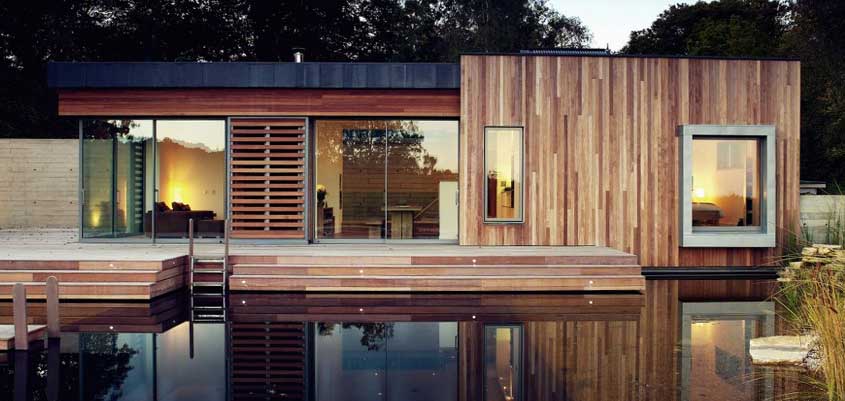
The homes of the future will need to consume less due to ecological necessity -especially in cities-, but also to face the dramatic increase in energy costs. And this is where sustainable houses come in, a way of viewing the residential sector with energy efficiency at the center of everything.
What are the main features that homes BREEAM or Passivhaus have to be benchmarks in the certification of sustainable houses?
- In the housing budget, energy efficiency must be taken into account as something priority and central.
- The orientation and placement of the house will not be made according to personal needs, but rather energetic ones. Its placement in relation to the sun will be strategic.
- Different sources of renewable energy will be necessary.
- Construction materials must be ecological.
- Rainwater harvesting systems will help make sanitary water ecological.
The main objectives of BREEAM and Passivhaus are to offer certification to benefit:
- Homes, which will find substantial savings in energy costs. In some cases, these may even be zero. Therefore, they are a solution to future problems of energy poverty. It is a medium- and long-term benefit.
- Cities and natural environments benefit from the high energy efficiency of buildings with both energy certification seals. They are a solution to curb pollution in large urban centers, as buildings are the largest source of pollution in urban areas.
Common characteristics of BREEAM and Passivhaus

Despite their regulatory differences, both Passivhaus and BREEAM have many features in common. Especially regarding construction, air renewal, and also alternative air conditioning systems, at the expense of traditional air conditioning or heating devices.
- Reducing energy losses with sustainable architecture. Both certificates advocate for ecological construction, with rooms of an appropriate size for the environment where they are situated.
- Ecological construction materials that provide tightness. It is essential that, in most situations, no air conditioning system is necessary. This is achieved through a design that prevents cold and heat from entering during the worst months of the year.
- Renewable energies and sanitary water. Part of the energy must be obtained sustainably, and hot sanitary water must come from alternative sources.
- Solar orientation. Both energy certification seals insist on good placement in relation to the sun. Also with solar protection in summer, which can be achieved with reflective systems.
- Double-flow mechanical ventilation systems. Air renewal is essential, which, besides ensuring salubrity in all rooms, achieves the removal of heat in summer and cold in winter. For this, heat recovery units are used, which can heat the incoming air in winter or cool the air brought in during summer to avoid using traditional air conditioning systems.
Key features of Passivhaus
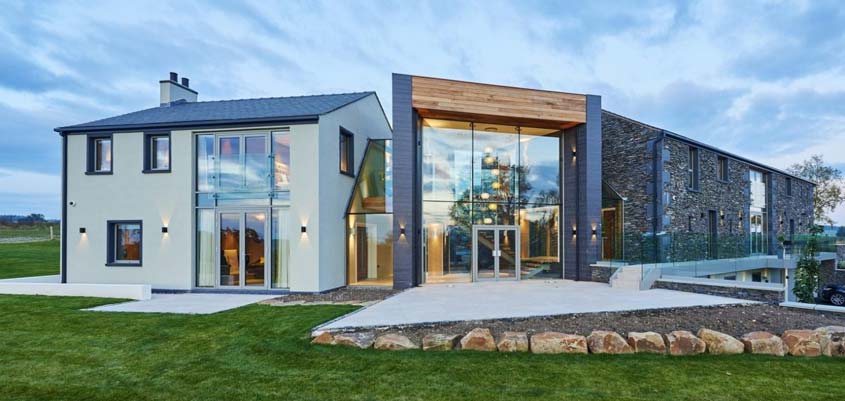
When we talk about Passivhaus, we must understand that everything is specified in its name. It is the most characteristic seal for passive houses. The emphasis this certifying entity originating from Germany places is that all energy processes in the home (with a small exception) are carried out passively. What does this mean?
To understand it, the best example is an air conditioning unit. Imagine a poorly built house where it gets very hot in summer. The common solution would be to install an air conditioning unit that blows cool air into the rooms. That is an active solution, since it requires a process that has an energy cost.
The passive solution would be to install elements that cool the room by preventing heat from entering the home. For example, an exterior awning that blocks the sun and walls that prevent heat from filtering into the room. In this way, the temperature in summer is also reduced, but without the need for an active mechanism. To find an automotive analogy: brakes are an active safety mechanism because they must be activated when necessary, with their corresponding energy expenditure. Meanwhile, the seatbelt is a passive mechanism.
Thus, with the Passivhaus standard we find an emphasis on passive houses that achieve optimal comfort without resorting to air conditioning systems. The only active mechanism allowed is the mechanical ventilation system, whose energy cost is very low. Furthermore, thanks to aerothermal energy, in many cases, it is at no cost.
https://youtu.be/pdmN9SQ6fXQ
In Spain, regarding the Passivhaus standard, the industry has questioned at various times whether its efficiency is equal in cold or warm climates, since the seal was created in Germany, where it is much colder than in our country. However, as can be seen in the project linked in the video above, Passivhaus also provides solutions in extreme heat climates.
Key features of the BREEAM seal

The energy certificate BREEAM is characterized by its ease of application. It is available in several languages, including Spanish, making it easy to apply. And while Passivhaus focused on making houses passive, BREEAM -of British origin- prioritizes comfort and sustainability.
The BREEAM construction certificate works with a points system that is easy to understand and evaluates the sustainable characteristics in several phases of construction.
The seal certifies that there is a feeling of well-being, with controlled humidity and other aspects such as clean air without odors, as well as other features such as preventing external noise from entering. It typically measures sustainability across ten criteria:
- Energy management.
- Health and well-being for its inhabitants.
- Necessary energy.
- Transport.
- Water and supply.
- Materials used.
- Waste produced.
- Land use.
- Building ecology.
- Pollution and innovation.
In contrast to both systems, which is the best choice between BREEAM and Passivhaus? Well, if possible, the ideal is to stick with both. On the one hand, Passivhaus bets on homes that are passive in their energy consumption, and BREEAM has very interesting points regarding the healthiness and comfort of the home. Implementing both allows for adherence to guidelines to have a building in the best energy, health, and comfort conditions at home.

Siber Ventilation
Related posts
Constant flow ventilation systems, how do they work?