Air quality measurement units: ppm or parts per million
In Spanish and European legislation, the microgram/cubic meter is the unit used to quantify air quality. This unit measures many of the reference values of harmful gases present in the environment, such as limit values or information thresholds. The pollutants that have been studied for the longest time, such as SO2 or nitrogen oxides, are expressed in microgram/m3. However, carbon monoxide (CO) is the only pollutant whose concentration levels are normally measured in milligrams/m3. For other pollutants with very low percentages in the air, such as Dioxins or Polycyclic Aromatic Hydrocarbons, even smaller submultiples than a gram are used:
- The nanogram/cubic meter (ng/m3): 1 nanogram corresponds to 10 E-9 grams.
- The picogram/cubic meter (pg/m3): 1 picogram corresponds to 10 E-12 grams.
Parts per million (ppm)
Parts per million (ppm) is the unit commonly used to measure the volume occupied by small amounts of elements (also known as trace), within a mixture. It usually refers to weight percentages in the case of solids, and in volumes in the case of gases. A ppm is used to measure air quality. In this way, 5 ppm of CO equals 5 units of volume of CO for every million units of volume of air, that is, 5 liters of CO in a million liters of air.Parts per billion (ppb) is a unit typically used to measure the presence of substances in small amounts within a mixture. As in ppm, it usually refers to weight percentages in the case of solids, and in volume in the case of gases. Therefore, 5 ppb of NO equals 5 liters of NO (nitric oxide) for every billion liters of air.
Removal of pollutant particles from the air
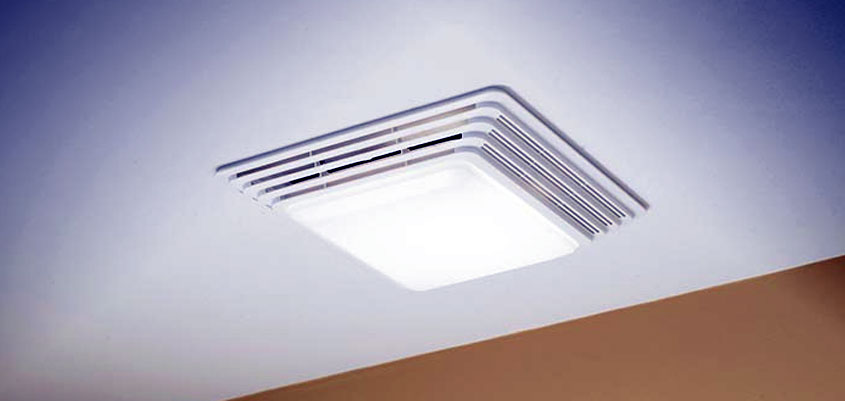
The presence of pollutant particles in the air requires the availability of hybrid or mechanical ventilation systems that ensure constant renewal of polluted air. The great variety of constructions and the specific needs of each of them diminishes the possibility of providing fixed rules regarding the arrangement of ventilation systems. However, a series of general principles can be given for carrying out their design and installation:- The air inlets should be diametrically opposite to the position of the fans, so that all used air crosses the contaminated area.
- It is advisable to place the extractors near the possible source of contamination, so that the stale air is extracted without passing through the room.
- The extractor should be avoided near an admission vent or any other possible air inlet, in order to prevent the expelled air from re-entering or creating pockets of stagnant air in the room to be ventilated.


Siber Ventilation
Related posts

Why is mechanical ventilation necessary in homes?