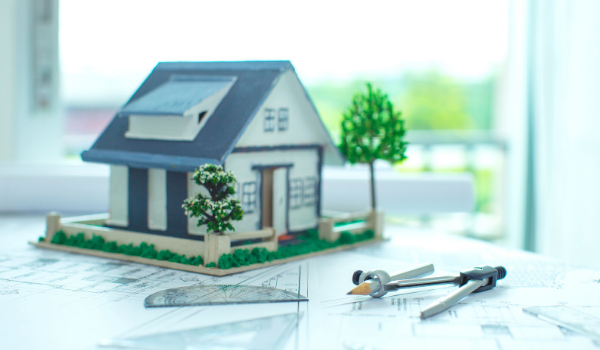
Ventilation After the Implementation of the BIM Methodology

superadmin
March 11, 2020
The BIM methodology has become one of the main protagonists of current architecture. This is due to all the advantages it offers when designing and constructing efficient buildings. Furthermore, it allows everyone involved in this work to be engaged throughout the process.
How Does the BIM Methodology Work?
The tools included in the BIM methodology serve to complete the information and all the possibilities offered by CAD technology, which facilitates the design of all construction elements in 2D and 3D. But the BIM system goes further when it comes to carrying out this type of work.
With the BIM methodology, it is possible to simulate the entire lifecycle of the building even before constructing it. In addition, it allows for estimating how much the work will cost and setting the times that will be invested in the entire process. Not to forget that it facilitates finding possible problems at the beginning of the project, allowing for the necessary changes to be implemented.
When applying the BIM methodology to construction projects, it is possible to address the entire process quickly and easily. All the elements that you will later include in the building can be integrated, and their placements can be checked. It is possible to gather all the information about each element participating in the project and how it affects the building's performance.
How Does the BIM Methodology Improve the Design of Ventilation Systems?
It is clear that the BIM methodology greatly simplifies construction projects. But it is especially practical when applied to ventilation systems. Data related to acoustic information, energy consumption of the system, and fan aerodynamics can be obtained.
By using the methodology, it is possible to create 3D models and use them to observe the various airflows; additionally, the air sweep can be represented. In this way, it will be possible to choose the ventilation system that is most suitable for the building.
An example of its use would be a large space, such as a school, a hospital, or a shopping center. It should be noted that these are constructions that will have a high flow of visitors, so it is appropriate to use this methodology. It will help calculate what equipment is needed, how they should function, or even the impact it will have on the people in the facilities.
It is necessary to assess the importance of using the BIM methodology, as it provides such detailed information that it achieves creating a highly efficient project. Furthermore, when materials are added during the development of the process, it allows checking how they will look and how they will interact with the rest of the construction.
For example, you can check if any of the ventilation ducts are obstructed by any construction element, thus finding the solution even before the problem becomes real. This will be done virtually and without the need to halt an ongoing construction work.
It is important to remember that in a traditional design, weeks or even months are spent designing what a building will be like, and all that work can go to waste if there is a calculation error. However, the BIM methodology is so precise that it can even estimate the impact of small changes made.
Undoubtedly, the BIM methodology has significantly changed the design of buildings and their ventilation systems.


Siber Ventilation
Manufacturer of High Energy Efficiency Ventilation Systems. Siber provides a set of high energy efficiency solutions in wind and mechanically intelligent ventilation, improving the Health, Hygiene, and Comfort of people, being respectful of the environment.
Related posts
energy efficiency
bioclimatic architecture
Energy efficiency and sustainability
sustainability
sustainable architecture
energy efficiency
sustainability
bioclimatic architecture
sustainable architecture
Sustainable architecture in Spain: some recent examples
For more than a decade now, Spain has joined the group of countries where sustainable architecture projects are developed

sustainable architecture
sustainable architecture
LEED Certification
GBCE: LEED Certification and Ecological Architecture
Analysis of the main vectors on energy saving and efficiency imposed by the GBCE to obtain the GREEN certificate.
sustainable architecture
sustainable architecture
energy efficiency
Energy efficiency and sustainability
energy efficiency
sustainable architecture
sustainable architecture
Do you know what the principles that define sustainable architecture are?
Sustainable architecture can be defined as that which is capable of designing and constructing buildings in a sustainable way for the environment.