Las ventajas de las cubiertas ventiladas
Si hay un elemento mayoritario en los tejados en las casas españolas son las cubiertas con tejas de cerámica. Las vemos en infinidad de ciudades y pueblos y con su colocación inclinada son parte del paisanaje. Y si bien llevan siglos existiendo, ahora incorporan una nueva medida de eficiencia energética en forma de ventilación bajo el tejado. Es lo que se conoce como cubiertas ventiladas.
La teja española, creada con una base de arcilla a altas temperaturas y actualmente de superficie plana, tiene una gran aceptación en todo el mundo. Lo normal, hasta ahora, era montarlas normalmente con pasta para adherirlas a la superficie, lo que podía provocar humedad y una mala ventilación.
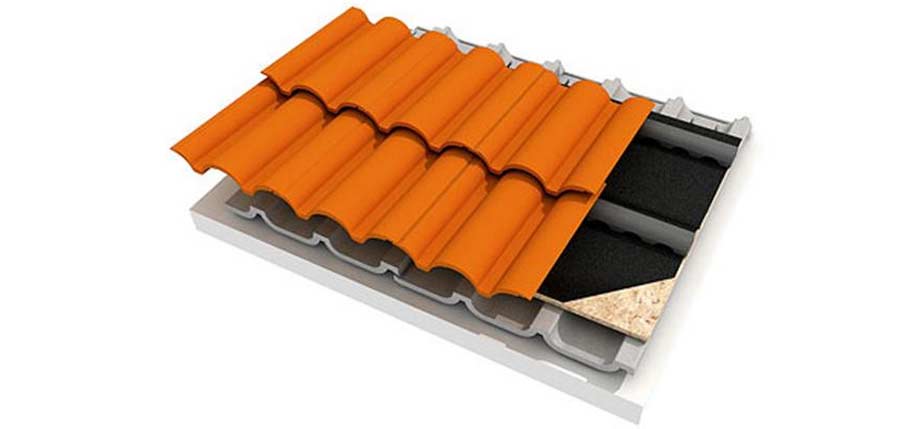
Las nuevas cubiertas ventiladas incorporan un revolucionario sistema de montaje, que olvida la sujeción con pasta para montar las tejas con clavos y tornillos, e incluso con grapas. Éstas se anclan a unos raíles o placas que se montan previamente. Y ello crea una capa de aire para ventilar el espacio entre las tejas y el techo interior.
Este sistema de fijación hace posible la microventilación al entrar el aire por la parte inferior de la cubierta, que sale por el lado superior.
Ventajas de las cubiertas ventiladas
[caption id="attachment_3316" align="alignnone" width="904"]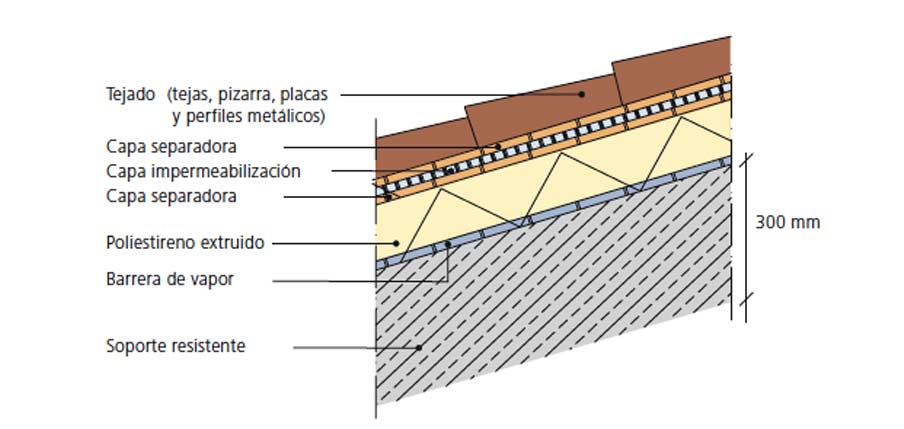 Esquema de una cubierta ventilada, foto del portal Construmática.[/caption]
La cubierta ventilada no incurre en un gasto muy superior en su instalación -es más, se instala más rápidamente-, y en cambio sí que tiene mejoras evidentes. Tanto en verano como en invierno, se logra un considerable aumento en eficiencia energética al evitar que se escape el calor en los meses fríos y frena el ascenso de temperaturas en la temporada cálida.
Durante el verano, el aire que se almacena entre las tejas y los soportes se caliente y asciende hacia la salida de aire, permitiendo que entre aire exterior. Esto ayuda a que se ventile mejor la estancia y se gane en confort.
Al invierno, en cambio, el aire se calienta entre las tejas y el tejado interior, ayudando a que no se escape el calor del hogar. Todo ello se traduce en una mayor eficiencia energética.
Este proceso de microventilación en los tejados ventilados se convierte en beneficios como:
- Los cambios de temperatura son algo menos bruscos.
- En los meses de verano, la cubierta ventilada evita que el techo -en contacto directo con el sol- cree un efecto horno en las estancias.
- Las tejas se secan y se evita la humedad. Así no se crea hielo en el tejado, ni moho o humedades incómodas.
- Los tejados ventilados son más impermeables a lluvias o nieve y duran más.
En cualquier caso, es importante respetar la norma a la hora de instalar estas cubiertas, ya que para que la ventilación sea la correcta es necesario que el aire entre la cobertura y pueda salir sin problemas. El espacio entre las tejas y el soporte ha de ser, como mínimo de 20 a 40 milímetros dependiendo de la teja. No obstante, lo ideal es que sea cuanto más amplio mejor. La ventilación gana en eficiencia cuanto más grande es este espacio.
Los materiales para los soportes que sujetarán las tejas son de diversos materiales, desde plásticos o metálicos hasta de madera. Eso, sí, estos materiales y raíles deben ser perfectamente lineales y de dimensiones constantes en altura y anchura para permitir el apoyo uniforme de las tejas. Hay que tener en cuenta que se ha de crear un espacio uniforme.
El avance de las cubiertas ventiladas es ya una realidad, y sin duda se trata de una manera muy sencilla y no costosa de ahorrar en facturas de tanto de la luz como del gas, ya que permite una mejor eficiencia energética. Y es que su instalación ayuda a usar menos los sistemas de calefacción y de aires acondicionados en los hogares y otros edificios.

Siber Ventilación
Entradas relacionadas