Cómo obtener una calefacción de bajo consumo gracias a la geotermia
¿Sabes cómo funciona una bomba de calor geotérmica? En el presente artículo te explicaremos las ventajas de su instalación.
En la actualidad, uno de los principales estandartes de la política energética en general, y del sector de la construcción en particular, es la eficiencia energética. Para proteger el medio ambiente, es de suma importancia que entre todos nos comprometamos a minimizar la emisión de gases de efecto invernadero. Ello obliga a reflexionar acerca de la implantación de mejoras en nuestros edificios que ayuden a reducir la demanda energética de estos. Se trata de integrar una serie de soluciones pasivas, de manera que se obtenga una alta eficiencia energética sin renunciar al confort y el bienestar que tú y los tuyos merecéis.
Ventajas de la energía geotérmica
• El coste de su explotación es bajo y su extracción es respetuosa con el medio ambiente.• Dado que se puede conseguir en cualquier punto de la corteza de terrestre, las dependencias hacia los países productores de las fuentes energéticas actuales se minimizan.
• Los residuos resultantes de su explotación, comparados con los residuos que originan el petróleo o el carbón, son ínfimos.
Cómo ahorrar energía
Una manera de ser más eficientes es instalando un sistema de ventilación mecánica con intercambiador tierra/aire en nuestra vivienda. Dichos intercambiadores tierra/aire emplean el subsuelo para refrigerar y calentar el flujo de aire que circula por un tendido de conductos que discurre por el terreno. De esta manera, disminuye la temperatura del aire que se insufla hacia el interior del edificio durante la época estival y la incrementa durante la época invernal. Se estima que la demanda energética de los edificios que poseen un sistema de ventilación mecánica con intercambiador tierra/aire disminuye en un 45%.Otra manera de recuperar energía es mediante una bomba de calor. Una bomba de calor es un dispositivo térmico que funciona por el principio según el cual el calor, de manera natural y espontánea, se traslada de un foco caliente a otro que no lo está, hasta que las temperaturas de ambos focos se equiparan. Se trata de un sistema que, al obtener la energía del aire, consume muy poca energía. Sus principales usos son la calefacción y el agua caliente sanitaria.
Para aumentar la eficiencia de una bomba de calor convencional una buena solución es utilizar la geotermia. Se trata de aprovechar la energía de la tierra, su temperatura estable y su capacidad de asimilar y transferir gran cantidad de energía calorífica.
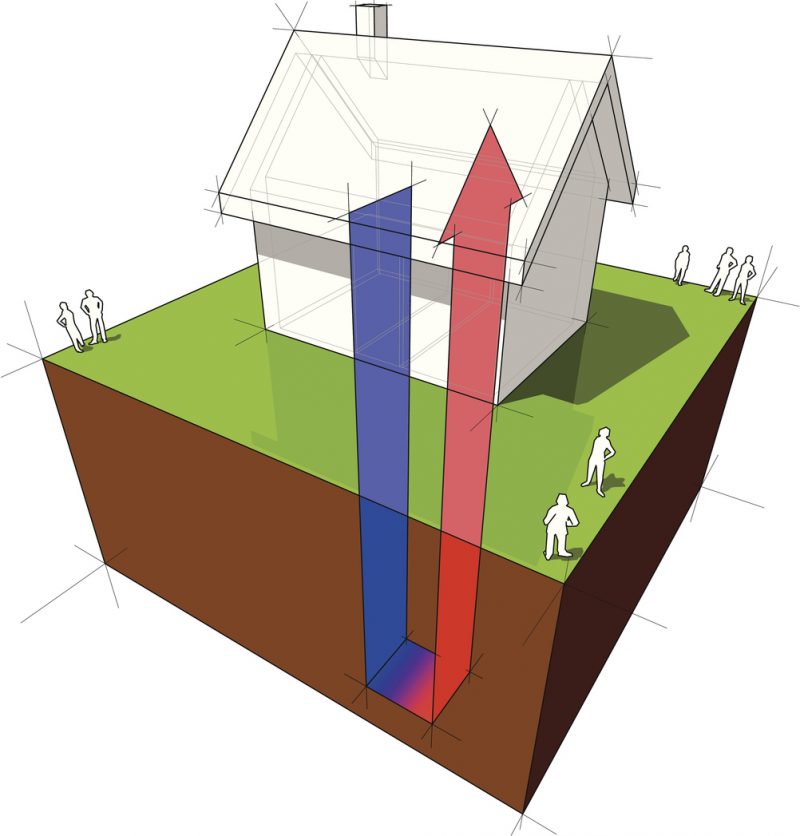
¿Cómo funciona una bomba de calor geotérmica?
En primer lugar, se procede a la perforación del terreno para enterrar los conductos (en el caso de que existieran aguas freáticas, también se puede aprovechar su calor). Por el interior de los conductos discurre un fluido que intercambia calor con el terreno. Si lo que se pretende es calentar el ambiente interior de un recinto, el fluido será más frío que la tierra y se irá calentando, a medida que asimile el calor que esta almacena. Posteriormente, lo cederá a la bomba de calor. Si por el contrario, se pretende refrescar el ambiente, el fluido discurrirá con la energía calorífica del interior y se irá refrigerando, transfiriendo el calor al terreno y cediéndolo a la bomba más frío.Recuerda que si sacamos partido a recursos que nos da la naturaleza, y en particular a la geotermia, no solo lograremos reducir la demanda energética de nuestro edificio (y, en consecuencia, el importe de nuestras facturas), también colaboraremos a minimizar las perjudiciales emisiones de gases de efecto invernadero.

Siber Ventilación