Extractores de humos, un repaso a la normativa vigente
Los extractores de humos son una verdadera necesidad para la salubridad de los entornos industriales y también en el hogar. Si bien en nuestras casas tenemos sistemas como las campanas extractoras en cocinas, en zonas de trabajo y sobre todo en fábricas y talleres es necesario contar con sistemas que envíen el humo fuera de las estancias cerradas.
Al tratarse de contaminantes para el exterior y al mismo tiempo de sustancias dañinas para la salud, existe una normativa vigente en extracción de humo. Deberá determinarse el tipo de actividad comercial o industrial para confirmar si es obligatorio instalar un sistema de extractores de humos. En los casos en que sea necesario, un sistema de extracción garantizará la calidad del aire en el interior. En la normativa relativa a la eliminación de este contaminante, se ha de clasificar la calidad del aire de extracción cuando se mezcla con humo, en el lugar donde sea requerido. Desde una cocina industrial en un restaurante hasta una fábrica que opere procesos químicos requiere de diferentes soluciones para la extracción de humo.
En España, la normativa vigente de extracción de locales de servicio dictamina que ha de ser de un mínimo de 2 dm3/s por m2 de superficie en planta. Sobre todo, en los espacios que se consideran como aire de extracción con muy alto nivel de contaminación. Técnicamente, la categoría en la normativa es AE 4, y se consideran en esta tipología las zonas de aparcamiento cerradas, los locales de fumadores, las cocinas de restaurantes con alto volumen o los centros químicos, entre otros.
Ventilación mecánica en extractores de humos
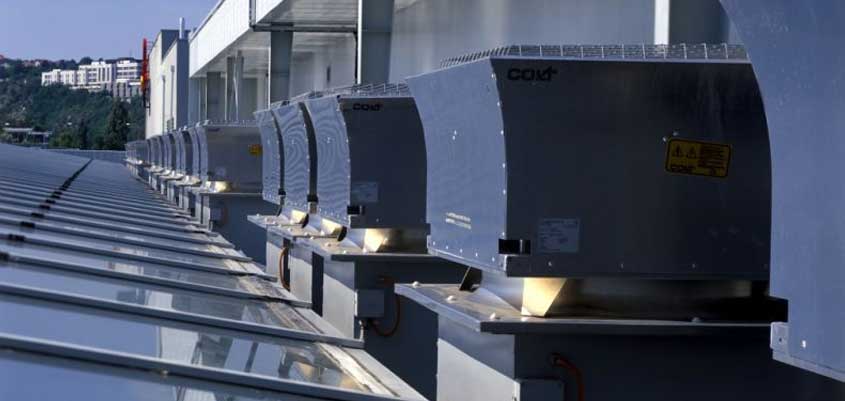
En entornos industriales y comerciales, los extractores de humos que realmente ofrecen soluciones son los que hacen uso de la ventilación mecánica. La normativa vigente en extracción de humo por ventilación mecánica que rige el uso de estos sistemas es la UNE-EN 1366-1:2016 de Aenor. En ella se dicta que:
- Los sistemas de ventilación y extractores de humos han de ser resistentes al fuego en comunión con criterios de Integridad, Aislamiento y Tiempo especificado en minutos.
- Se establece que los sistemas de extracción de humo han de soportar una resistencia al fuego de una hora. En el caso de la ventilación, la resistencia ha de ser idéntica a la del elemento de compartimentación que atraviesa el aire contaminado de humo.
- Estos sistemas han de poder seguir funcionando en caso de incendio y evacuando el aire contaminado que procede de los gases de combustión.
- Los sistemas industriales han de ser lo más cerrados posibles para que expulsen menos humo al exterior. Así los extractores de humo necesitarán eliminar menos aire contaminado.
- También existe una norma del Reglamento 305/2011 del Parlamento Europeo, que obliga a todos los sistemas de ventilación para la extracción de humo a que reúnan las condiciones necesarias para llevar el distintivo CE.
Por otro lado, al mismo tiempo dicha instalación de extracción de humos se debe encerrar lo máximo posible para que la cantidad de aire contaminado que haya que aspirar sea menor. También se utilizarán las propias fuerzas de inercia para facilitar la captación de los humos.
Para todo ello, es imprescindible que el funcionamiento de los extractores de humos y los sistemas de ventilación mecánica se coloquen a partir de un estudio de las condiciones del lugar de trabajo que optimice los sistemas de ventilación.

Siber Ventilación
Entradas relacionadas