Empresas de servicios energéticos: qué son y qué servicios prestan
Una Empresa de Servicios Energéticos (ESE), se define en el R.D. Ley 6/2010 de 9 de Abril, cómo aquella persona física o jurídica que pueda proporcionar servicios energéticos. Estos servicios deben suministrar una serie de prestaciones que permitan optimizar la calidad y la reducción de los costes energéticos, incluyendo la construcción, instalación o transformación de obras, equipos y sistemas, así como su mantenimiento y actualización. El servicio energético deberá prestarse basándose en un contrato que llevará asociado un ahorro de energía verificable, medible o estimable. Por tanto la retribución de esos servicios está vinculada a la consecución de un ahorro energético.
¿En qué consiste la eficiencia y el ahorro energético?
Desde hace décadas, el desarrollo económico ha estado estrechamente relacionado con un mayor consumo de energía y un aumento de las emisiones de gases de efecto invernadero. Esto ha generado importantes impáctos medioambientales y una fuerte dependencia de fuentes de energía alóctonas, que son aquellas que se producen lejos de los lugares de consumo. Las energías renovables pueden ayudar a romper esta tendencia, contribuyendo al desarrollo sostenible.En este sentido el ahorro energético consiste en un ahorro en la utilización de los recursos naturales para proteger el medio ambiente. Este ahorro se puede lograr construyendo edificaciones bioclimáticas, empleando sistemas de climatización y ventilación eficientes y modificando los hábitos de consumo de los usuarios.
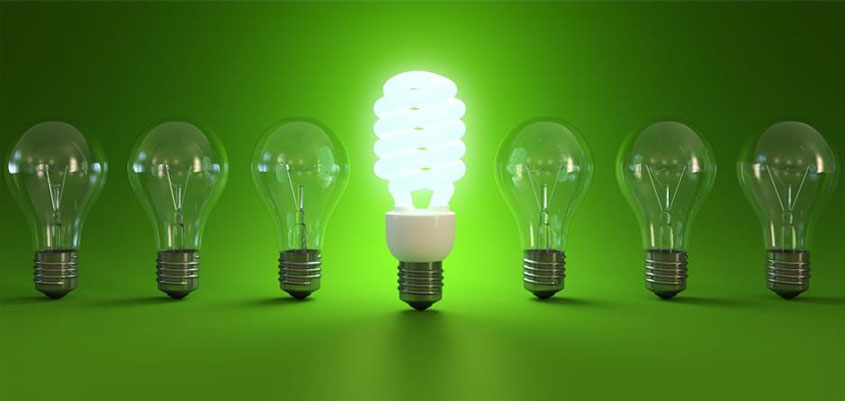
En lo que se refiere a la eficiencia energética, se puede definir como la práctica que permite reducir el consumo energético mediante el uso eficiente de la energía, optimizando los procesos productivos y el empleo de la misma. Aplicando este concepto a la iluminación, no se trataría solamente de ahorrar luz, sino de iluminar mejor consumiendo menos electricidad.
Otros conceptos relacionados
Desarrollo sostenible
Consiste en satisfacer las necesidades de las generaciones presentes sin comprometer las posibilidades de las generaciones futuras.Cambio climático
Variación del estado del clima que se puede detectar a través de los cambios en los patrones meteorológicos durante un periodo prolongado de tiempo, que puede ir desde décadas hasta millones de años.Gas de efecto invernadero (GEI)
Componente gaseoso de la atmósfera de origen natural y antropogénico, que absorbe y emite radiación en longitudes de onda específicas del espectro de la radiación infrarroja emitida por la superficie de la Tierra, la atmósfera y las nubes. Esta propiedad es la que origina el efecto invernadero.Dióxido de carbono (CO2)
Gas que se produce de forma natural y también como subproducto de la combustión de combustible fósiles o de biomasa, de cambios del uso de la tierra o de procesos industriales. Es el principal gas de efecto invernadero antropogénico que afecta al equilibrio radiativo de la Tierra.Energía primaria
Es la que contienen los recursos naturales como el carbón, el petroleo crudo, el gas natural, el uranio o las fuentes de energía renovables.Energía secundaria
La energía primaria se transforma en energía secundaria mediante la depuración (gas natural), el refinado (del petróleo bruto en productos petrolíferos) o la conversión en electricidad o calor.Energía final
Cuando la energía secundaria se suministra a las instalaciones de uso final se denomina energía final, como es por ejemplo la electricidad que proporciona una toma de corriente y se transforma en luz artificial.Cogeneración
Aprovechamiento del calor residual resultante de la generación eléctrica en plantas termoeléctricas. El calor de las turbinas de vapor o los gases de escape de las turbinas de gas puede usarse para fines industriales, calentar agua, o para la calefacción central de barrios y ciudades.Energía eólica
Energía cinética procedente de las corrientes de aire que surgen de un calentamiento irregular de la superficie de la Tierra.Energía hidroeléctrica
Energía que se consigue a partir del agua que se desplaza desde un punto hasta otro situado a una cota más baja. De esta forma se puede convertir en energía mecánica mediante una turbina u otro dispositivo que a su vez hace funcionar un generador que produce electricidad.Energía solar
Energía obtenida mediante la captación de la luz o el calor del sol, que se transforma en energía química mediante una fotosíntesis, o en electricidad mediante paneles fotovoltaicos.Intercambiador de calor
Dispositivo para la transferencia de calor entre dos medios sin que se mezclen los fluidos caliente y frío, como son por ejemplo los radiadores, las calderas, los condensadores o los intercambiadores empleados en los sistemas de ventilación de doble flujo.

Siber Ventilación
Entradas relacionadas
¿Por qué es necesaria la ventilación mecánica en las viviendas?