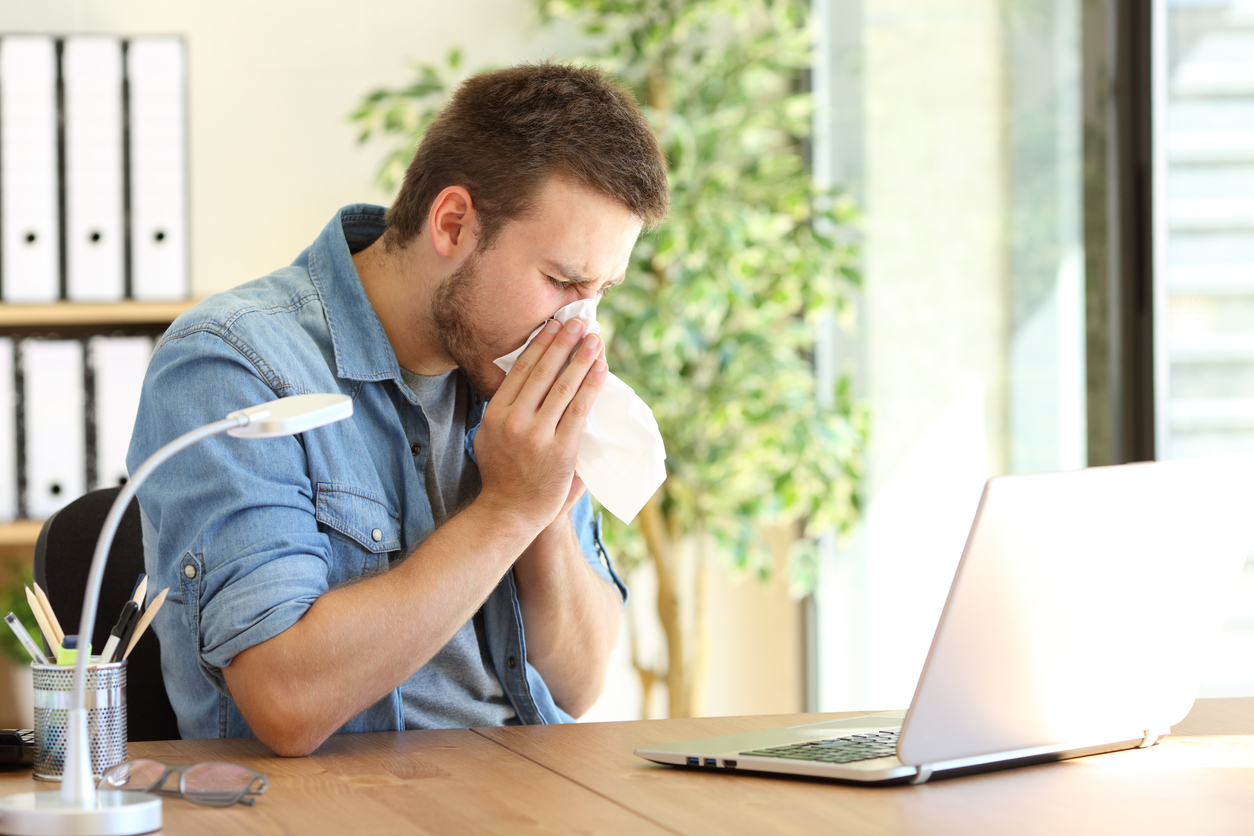
Allergic cough: breathe quality indoor air to prevent it
Enjoying quality indoor air is essential to prevent the appearance of ailments and health disorders in the occupants of buildings. Current regulations — increasingly stricter regarding energy efficiency, sustainability, and the environment — require buildings to be more airtight, where the abuse of air conditioning systems is high. The recirculation of air that occurs with the use of these conventional systems to respond to indoor thermal comfort results in an insufficient supply of fresh air and an increase in indoor pollution. The effects of contaminated air are diverse: headaches, fever states, allergic cough, infections, asthma...
Since we now spend more than 80% of our time in enclosed spaces, it is necessary to ensure that the indoor air of our homes, offices, leisure centers, etc. is not a breeding ground for contaminants and bacteriological agents that jeopardize the well-being, comfort, and health of people. Adequate, controlled, and efficient ventilation will eliminate air pollutants without increasing the energy and economic bill.
Allergic cough and air quality
The airborne pollutants become part of our bodies through respiration. Therefore, the first system affected is the respiratory system (although these harmful substances can eventually damage other organs). The allergic cough — caused by the presence of allergens — is the body's response to the inflammation of the respiratory pathways triggered by the presence of these allergens.What are the causes of unhealthy indoor air?
There are various causes that can trigger harmful indoor air for occupants:Inadequate ventilation
We must ensure that sufficient airflow is provided for the proper renewal of indoor air in occupied spaces. Also, that the system is properly designed and sized, and that proper maintenance and cleaning actions are carried out.Indoor pollution
We must avoid, as much as possible, the accumulation of chemical pollutants. Such pollutants can be expelled by users themselves (CO2, as a result of metabolic processes; tobacco smoke), by construction materials (fibers and volatile organic compounds), or by products used (disinfectants, paints, varnishes, etc.). A good ventilation system will guarantee the expulsion of the contaminating substances that may accumulate in the air.In addition to chemical pollutants, we can also find microorganisms in the air that put our health at risk. Spores (which lead to fungi) cling to dust particles and surfaces, waiting for the ideal conditions to propagate and disperse. Conditions of high relative humidity (above 70%) are the breeding ground for them to spread. An air recirculation system is responsible for the second phase, the propagation. Therefore, it is essential to prevent the accumulation of condensation inside air conditioning and ventilation systems, as standing water and dust particles are the perfect allies for the microbiological agents responsible for numerous ailments and health problems (allergic cough, nausea...).
If you want to avoid symptoms, remember:
• Ensure proper renewal of indoor air in the premises.• Avoid the accumulation of water vapor and dust in air conditioning and ventilation systems.
• Ensure a relative humidity rate between 40 and 60% (never above 70%).
• Carry out the corresponding maintenance and hygiene actions for the ventilation and air conditioning systems (established in the current regulations).


Siber Ventilation