All the parts of a controlled mechanical ventilation system explained one by one
Knowing all the parts of a controlled mechanical ventilation system is essential to understand how it works. Therefore, we have proposed to explain what they are, how they operate, and what function they fulfill within it.
Parts of a controlled mechanical ventilation system
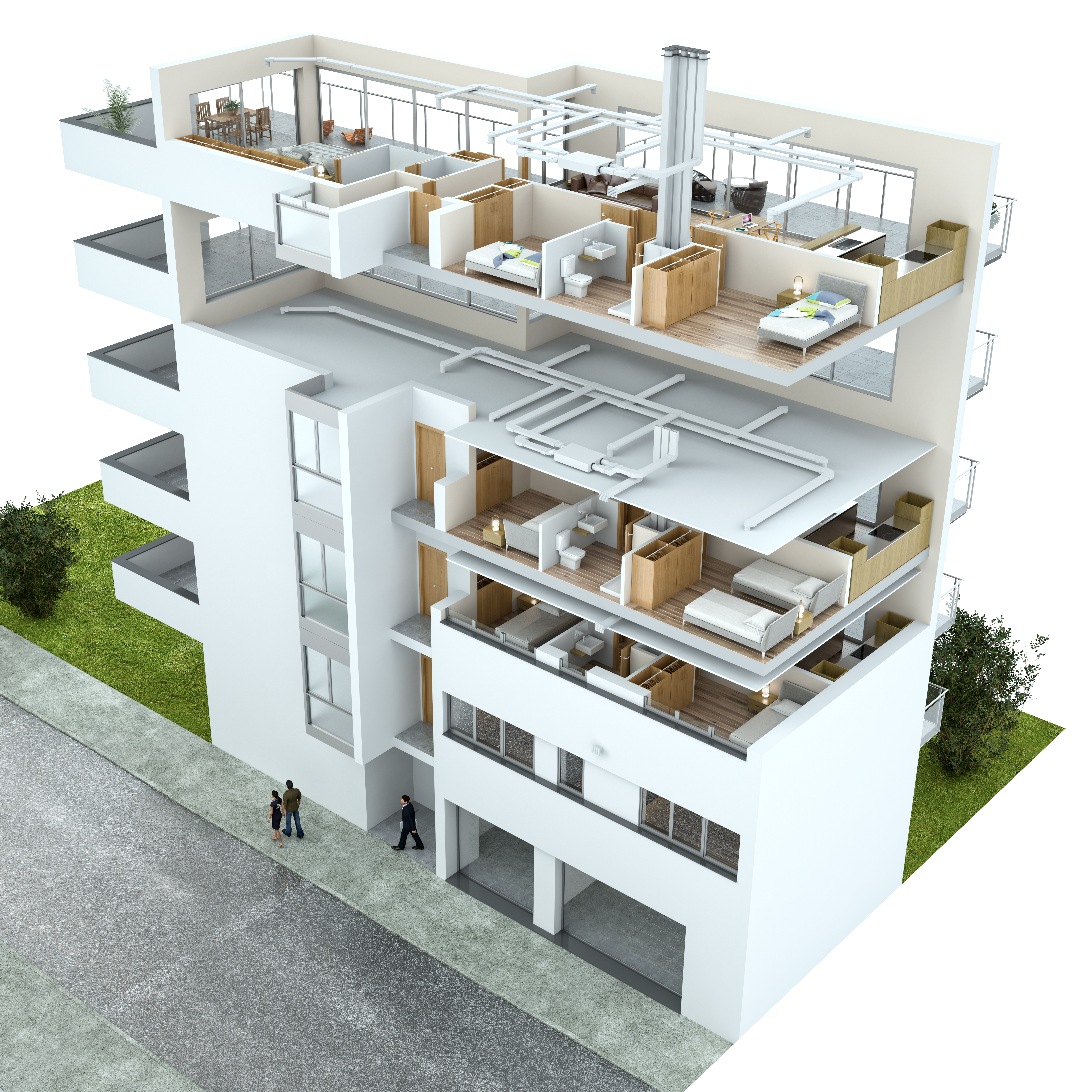
In general terms, we can say that these are the main components in any controlled mechanical ventilation system:1. Extraction and supply terminal
The extraction terminal is the element that is responsible for discharging the stale air extracted from the inside to the outside. Therefore, it is always placed on the façade or roof of the building. It is complemented by the supply terminal, which performs the opposite work. That is, it captures the air from the outside and introduces it into the circuit.2. Supply and return ducts
For the air to reach the extraction terminal, a series of ducts are necessary to transport it. The same occurs with the air obtained from the outside by the supply terminal.3. Air filters
Within the ducts, there are a series of filters. Essentially, these elements function to retain dust, mites, and, in general, any harmful element present in the air that will be introduced into the dwelling. The type chosen will depend on the environmental characteristics of the surroundings.4. Energy recovery unit
This is the most important element in terms of energy efficiency, especially in homes with a high demand for climate control. What's the reason? It allows recovering up to 95% of the temperature of the air extracted from the interior by using high-efficiency heat exchangers.Imagine a single-family house located in a mountainous area where temperatures drop below zero in winter. Evidently, natural ventilation is almost impossible during that time. Without a controlled mechanical ventilation system with energy recovery, it would be necessary to incur significant costs in climate control every time it was necessary to renew the air quality.
The motor used in the energy recovery unit must be able to regulate its operating power according to the needs. This is required by theEuropean Ecodesign Directive. Generally, EC electronic motors are used to achieve this.
5. Humidifiers and dehumidifiers
Excess humidity can lead to the appearance of mold and a thermal sensation of being colder or hotter than reality. Similarly, levels below normal can cause respiratory irritation.In this sense, controlled mechanical ventilation systems detect the humidity levels in the environment. Based on that information, they regulate the percentage present in the air to ensure maximum comfort for the building's occupants.
6. Other components
Beyond the previous elements, this type of ventilation system may have other parts. This would be the case, for example, of:- Heating devices for air. We are talking about heat pumps, hot water batteries, or electric heaters. They are essential when the air coming from the outside has a very low temperature.
- Cooling devices for air. Mostly, mixed water batteries or, directly, cooling units. Their goal is to reduce the temperature of the air that enters the dwelling when it is very hot.

Siber Ventilation
Related posts