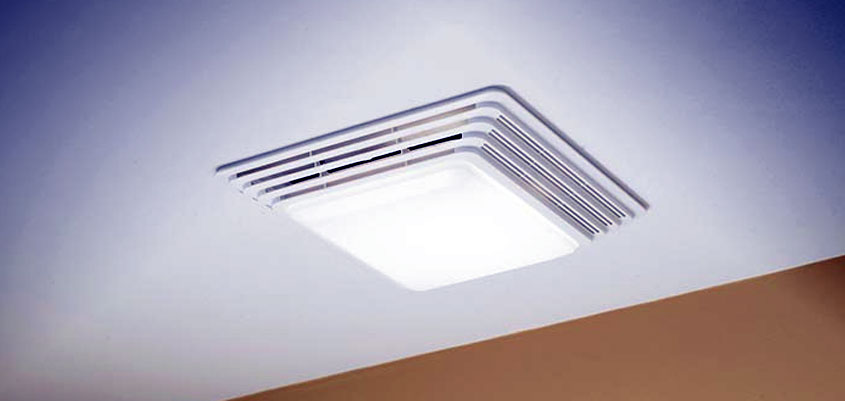
The CTE HS 3 and healthiness, what does the regulation say?
The Technical Code of Building (CTE) contains all the regulations that must be followed in Spain for construction. Its pages establish the requirements that buildings must meet, always in relation to the basic requirements for safety and habitability established in the Organic Law of the State. For the clean air sector, climate control and ventilation systems, it includes a Basic Document, known as the CTE DB HS 3, which gathers all the obligations, requirements, and indications to be taken into account in our buildings.
The importance of the CTE DB HS 3 is such that it influences the entire construction process of any building. In addition, the Basic Document has been adapted to the needs of Nearly Zero Energy Buildings, the new European regulation that has been implemented in Spain and that must be complied with in all buildings constructed within a year and a half.
Similarly, the DB HS 3 emphasizes something of utmost importance, which is air quality. It ensures that there is a minimum renewal and flow rate, and requires that homes be equipped to guarantee minimum health and comfort.
The last change to the Basic Document of the CTE was on June 23, 2017. At that time, a modification was published in the BOE with order FOM/588/2017. In it, the Basic Document DB HE for energy savings was also modified. And the entire Basic Document DB HS, focused on healthiness.
The new requirements incorporated into the DB HS 3 referred to ventilation flow rates, finding more specific requirements. Since then, it explicitly refers to the maximum concentrations of pollution, measured in parts per million (ppm) of CO2.
The changes included in the order from last June have been effective since that moment for all works that are tendered from the day the modification was presented in the BOE, without retroactive effect. However, today these regulations must be considered for any building tendered from now on.
The ventilation regulation of CTE DB HS 3
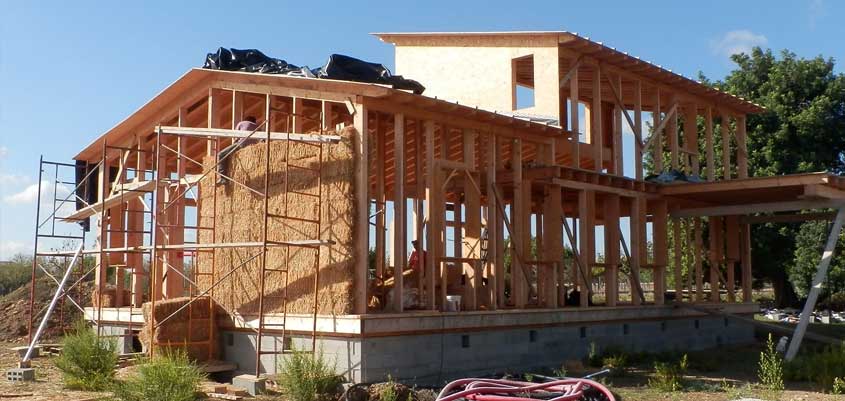
Within the Basic Document HS, the main section for the sector is HS 3 due to its specificity in the interior air quality, although HS 1 also influences ventilation: it governs the requirements regarding the humidity of each building.
The CTE DB HS 3 establishes that buildings today must have a ventilation system. Such an installation can be hybrid - using natural ventilation at some point - or fully mechanical. It is also specified that air must circulate throughout the home from dry areas to humid areas, through admission openings, which must connect the rooms to the outside in the dry areas. These areas are the dining room, bedrooms, or living rooms.
The air extraction areas, according to DB HS 3, must be in kitchens, bathrooms, and cleaning areas. Openings must be installed for passage between the dry and humid areas.
In this way, what the Basic Document aims for is that all rooms in the home have sufficient ventilation and a minimum airflow from the exterior, in addition to expelling stale air, usually produced by cleaning products that we all have at home.
The air circulation flow rates, after the modification made last year, are as follows:
Admission flows
- 8 l/s per occupant if there is only one bedroom in the dwelling.
- 8 l/s per occupant in the master bedroom of a house with multiple bedrooms.
- 4 l/s per occupant in secondary bedrooms.
- 6 l/s (21.6 m3/h) per occupant in living rooms and in the dining rooms of houses with one bedroom.
- 8 l/s (28.8 m3/h) per occupant in living rooms and in the dining rooms of houses with two bedrooms.
- 10 l/s (36.0 m3/h) per occupant in living rooms and in the dining rooms of houses with three or more bedrooms.
Extraction ducts for mechanical ventilation
When the ducts are located adjacent to a habitable space, unless they are on the roof or in utility rooms or in ducts that meet the conditions set by DB HR, the nominal section of each segment of the extraction duct must be at least equal to that obtained using the formula: S ≥ 2.5·qvtWhere qvt is the air flow in the segment of the duct [l/s], which equals the sum of all flows passing through the extraction openings that pour into the segment.
When the ducts are placed on the roof, the section must be at least equal to that obtained using the formula: S ≥ 1.5·qvt.
The requirements included in the Basic Document HS3 of the Technical Code of Building (CTE) ensure that the homes constructed have sufficient airtightness and guarantee adequate air circulation. Furthermore, energy efficiency is enhanced, as the renewal of the air also helps maintain a better temperature in the home. The HS3 has been adapted to meet the requirements of the European Union regarding energy efficiency.

Siber Ventilation
Related posts

Constant flow ventilation systems, how do they work?