The chimney effect in ventilated facades
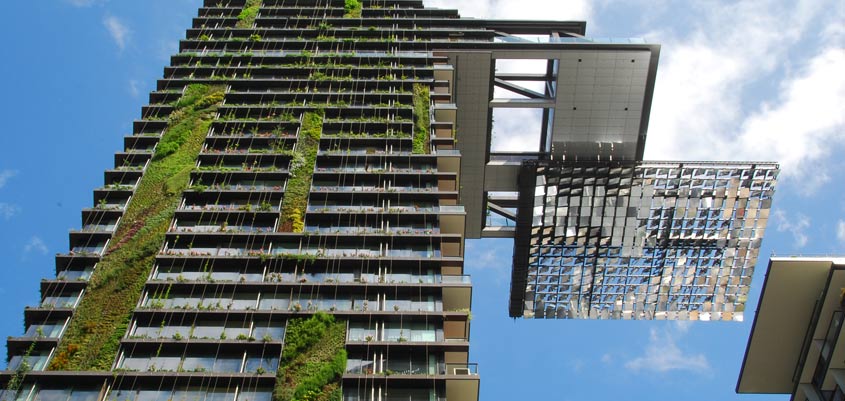
We could define its use as wrapping a building. Because, in reality, what is done is to place a huge jacket on the structure of a block of flats. This is what a ventilated facade consists of. But its reaction is what matters, as it can keep rooms warm in winter and cool homes in summer. This is what is called a chimney effect. And it is the great success of these air chambers in buildings.
The ventilated facade is similar to a ventilated roof, except that it acts on the entire building. From bottom to top. And it is considered the best construction element to solve problems of bad temperatures thanks to the chimney effect.
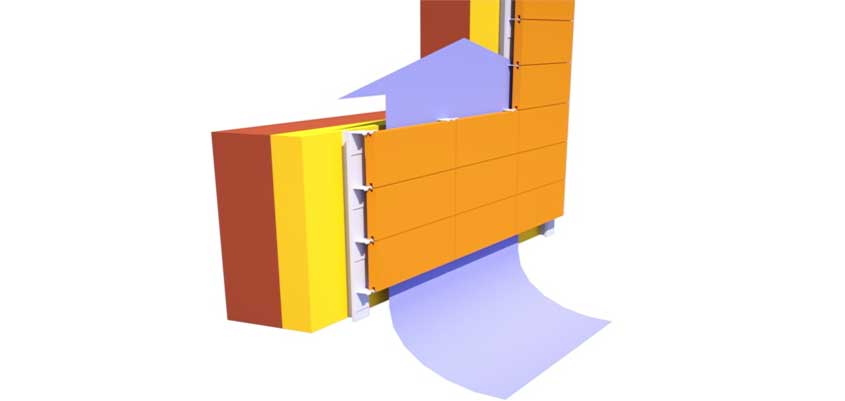
The idea is to implant a facade over the facade, leaving a space between the two. As if it were a coat. This jacket is usually made from materials such as ceramic, stone, or wood. The great advantage is that it implements an air chamber between the old and new skin, which acts like a coat in winter. It retains heat and does not let the cold pass. Because it creates that effect chimney between both layers, a ventilated facade. All in a natural way.
In summer it also has advantages, as it allows air to flow between both layers and that warm air is expelled outside. And in the end, it all translates into greater energy savings. It solves insulation issues, and the chimney effect in ventilated facades makes other problems, such as humidity, disappear.
Moreover, the maintenance of the ventilated facade is simple. It even cleans itself with the rain. And its use can be very prolonged; according to some experts, it lasts forever if maintained properly.
Operation of the chimney effect in the ventilated facade

The chimney effect in the ventilated facade is the response to the heating of the outer layer. The density of the air changes compared to that of the outside. An upward movement occurs due to natural convection, thanks to temperature differences.
In winter, it creates that chimney effect, by heating the air between both layers and making the interior room warmer, away from the cold outside. All this translates into a substantial savings on energy expenditure.
The advantages of the ventilated facade in summer are also notable. First of all, the sun's impact on the facade ceases to exist, so the rooms heat up much less. But it also enables the chimney effect in the ventilated facade for the air to escape from the bottom to the top, renewing the air inside with fresher air.
It is estimated that in summer, heat can be reduced by up to 40% with the installation of a ventilated facade. Which leads us to the pros and cons of this type of facade:
- They eliminate humidity problems, the direct contact of the sun, and serve as a shell against the elements.
- The chimney effect makes it so that fewer artificial systems are needed to maintain rooms at temperatures that we find comfortable in the summer and winter.
- They are difficult to install and are a costly method compared to others. Maintaining windows or visibility from the inside is something to work on. To achieve the chimney effect in ventilated facades, the action of professionals is necessary.
For example, in Navarra, both the use of the chimney effect in ventilated facades and the cheaper option to implement a layer of air with an outer layer through the SATE system have become popular at a high level. It is much cheaper. Additionally, some regional governments offer subsidies for it.

Siber Ventilation
Related posts
Why is mechanical ventilation necessary in homes?

Improve indoor air quality and adapt to current regulations