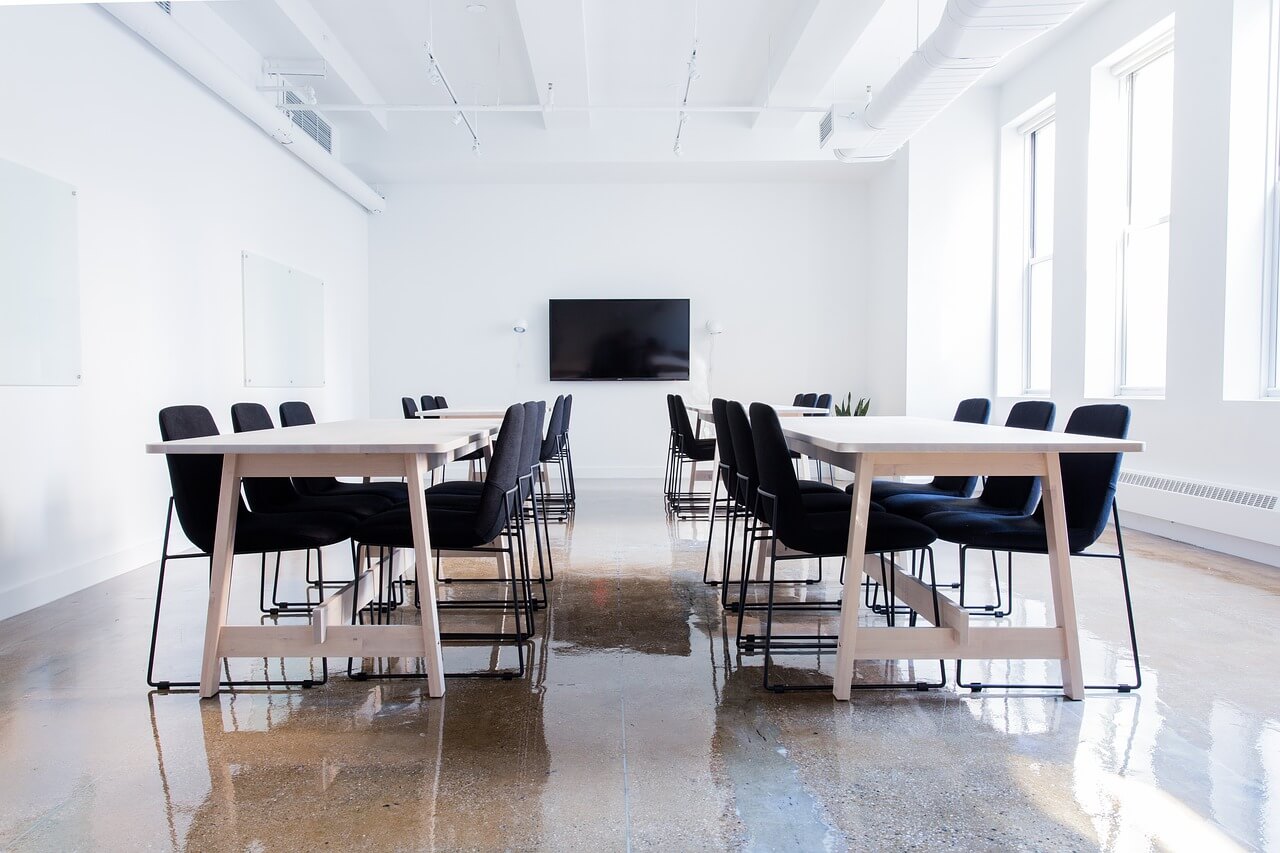
Ventilation systems for offices and businesses

superadmin
May 24, 2021
The presence of a large number of people in a closed and poorly ventilated space is the perfect breeding ground for the expansion of the coronavirus. It must be taken into account that one of the greatest sources of transmission are the so-called aerosols.
These are small particles that are emitted when talking, breathing, coughing, or sneezing. Therefore, in addition to wearing a mask, social distancing, and hand washing, ventilation systems for offices and businesses are one of the most useful tools to prevent the spread of Covid-19.
Why are ventilation systems for offices and businesses important?
The less ventilated a closed space is, the greater the risk of transmission of coronavirus. Therefore, it is vital to maximize ventilation in office or business buildings to reduce the risk of pandemic spread.Ventilating serves to renew the air in closed spaces, which can be done either naturally or by using ventilation systems. The World Health Organization (WHO) recommends that air be renewed 6 times every hour, although this figure should be adapted to the size of the space, the number of people inside, and the activity they perform.
When a building does not have any type of mechanical ventilation, the only option is natural ventilation. In this case, it involves opening doors and windows. It is necessary to do so with sufficient frequency to ensure the air inside is renewed. Ideally, it should be through cross-ventilation, that is, having doors and windows on opposite sides open to increase airflow.
What are CO2 meters used for?
One resource is installing CO2 meters, which are used to check if the ventilation is adequate and to make necessary changes to enjoy clean and pure air, but above all safe.Natural ventilation is so important that even in buildings with mechanical ventilation systems it should be utilized. When these systems are available, it is crucial to maintain the installation correctly. If the equipment is not clean, it will lose effectiveness and may jeopardize the safety of those inside the building.
It is very important that the equipment does not favor the recirculation of air, as this could spread the virus to different rooms, since recirculation would cause contaminated air to re-enter the room.
What else should be considered besides having ventilation systems for offices and businesses?
When buildings have a mechanical ventilation system that does not guarantee adequate air renewal, it is necessary to consider improvements. In addition, the number of times natural ventilation is performed should be increased.It should also be considered the use of purifiers equipped with HEPA filters to clean the air as much as possible. It is important that these filters comply with the UNE1822 standard and can retain 99.95% of aerosols. The Ministry of Health itself has published a series of recommendations to reduce the risk of infection through aerosols in closed spaces like offices and workspaces. This document details further security measures such as wearing masks, mechanical ventilation, or the use of HEPA filters.
How should restrooms be ventilated in offices and businesses?
As for restrooms, the recommendation is that if they have extraction systems, they should be kept operational at all times. If they ventilate through passive shunt or mechanical extraction systems, it is necessary to keep the windows closed to prevent air from recirculating to other rooms.When there is no extraction system in restrooms, it will be necessary to rely on natural ventilation by opening windows. When doing so, windows in other rooms should be kept open to achieve cross flows.
Beyond the system for airing spaces, health authorities recommend placing signs that advise to flush the toilet with the lid down. The reason is that it helps prevent contaminated aerosols from spreading.
It is clear that anything that can be done to fight against the coronavirus is invaluable and that it is necessary to invest in appropriate ventilation systems for offices and businesses. Only then can it be ensured that the air is as pure as possible.

Siber Ventilation
Related posts
Industrial ventilation: air quality and energy savings

The quality of indoor air in schools and educational centers