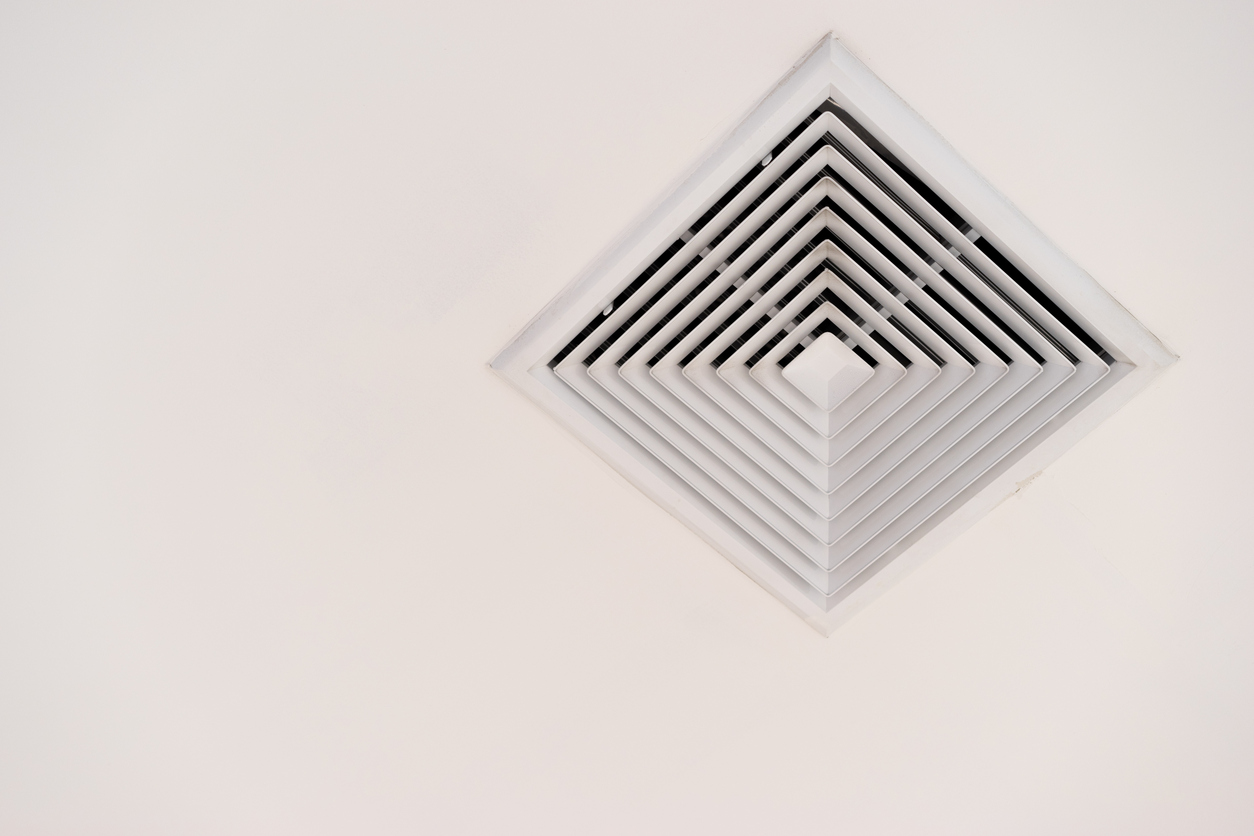
Ventilation Grille: Compliance with Regulations and Comfort
According to the DB HS 3 Indoor Air Quality, homes must comply with the basic safety and habitability requirements established in the Building Planning Law. To achieve this, they must have a system that ensures adequate ventilation in its rooms, by eliminating the pollutants that may be produced during normal use in humid areas and providing a sufficient flow of outside air that guarantees the extraction and expulsion of stale air.
The mandatory compliance with regulations may conflict with other aspects to consider, such as energy efficiency and acoustic and thermal comfort.
Compliance with Regulations: Ensuring Indoor Air Quality
Ventilation grille: both supply and exhaust types must ensure a quality of air that meets the technical requirements of the CTE. There are various solutions available in the market.- Central ventilation grilles and shuttered adjustable supply and exhaust outlets, to be installed in false ceilings or walls, allowing different flow regulations.
- Filters. Air quality must be ensured by the use of filters, preferably ecological, in the grilles to purify the incoming air and ensure it is free of pollen, soot, pollution, and other contaminants. It should be noted that a high-efficiency air filtration system is an ideal solution for allergy and respiratory problems.
- In case the home has the possibility of a geothermal air intake, it is recommended to install a geothermal air-to-ground exchanger that utilizes the ground's inertia to cool the incoming air in summer and heat it in winter, composed of a fresh air intake, special ducts, and an inspection point. To ensure healthy air, the fresh air intake must be equipped with a grille and a G4 type filter.
- Designed to introduce fresh air into the main rooms of a home, there is the option of having hygroregulatable air intakes. These air intakes open depending on the relative humidity of the room, ensuring a variable nominal flow between 6 and 45 m3/h, depending on the humidity rate of the room under a pressure difference of 20 Pa.
Acoustic and Thermal Comfort
Ventilation grilles must have a level of insulation that ensures compliance with the technical requirements of the Technical Building Code and ensure both a high degree of soundproofing against noise and a high degree of thermal insulation against the problems that air intakes can pose. There are various solutions that can be proposed to guarantee acoustic and thermal comfort.- Hygroregulatable air intakes. In addition to ensuring variable flow, they provide a high level of acoustic insulation, in accordance with the NF E 51 732 standard.
- silencers. For air intakes located in walls, the market offers wall passage silencers made up of windbreak grilles with a diameter of 125 mm (with or without foam). Also, there are silencers available for the top of the window, formed of external aluminum grilles.
- Air tightness. It should be emphasized that a proper ventilation network must be airtight. Otherwise, leaks would need to be compensated by a substantial flow at the machinery level, which would lead to oversized networks and ventilation units, an increase in energy costs, thermal loss, which would affect the comfort of users, and noise disturbance for occupants.


Siber Ventilation
Manufacturer of High Energy Efficiency Ventilation Systems. Siber provides a set of high energy efficiency solutions in wind and mechanically intelligent ventilation, improving the Health, Hygiene, and Comfort of people, being respectful of the environment.
Related posts

air admission
pipes
air extraction
heat exchanger
Efficient rehabilitation
air renovation
ventilation
mechanical ventilation
natural ventilation
Why is mechanical ventilation necessary in homes?
The need to ventilate homes through mechanical ventilation is due to the high level of airtightness that buildings currently have.