Radon gas in public buildings, measures taken against this poison
The radon gas is one of the most dangerous poisons in the air. It cannot be easily detected because it is colorless and odorless, but it can be lethal if it settles in our homes. According to the World Health Organization, it is the second leading cause of lung cancer deaths. And while it has not received the priority it needs until now, it is now mandatory to detect it. How is the level of radon gas in public buildings controlled?
The problem of radon gas in public buildings is similar to the case of this poison in homes. Over the past 30 years, the European Union has issued numerous alerts about the danger posed by this harmful gas. However, in Spain, it has not been truly acknowledged until the Law was implemented that, starting this year, requires buildings to be inspected for the presence of gas.
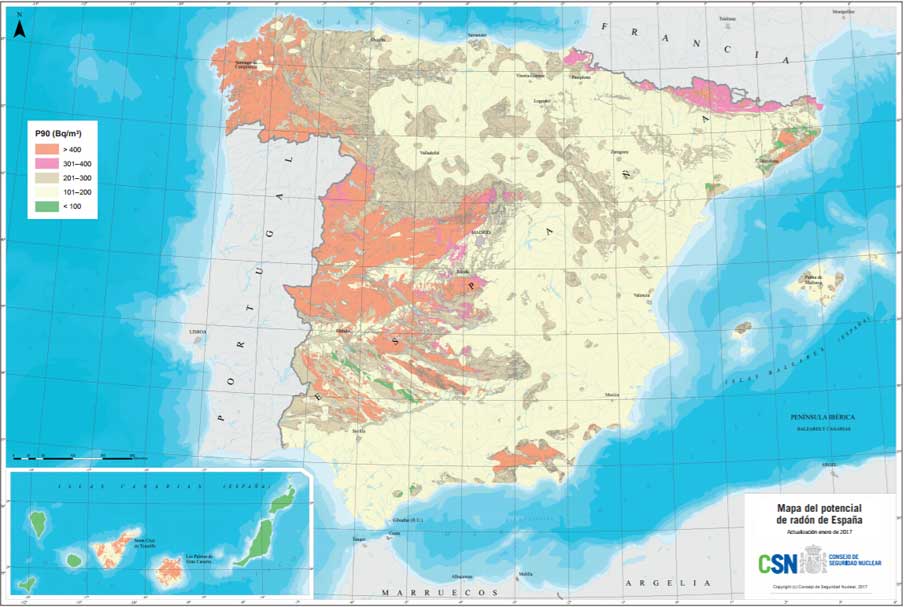
The radon gas originates in the basements of numerous Spanish homes, and in many of them, its existence is not even known. Galicia, Extremadura, and Madrid are the three most affected communities by this gas, although it is present in many other regions. The two Castillas are also autonomous communities on alert. All of this can be consulted in the radon map, which distributes the impact by geographical areas in Spain.
This problem of ignorance in our country is precisely the same that affects public buildings. From now on, the government must facilitate the detection of gas to private homes, and even subsidize part of the renovations aimed at eliminating radon gas in homes. And concerning public buildings, authorities and the Nuclear Safety Council must assist provincial and municipal governments in monitoring the presence of this poison. Especially considering it originates from the underground and subsoil.
Many municipalities in Spain are implementing a plan of measures against the presence of radon gas, encouraged by the Organization of Consumers and Users (OCU). For example, the Galician municipality of Guitiriz has initiated a program to measure the levels of this gas in 14 public buildings, including health and educational centers.
For many municipalities and public authorities, this is a new concern still unknown, but they recognize that it needs to be addressed. The measures that municipalities can take are, at the beginning, using methods to detect the gas and trying to inform the managers of each public building.
In the municipality of Guitiriz, 95 radon detectors are used for those 14 buildings. If the presence of radon gas is detected, the next step would be to find ways to prevent the gas from filtering into the areas occupied by people. It is estimated that it takes three months to determine if the gas is present in the environment.
Measures to stop the spread of radon gas in public buildings

The first step to stop the spread of radon gas in public buildings and also in homes is to use detectors for this poison.
Normally, radon detectors are small cylinders with an identifying code that are placed at breathing height, mainly on shelves or tables, never near windows. All locations must be documented.
For 100 days, the radon detectors absorb the air passing through them and the gas disintegrates, leaving black spots and marks that will be analyzed under a microscope. This will allow it to be determined whether it exceeds the maximum rate of 300 Bq per m3/s. If so, measures must be taken.
Actions to reduce the level of radon gas can include the following:
- Improve ventilation. It is essential that ventilation expels this poison out of our rooms.
- Use mechanical extraction systems to remove contaminated air from basements.
- Seal leaks. The gas seeps through cracks and must be sealed.
- Seal the walls to prevent any holes or gaps where the gas might seep in.
What to do if we detect the presence of radon gas in public buildings or at home? Above all, do not panic. While they can be considered deadly houses, the solution is simple. For domestic use, detection can cost between 200 and 400 euros, and total removal no more than 3,000 euros. And now, the good news is that public power must be counted on for support.

Siber Ventilation
Related posts

Intelligent control of indoor air quality in your home

Do you know what the effects of indoor air pollution are?