What is a Canadian or Provençal well?

superadmin
January 31, 2017
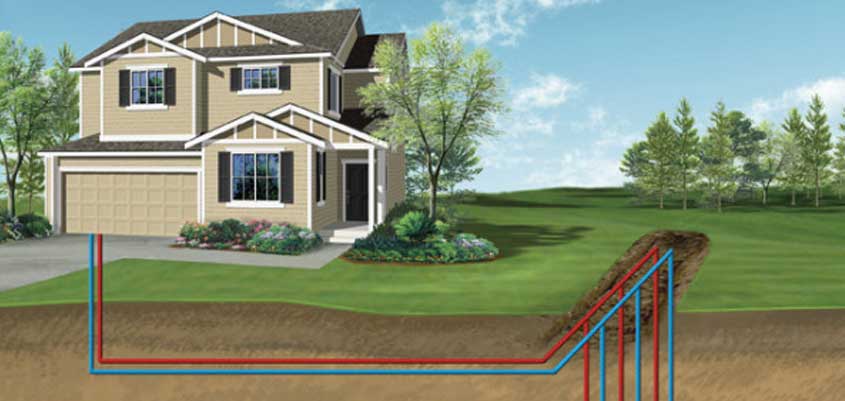
The Canadian well or Provençal well is based on the physical principle that governs the variation of temperature as we descend into the ground. It happens that at a depth of approximately 2 meters, the temperature remains stable, meaning it is not affected by the weather conditions on the surface, so the ground temperature corresponds to the average temperature of the location. If this average temperature is pleasant, it makes sense to connect a dwelling with the ground on which it sits to climatize it.
Canadian Well
Therefore, the Canadian well uses the thermal inertia of the ground to cool the air entering the dwelling in summer and to heat it in winter. To do this, it combines a mechanical double-flow ventilation system with heat recovery. The system consists of an external air intake made of steel with a grill and air filter, underground polyethylene ducts, a waterproof cover, and start-up accessories. The system is completed with an automatic control formed by two thermostats, a wall pass-through for air-tight entry into the dwelling, and a motorized unit that selects the source of renewal air. When the temperature reaches 25 °C, only the air that passes through the Canadian well will enter. Between 5 °C and 25 °C, the air enters through the wall air intake, although a minimum flow also circulates through the underground duct, preventing air stagnation.
Technical Aspects of the Design
Types of Soil
The thermal conductivity of the soil is an important factor when designing a Provençal well. From this point of view, wet soils are preferable to dry soils due to their better thermal conductivity. Both sandy soils and peats should be avoided, and in the case of installing the well in this type of soil, the ducts should be surrounded by compacted clay to ensure proper thermal contact between the pipes and the ground.
Depth
As the depth increases, so does the performance of the installation. Typical values can be considered depths between 1.5 and 3 meters. If the system needs to operate for a significant number of hours, the minimum recommended depth is 3 meters.
Type of Material for the Ducts
Various types of plastics are usually used for the ducts, such as PVC, polypropylene, prestressed concrete, ceramics, or galvanized steel. The material must be crush-resistant since it will be buried. In general, corrugated pipes provide greater structural resistance but also a higher possibility of water accumulation from condensation.
Maintenance
The thermal exchangers should be equipped with filters to prevent the entry of particles into the climatized area. The filters should be changed periodically. The monitoring of the indoor outlets should be done at the same time as the outdoor ones. In both cases, cleaning every fifteen days is advisable. For long-term maintenance, it should be considered that the lifespan of the blower fans usually ranges between 15 and 20 years.


Siber Ventilation
Related posts