Protect your health: how to eliminate humidity from your home

superadmin
August 23, 2017
The presence of humidity in our homes can become a real health problem if not addressed in time. There are different kinds of humidity, depending on the causes that originate it. Knowing its source will be essential to apply effective solutions that help us eliminate it. If it has already made its presence felt in your home, here are some solutions to eliminate it. However, remember that the best solution is always prevention.
Eliminate humidity according to its source
There are three types of humidity: capillary humidity, lateral infiltration humidity, and condensation humidity.Capillary humidity
This type manifests in walls that are in contact with the ground. It is humidity that comes from groundwater. In this case, the walls act like a "sponge," allowing water to rise by suction along the surfaces. Prevention of capillary humidity issues lies in the construction system.According to the CTE DB HS 1, Protection against humidity, all walls must have a minimum level of impermeability (according to table 2.1) and a draining layer and a filtering layer must also be placed between the wall and the ground. If capillary humidity has already made its presence known in our walls, there are currently different solutions to eliminate it that act as a barrier. These can be chemical barriers, electrical barriers, or barriers based on hygrocovectors.
Lateral infiltration humidity
In this case, groundwater does not rise through the wall; rather, the humidity from the ground transfers to the adjacent walls. The solutions for this type of humidity, which also results from contact with the ground, are the same as those for capillary humidity.Condensation humidity
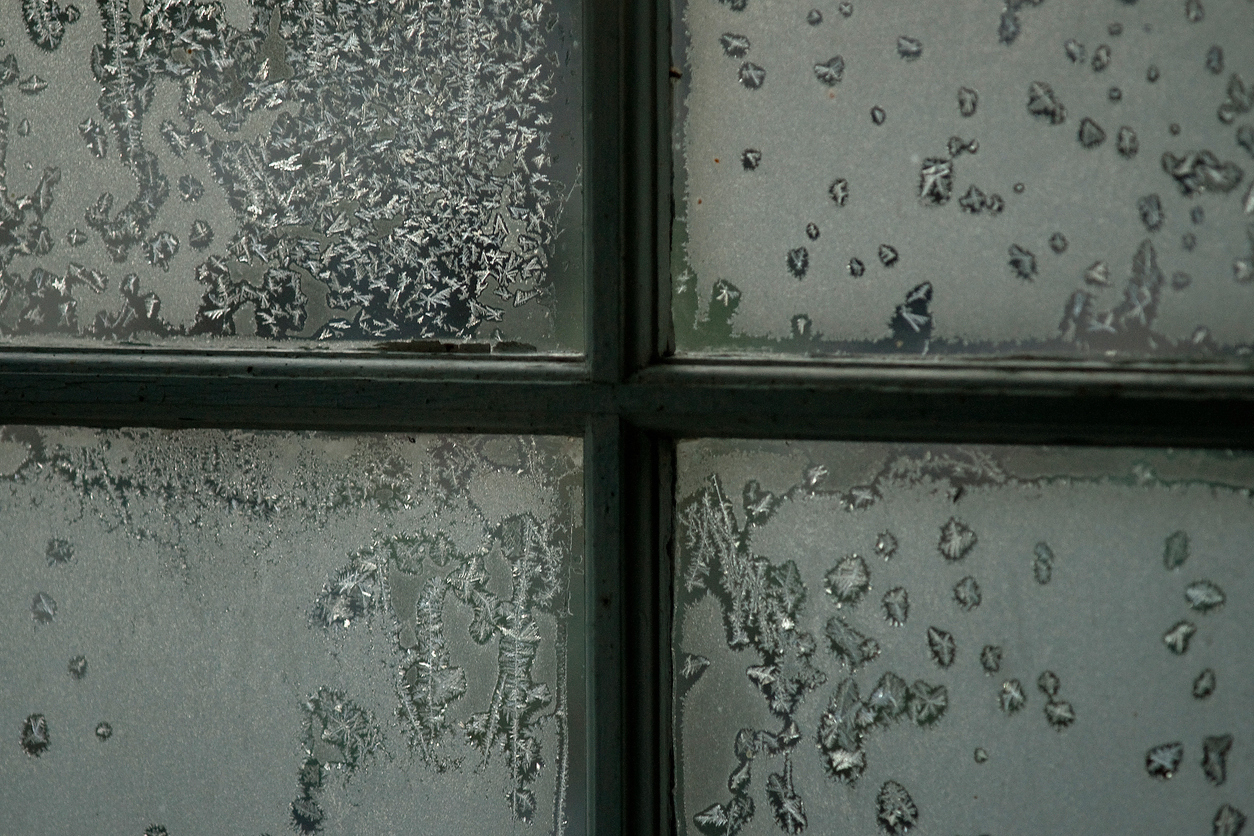
It occurs due to temperature differences between the two sides of a surface. The warm air inside a room, containing water vapor, condenses when it comes into contact with a cold surface. Problems of condensation humidity are the most common.How can we eliminate problems of condensation humidity?
Since issues of condensation humidity arise from a temperature difference between the two sides of a surface, the best way to prevent it is to ensure that the envelope of our building is properly insulated. Special attention should be paid to the thickness of the thermal insulation of the facades and the technical performance of the windows. They must have thermal bridge breakage and their low-emissive glass should have an air chamber.However, it is important to note that mere occupancy and use of spaces already generate water vapor. Let’s not forget that people, when we breathe, emit CO2; and various daily activities also contribute to humidity in the environment (cooking, showering, washing dishes, doing laundry…). It will be of no use to have a perfectly insulated envelope if adequate and sufficient ventilation of the spaces is not carried out.
Ventilation as a solution to humidity problems
There are devices on the market designed to eliminate problems of condensation humidity, such as dehumidifiers. However, we must take into account that these types of devices are not the solution, as they excessively dry the air and may cause problems with mucous membranes. Furthermore, the excessive use of heating systems in winter also worsens the issue, since in these cases, there is no air renewal, only simple air recirculation.In all effects, the best solution to avoid problems of condensation humidity is ventilation. Due to thermal needs and energy savings, we cannot ventilate our homes as much as necessary during the winter months. A controlled mechanical double-flow ventilation system, in which both the supply and extraction are made by mechanical means, will ensure a quality indoor air free of contaminating particles and within the recommended humidity limits. This way, we will avoid the discomfort that a high humidity level represents for people and the dangers that a humid environment poses for the condition of our building (structure, materials, fabrics…).


Siber Ventilation